

Quick summary:
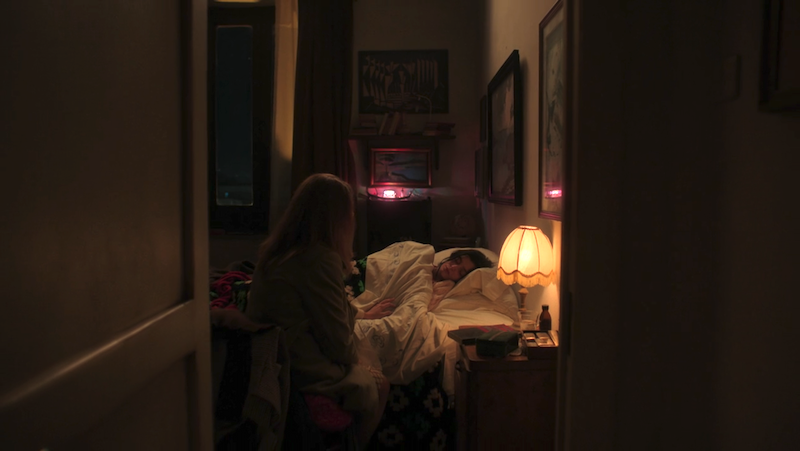
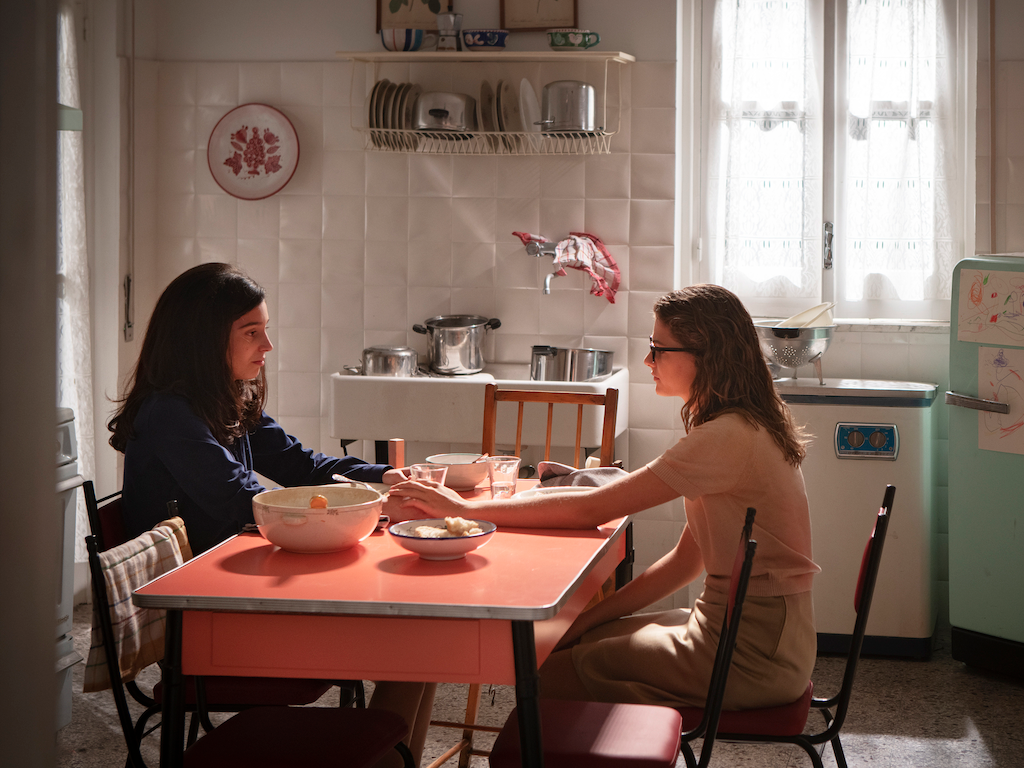
When the Soccavo Salami Factory turns into a Communists vs. fascists battleground and Lila (Gaia Girace) is hit with the one-two punch of physical and mental illness, she sends for Elena (Margherita Mazzucco). As a sweaty Lila lies in bed with "[her head] coming unstuck like peeling wallpaper," she explains what happened after "The Blue Fairy" bonfire as Elena patiently listens. Depicted solely in flashbacks, the episode recounts her sexual assault at the hands of Bruno (Francesco Russo), followed by her increasing involvement with the union and the Communist Party. Pasquale (Eduardo Scarpetta) is now back in her life, along with Nadia Galiani (Giorgia Gargano), and both have forced her hand at the factory, escalating an already fraught situation. When Lila goes to confront Bruno with a list of worker demands, Michele Solara's (Alessio Gallo) presence in his office triggers a dissolving boundaries breakdown, and the story ends where it began.
Corresponding book chapters:
"The Fever" spans 89 pages, from Chapter 21 through 46. If I hadn't read the books, I think I'd be satisfied with the quality of the series because I wouldn't be aware of how much context is missing. It certainly stands on its own (through S3, at least) and mostly captures the spirit of the narrative, but from this point on, the books are truly incomparable. There are several pieces (Chapters 27 and 46) that defy adaptation because there is no way to show; the magic is all in the telling.
Notable choice (complimentary):
Lila's breakdown is a good example of a scene that's actually more effective onscreen than it is in the book. The show's depiction takes liberties, externalizing much of what is internal and shifting the order of events, yet it still feels true to the experience of dissolving boundaries as described throughout the series. When Lila first encounters this feeling, it's because she suddenly realizes that Rino (Gennaro De Stefano), her beloved older brother/protector, is a simpleton piece of shit who only cares about her when it benefits him. This time, it builds in intensity as her working conditions worsen and she becomes aware of how inescapable and unfixable the neighborhood's corruption is.
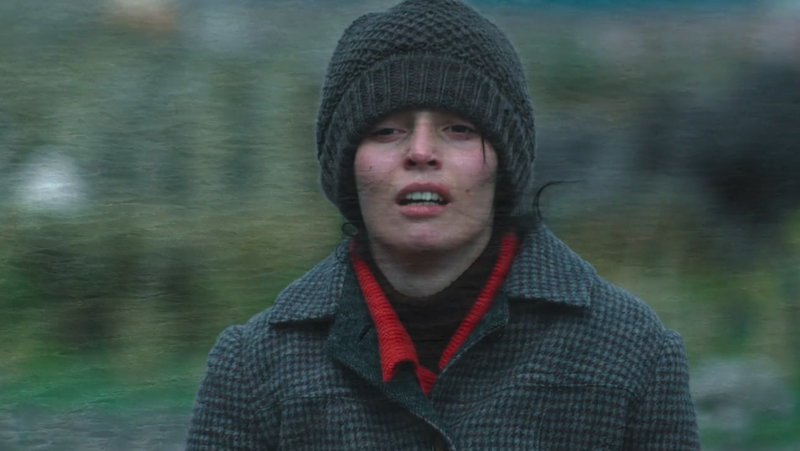
After confronting Michele in the show, Lila leaves the factory and goes on a long, paranoid walk as the sweeping string score plays. There's a great sequence where the camera pans down a smokestack in the background to reveal Lila in the midground, walking down the road. The handheld camera switches to a position right near her shoulder, unsteadily following her as she abruptly stops walking and turns back to reveal not someone following her, but the same immobile smokestack. The camera switches from close shots of her face to shaky, rapid shots of the stone wall at her side, mirroring her lability. She cries, screams, talks to herself, and flails her arms, eventually collapsing near the sea in a discombobulated daze.
My favorite moment is when the shimmering, dark sea fades into slowly rippling green grass, which dissolves into a pan up Lila's prostrate body; she's finally still but not at peace. Elena's voiceover says, "With the appearance of Michele Solara, [Lila's] small world made up of Enzo and Gennaro crumbled away. The boundaries were dissolving again, everything was spilling out without borders." It's a particularly evocative scene thanks to Gaia Girace's vulnerability and Francesca Calvelli's masterful editing. The entire episode builds to this moment, with Lila's health worsening as she tries to ignore her condition. It's cathartic when she finally loses control and lets herself feel the horror that's been building since she left Stefano (Giovanni Amura).
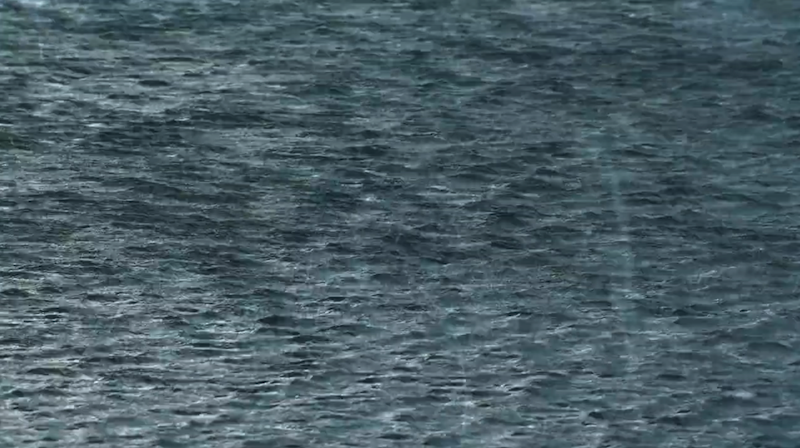
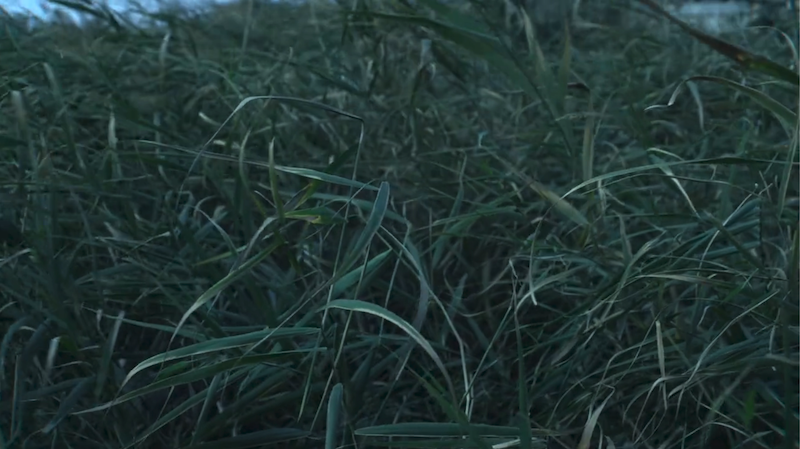
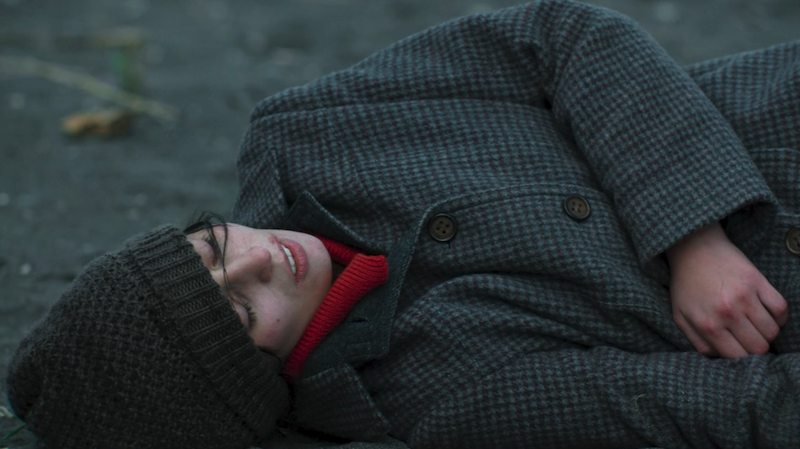
The piece of music that plays over this scene is from Max Richter's reinterpretation of Vivaldi's "The Four Seasons," specifically the "Summer 2" movement.
In the novel, this meandering walk happens without much description, and the moment of dissolving boundaries instead occurs after she becomes a pariah at the factory c/o the Communist pamphlet. She's in her room late at night with a sleeping Gennaro when her heart starts beating so hard that she's afraid it will "shatter him like a plastic puppet, splitting open his chest and stomach and head to reveal his insides." It's an unsettling scene in the book, but wouldn't have been as narratively satisfying within the arc of the episode. The writers were smart to rework it for maximum payoff.
Notable choice (derogatory):
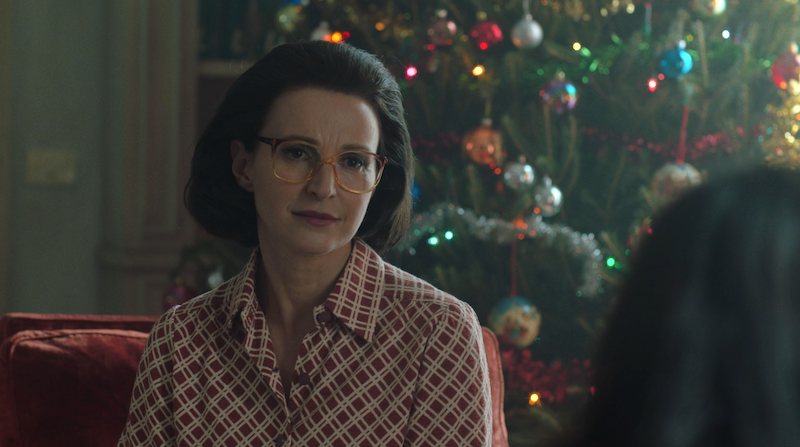
The scene between Lila and Professor Galiani (Clotilde Sabatino) is a pale shadow of the original. In the book, Galiani is impressed with Lila's brash honesty when she enters the apartment and immediately declares that the last time she was there, "I was bored, I couldn't wait to leave." Later, Lila details how out of place she felt that night six years ago, how ignorant, and Elena imagines that Galiani "must have felt in Lila [...] that elusive quality that seduced and at the same time alarmed, a siren power." In the show, they have a polite conversation, but there's no magnetic pull between them. In the book, on Lila's way out after screaming at Nadia, they have this exchange:
"What did you study?"
"Nothing."
"To hear you speak—and shout—it doesn't seem so."
"It's true, I stopped after fifth grade."
"Why?"
"I didn't have the ability."
"How did you know?"
"Greco had it, I didn't."
Professor Galiani shook her head in a sign of disagreement, and said:
"If you had studied you would have been as successful as Greco."
As her parting line, Lila reiterates the idea that she's "the wicked one," the foil to Elena's goodness. There's also an earlier moment where Galiani throws a dig at Elena when she tells Lila they never see her anymore because "success has gone to her head." Elena isn't physically in the scene, but her presence is acutely felt, reminding us at every turn of the party that caused a temporary rift in their friendship. If you've read/watched ahead, you'll know that this scene mirrors a later one where Elena is present at the Galiani apartment and things don't go as she anticipates. It's a less painful scene in the show without the complexity of this one teeing it up, so I'm not sure why the writing has dumbed it down.
I likewise miss the book tension between Professor Galiani and Nadia that Lila notes and delights in. It foreshadows Nadia's future in an effective way and provides an interesting comparison with how Professor Galiani later treats Elena.
Thoughts:
"The Fever" is a Lila-heavy episode where we learn what her life at the sausage factory has been like since the end of S2. As Elena cries over bad book reviews and lightly toe dips into political activism, Lila struggles to fight off despondency so she can at least try to improve her lot. In the novel, before presenting Bruno with the committee's list of demands, she muses,
You're convinced that you, and they, starting from here, from what you are now, will join the victorious march of the proletariat of the whole world? No way. March to become what? Now and forever workers? Workers who slave from morning to night but are empowered? Nonsense. Hot air to sweeten the pill of toil.
During her time at Soccavo's, she vacillates between defeatist negativity and abject defiance against those who attempt to control her. When, once again, Michele Solara reveals himself as the puppet master of her misfortune, it's no wonder she loses her faculties. It's the wedding shoes 2.0; it's Michael Corleone saying, "Just when I thought I was out, they pull me back in!" Only, Lila has always understood how much power that family wields. Even when she was a girl, she knew "there was no way to be free of them." Elena leaves Naples. Lila stays and spends the rest of her life defying them and everything they stand for until they ultimately suck her into their black hole. (If you haven't picked up on this yet, each book/season gets progressively bleaker.)
Lila understands that no matter how hard she tries, there's no escaping the past. Even if she left, like Elena, she'd never be able to shake her rotten origin, to erase all the terrible things she knows about the world from her brain. At the Galiani apartment, she thinks about how pointless it is to spend time educating Gennaro because "Professor Galiani's grandson would give orders and Gennaro would obey." In the book, it's even more explicit, and she thinks, "I'm made badly and he's made badly." She wanted to do right by him, to give him a better education, but in order to do that, she would have had to endure Stefano's abuse, putting them both at risk and creating more psychological damage. Instead, she chose safety and financial independence, relegating future Gennaro to "a place like [the factory], crawling to some boss for another five lire." Take your pick: a generation of poverty, abuse, corruption, or the constant guilt and self-esteem issues that accompany an attempt to escape.
The episode doesn't give much in the way of Elena updates, but it begins with Pietro (Matteo Cecchi) meeting her family for the first time. Everything goes as well as possible, even when Immacolata (Anna Rita Vitolo) confronts him over the decision to get married at city hall. Once Vittorio (Luca Gallone) approves of their union and everyone's in high spirits, Pietro presents Elena with another ring, this one from his grandmother. There's a brilliant bit of visual foreshadowing where, as he goes to slip it onto her finger, hands instead appear around her throat. An undulating, almost underwater-sounding, score plays as the shaky camera shows close up hands, gripping Elena from all angles and forcing her to accept the ring. It only lasts a few seconds before a much calmer reality sets in, but an ominous pall remains. Elena believes her association with the Airotas will help erase the coarseness of her upbringing, as if this is an achievable feat. Even if the marriage succeeds, disappointment is inevitable.
No matter how far Elena climbs, she'll never actually come from Pietro's highbrow intellectual world. While he's lost in esoterica, she's being pulled into labor disputes and political clashes by old friends who are forced to confront the daily reality of capitalist exploitation. When Pasquale and Enzo (Giovanni Buselli) arrive at her house on behalf of Lila, Elena realizes that their mutual involvement in the Communist Party has brought them back together. For a while, Lila and Enzo were totally isolated from the old neighborhood, not wanting to risk putting anyone else in danger by association. As a bedridden Lila explains to Elena (after making her promise to care for Gennaro if anything happens to her), Pasquale came over one day after a nearby party meeting, creating a tense vibe until explicitly stating, "I'm not afraid, I'll follow your example. No one gave it back to the Solaras and the Carraccis as good as you."
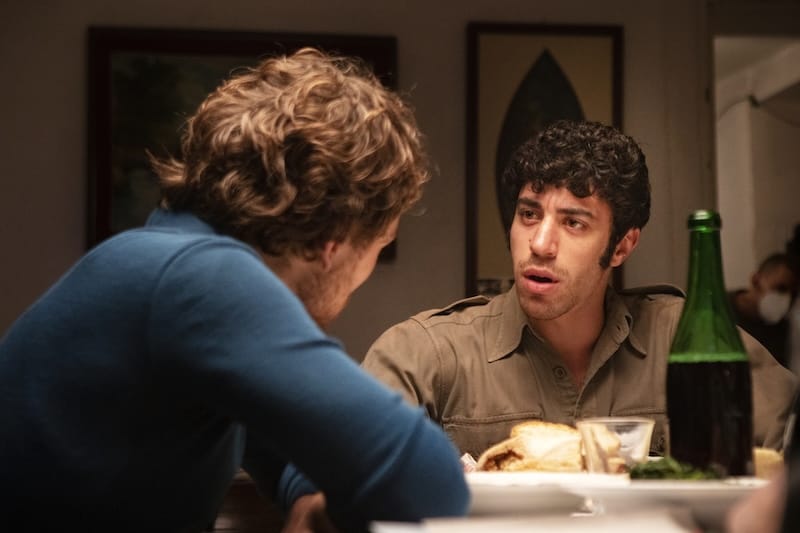
With Pasquale back in the fold and supportive of their neighborhood defection, Lila and Enzo become more politically active, often accompanying him to committee meetings. At this point, work at the factory is soul-sucking, but Lila looks forward to nights spent with Enzo, helping him study computer programming via a Zurich correspondence course. Unlike Nino, who couldn't handle her challenging his academic pursuits, Enzo welcomes it, fully acknowledging her impressive ability to "rapidly [master] any material." She feels significant guilt over the chaste nature of their relationship because she loves him, but she's just not ready for anything deeper. When they sleep in the same bed together toward the end of the episode, Lila still isn't ready, but she's terrified of losing him. Enzo could have been gross about it, pushing her into something physical that she technically gives permission for yet clearly doesn't want; luckily, he's a mensch, and their relationship is a balm for the horrors she's forced to tolerate in exchange for money to survive.
At the factory, Lila's sexually harassed, first by co-workers, then by Bruno himself. Again, this is a scene that's far worse to watch than read. He calls her into the drying room, tells her about fucking a pregnant Pinuccia on Ischia, says the smell of sausage makes him horny, and starts kissing her as she struggles against him. In the book, she's initially paralyzed by fear because she's reminded of Stefano's attacks and the fear of being murdered, but then her rage kicks in and she's ready to break his dick in twain. After this happens, she's at a committee meeting with Pasquale and Enzo when she recognizes Nadia, Nino's ex-girlfriend, as the passionate comrade decrying traditional leftwing parties. Motivated partially by spite for "that shiny clean bitch" who doesn't know dick about hard work, and by her recent assault, Lila stands up to speak when Pasquale encourages her.
What she says, essentially, is that her job is a humiliating, miserable slog. As she speaks about the rampant sexual harassment, Pasquale and Enzo look shocked. Lila finds their reactions ridiculous because they surely see women experience the same treatment where they work and are somehow only outraged when it impacts one who's important to them. This is what leads to my favorite one-liner of the episode: "Fuck off, you and the working class." Lila is always one to spot hypocrisy, which is why she doesn't take kindly to having her words used without consent in a pamphlet distributed the following day at the factory. The Communists have taken her experience and exploited it for collective gain, using it to give weight to theoretical arguments and putting her in real danger. When Bruno threatens to fire her, Lila is conciliatory, reminding him she has a small child and would never put her job at risk. Later, in the book, she hates herself for using this "charming affectation, perhaps seductive, the body of a woman acting autonomously in spite of disgust."
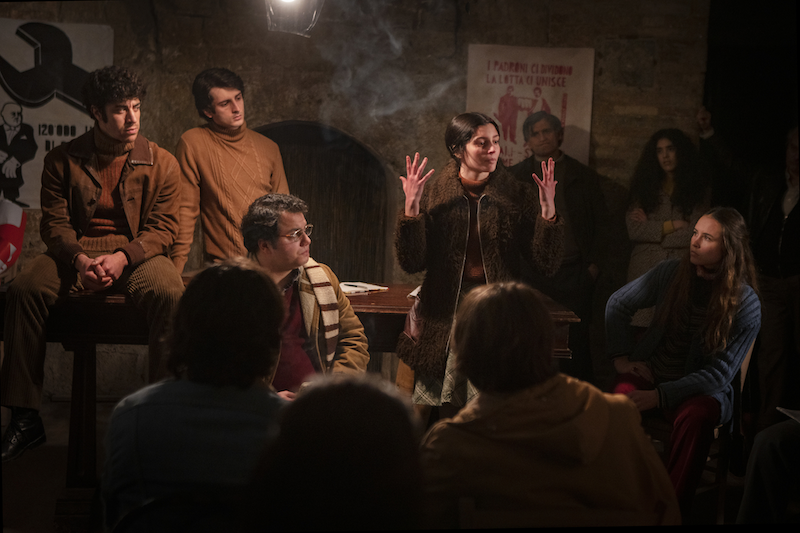
When she confronts the Communists at the Galiani house on Corso Vittorio Emanuele, they reiterate the standard talking points, reminding her that they're all taking risks and supporting each other while pushing for change. In general, I don't disagree with this line of thinking, but nothing Lila said was so urgent that they needed to publish it immediately without her notice or permission. They treat her like another cog in the machine, not a comrade with her own agency. It's hilarious that Pasquale, who was ready to beat up her sexual assaulters, escalated the peril of her situation without blinking an eye. When Lila faints at the meeting and learns from Armando that she might have a heart murmur, it's yet another potential problem to add to her neverending stack.
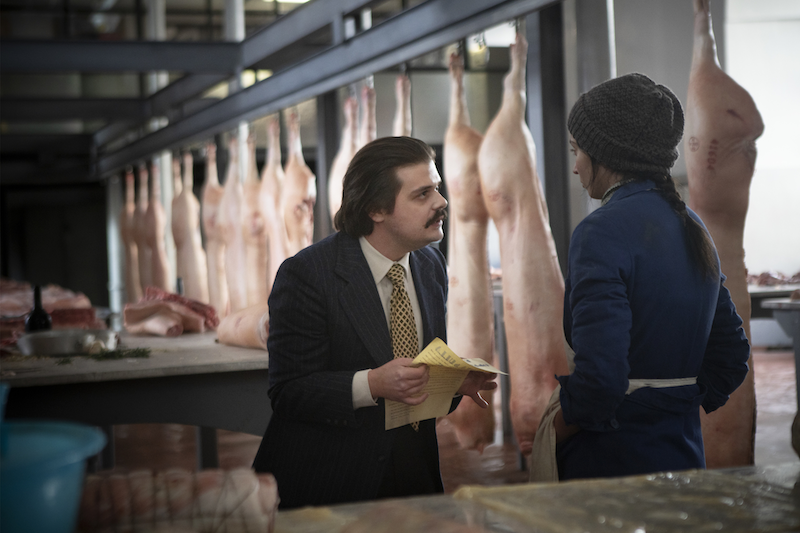
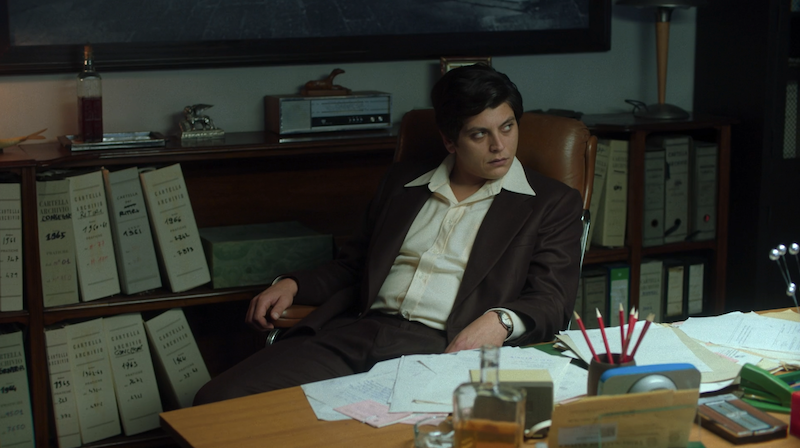
In typical fashion, the factory devolves into chaos when the fascists and Communists both show up and start beating the shit out of each other. The best exchanges are between Lila and Gino, who looks particularly stupid in a leather blazer, rocking a chinstrap pube beard. I love that he goes out of his way to let her know that he asked for Stefano's permission to "smash her face in." The way this all plays out in the book is quite different, with Lila making legitimate efforts to organize the workers at the factory and formalizing a list of demands for Bruno's consideration. In the show, it happens slapdash after the fight breaks out, and when she shows up to speak to Bruno, Michele Solara is with him in his office.
Even before she sees Michele, Lila doesn't look well. Before she heads to Bruno's office, there's a shot of her with her head in her hands as the camera moves with her, getting closer as everyone in the background blurs out of focus. She's not well, and these feelings only increase when she's forced to listen to Michele's updates on the neighborhood, his compliments followed by misogynistic insults. Much of the conversation is shot-reverse-shot with occasional two-shots of them together by the windows in the office. Bruno, for the most part, is relegated to the orange cuck chair where he sits like a defeated little bitch who's mismanaging the business he's inherited directly into the ground. Somehow, Lila holds her composure during Michele's idiotic "whistle" story that ends with a shot of him dropping the ball into Bruno's (admittedly enviable) Spyros ashtray; she loses it when he talks about her unfuckable body/fuckable mind, grabbing the ball and attempting to bludgeon him with it.
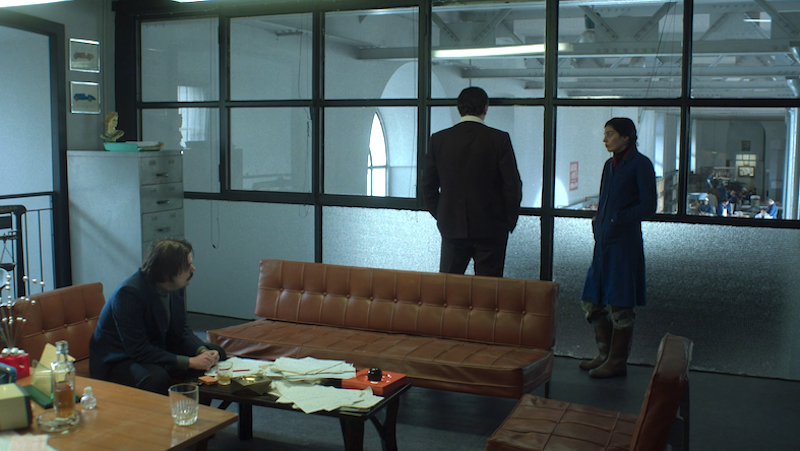
When Lila learns that Soccavo is in Manuela Solara's red book and that she actually works for Michele, she rips off her uniform, tells both men to go fuck themselves ("I could whistle when I was five"), and heads to the sea for a classic cinematic breakdown. Back in San Giovanni, Elena remains by Lila's side, where she's been during this entire string of depressing updates, feeling guilty because this could have easily been her life if luck hadn't been in her favor. Per usual, I miss Elena's insights from the book that remind us what an asshole she is, like her desire to ask about how/when her name was mentioned during the conversation with Professor Galiani, or her unwillingness to share her own sexual assaults in a show of solidarity. There's also something lost in the omission of this being the last time Elena has legitimate details about Lila's life. From this point on, there's a real divergence, and the relationship loses its old intimacy.
When Lila first speaks at the committee meeting in the book, she returns "with the impression of having exposed herself too fully to people who, yes, were good-hearted but who, even if they understood it in the abstract, in the concrete couldn't understand a thing." I suspect Lila feels similarly about Elena. The sad thing is that Elena does understand (or tries very hard to), but she's so emotionally closed off that unless Lila read these books, she'd never have any clue.
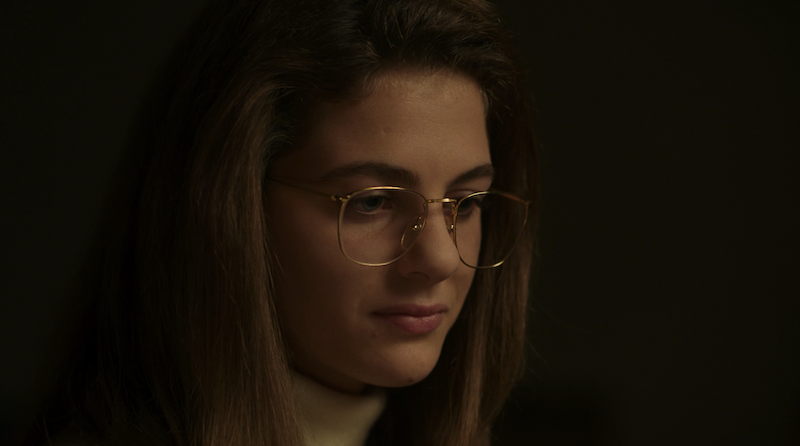
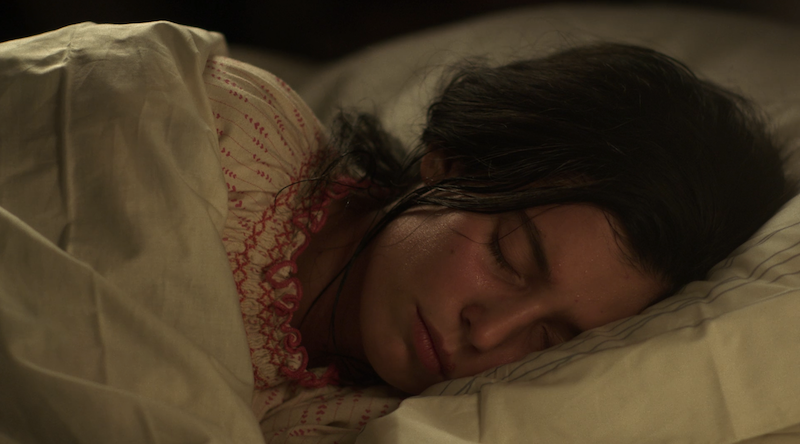
Much like her own mother, Elena is physically there, but emotionally absent.
Random observations:
- The night Elena goes to see Lila, the Grecos are watching the opening theme to "Canzonissima," an Italian musical variety show broadcast on Saturday evenings by RAI ("My Brilliant Friend" co-producer) from 1958-1975. The song, "Zum Zum Zum," was originally recorded by Mina, the host of the show, and performed in chorus by each episode's participants.
- On their way to San Giovanni, Pasquale tells Lenù, "The party stays mum, waiting for Aldo Moro to go to government. Are we Aldo Moro's lapdogs? We have to make revolution!" Moro was a prominent Christian Democrat, and Italy's prime minister from 1963-1968 and 1974-1976. In 1978, he was kidnapped and murdered by the Red Brigades, the terrorist group that Pasquale starts associating with (I'm assuming) later in this third installment. I haven't watched it yet, but Marco Bellocchio's 2022 mini series, "Exterior Night," is about this string of events.
- Contraceptives were effectively banned in Italy under Mussolini, whose regime introduced the Rocco Code, outlawing the "incitement of practices against procreation" in 1930. The ban was less "all birth control is illegal" and more of an information ban. For example, condoms could only be marketed and sold for disease prevention, not unwanted pregnancy. The pill and the spiral (IUD), which Armando mentions to Lila, could be prescribed under the guise of therapeutic purposes. They were available in Italy in the early 1960s on the DL, but became increasingly popular during the late 1960s thanks to the Italian Association for Demographic Education (AIED), Italy's closest equivalent to Planned Parenthood. In 1971, the information ban was lifted and in 1978, abortion was legalized. Keep all of this in mind as the season progresses.
- The Neapolitan novels are certainly depressing, but sometimes they're unexpectedly funny, like when Edo, who hurt his hand on the job, threatens everyone who stands in the way of collective bargaining: "If my hand gets infected, if they cut it off, I'm coming to your house, I'll pour a can of gasoline on it, and set you and your family on fire."
- When Lila is at her lowest point in the book, Elena once again considers telling her that Nino said she's "made badly even when it comes to sex." To Elena, Lila's admission of not enjoying penetrative sex seems like confirmation that Nino is correct, even though she herself doesn't enjoy it without clitoral stimulation. One of the saddest things is watching women uphold patriarchal beliefs they could be tearing down simply by honestly sharing information.

Member comments