
Quick summary:
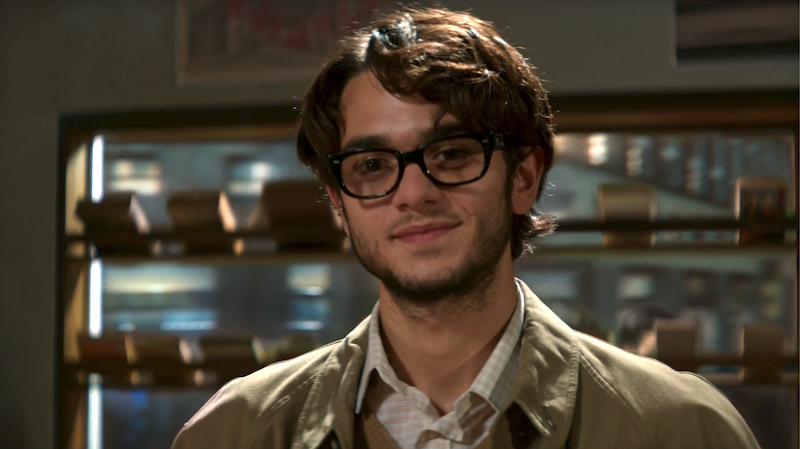
When Elena (Margherita Mazzucco) meets Pietro Airota (Matteo Cecchi), another student at the Normale who comes from an intellectual family, everything falls into place: she graduates with the highest honors, they get engaged, and she writes and publishes a book. While her life is coming together, Lila's is falling apart. Since they last saw one another, Lila (Gaia Girace) and Enzo (Giovanni Buselli) have moved to San Giovanni a Teduccio. Stefano's (Giovanni Amura) mistress, Ada (Ulrike Migliaresi), gives birth to a baby girl named Maria, slipping seamlessly into Lila's old role in the Carracci household. For all the neighborhood gossip, no one seems to know what Lila is doing in San Giovanni, so Elena goes there to find out and is shocked to see her brilliant friend toiling away at the Soccavo Salami Factory.
Corresponding book chapters:
Aside from the flu scene in Chapter 109 that takes place in "The Secret Notebooks," "The Blue Fairy" covers Chapters 107-125, ending with Nino Sarratore's (Francesco Serpico) smug fucking face just like the novel.
Notable choice (complimentary):
In the opening scene of the episode, Elena discusses her professional goals with her thesis advisor, who doesn't take her desire for an academic career seriously. When she says she wants to teach, he assumes she means in a Professor Galiani capacity, not at a university like Pietro. He gives her this condescending little speech, the tl;dr of which is that she'll never be respected in those upper echelons of academia because she's a trash person who comes from a long line of trash people. She's better than her illiterate forebears, yes, but she still has a Neapolitan accent that prevents her from successfully masquerading as an intellectual sophisticate. As this douchebag intones, "nature does not take leaps."
In the novel, none of these slights are as explicit. There's a misunderstanding where the advisor asks if she thinks she'll teach after her degree — meaning at a high school — and she assumes university-level. When he awkwardly corrects her, she feels "Shame, shame, shame. This overconfidence that had grown in me, this ambition to be like Pietro." These feelings are what drive her to write her first novel in a frenzied desire to decipher and make peace with herself. The moment with the advisor is self-contained, an event that pushes Elena toward her future, just not in the way she expected it to.
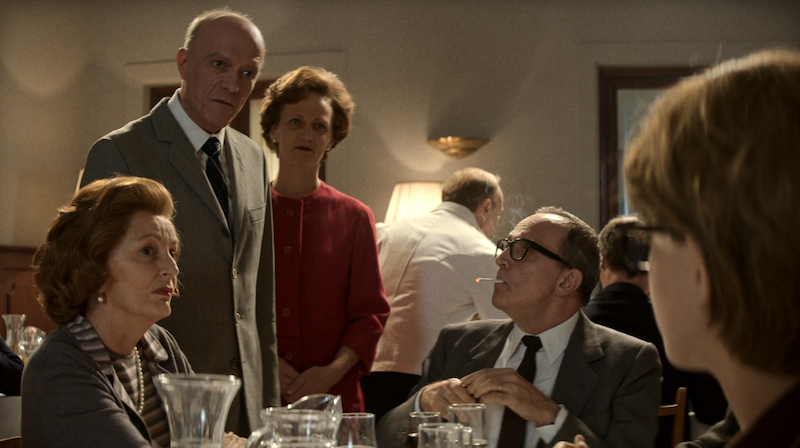
The show makes further use of the advisor by incorporating him in a later scene where Elena has lunch with the Airotas. When the advisor approaches their table for a round of ass-kissing, he's surprised to see Elena there, describing her as "a very capable student of mine." When he leaves, the elder Airotas aren't even sure who he is, briefly musing, "a professor of Latin literature, I think." It's a nice little checkmate moment for Elena, who, whether unwittingly or not, has shown that she's not some simpleton who doesn't understand how the world works. It's true that nature is not on her side, but with the right social contacts, this matters far less.
Notable choice (derogatory):
I forgot how much sexual shame drives Elena to write her first novel. The show centers it around Franco Mari as Elena reminisces about their wonderful days together before forcing herself to question that reality:
I'm lying to myself, I thought. Had it all been so wonderful? Even then, I knew there was shame, awkwardness, humiliation and disgust. To accept, endure, force oneself... Is it possible that even happy moments of pleasure don't bear closer inspection?
In the novel, the introspection that inspires Elena to write comes from a reminder, in the form of Bruno Soccavo, of the most recent summer spent on Ischia. As she considers it, she realizes
that the happy phase of that vacation had faded, while its unpleasant side had expanded. I discovered that every sound from that time, every scent was repugnant to me, but what in memory, surprisingly, seemed most insupportable, and caused me long crying spells, was the night at the Maronti with Donato Sarratore. Only my suffering for what was happening between Lila and Nino could have driven me to consider it pleasurable. At this distance I understood that that first experience of penetration, in the dark, on the cold sand, with that banal man who was the father of the person I loved had been degrading. I was ashamed of it and that shame was added to other shames, of a different nature, that I was experiencing.
This framing is very different than Elena's initial insistence that,
I didn't once regret accepting what had happened, I had no second thoughts and I felt proud of it. That's how I wanted it to be and I imposed it on myself, but that man, I never wanted to see him again.
Through writing, she processes a trauma she wasn't previously cognizant of because she began shielding herself from it as soon as it occurred. Now, with the passage of time and a need to assess her past before formulating a future, she returns to "the blackness of the Maronti." I'm not sure why the show leaves out this context... perhaps because the Bruno connection (via Lila's move to San Giovanni) hadn't yet been established and the writers wanted to include that melancholy/romantic Franco flashback. Either way, I prefer the darkness of the novel and wish the show had included Elena's new revelations about her experience with Donato. I still don't think she'd call it rape or even assault, but she can at least admit to herself that it was damaging.
Thoughts:
The shitty truth about life, which it sometimes takes decades of experience to grasp, is that it usually doesn't matter how talented or hardworking you are; if luck isn't on your side at the right time, it might all come crashing down, much to the delight of the assholes rooting for your demise. Lila has always tried to make the best of unfavorable circumstances, which people in the neighborhood interpret as arrogance. When the ability to attend school is taken away from her, she focuses on marrying favorably because what other choice does she have? If she must be with someone against her will, he might as well afford her economic freedom. For the briefest spell, it appears she has it all figured out, but then the abuse, manipulation, and imminent threat of death eventually push her back into poverty.
Throughout Ferrante's opus, the juxtaposition between Elena and Lila shows how much it sucks when only certain people are allowed to pursue dreams. Lila can only be so happy for Elena, who seems to get everything she wants with relative ease, while she's risking rape and dismemberment at the sausage factory. Elena can only feel so much joy in the publication of her novel when Lila, a person of equal intelligence and ability, toils away in the cold room for 10 extra lire. If they had both studied, maybe nothing would be different and their lives would still be consumed with jealousy and resentment, but at least there wouldn't be the nagging guilt that comes with watching someone struggle despite their best efforts from a lofty position of privilege.
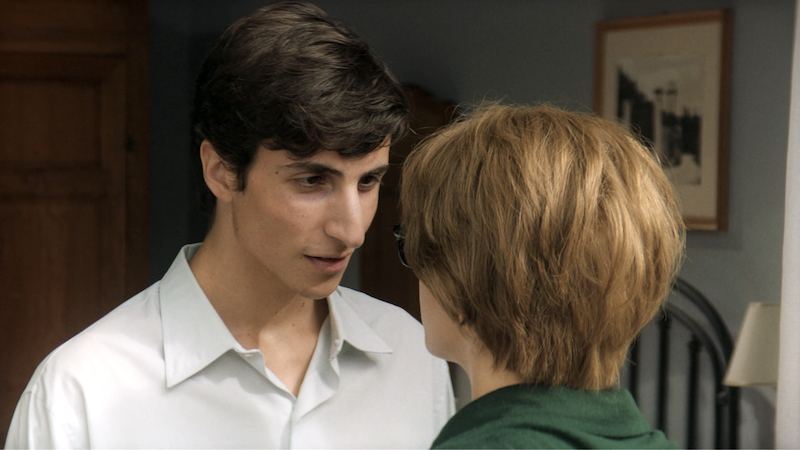
Feelings of inadequacy c/o men are what drive her into the shame spiral that results in her first novel, "Digression." When she begins writing, she's already faced rejection from her advisor and has also recently met Pietro, a serious student of the same age who has so much confidence in his goals that it inspires her by proxy until she remembers the same doors aren't open to her. It's notable, too, that what inspires Pietro to approach her is a group of students taunting her "slutty" ways as she walks down the street. There's a great rack focus shot where the camera follows Elena walking away from the jeering group as an annoyed Pietro enters the foreground in closeup. Her sexual past and uncertain future lead to an outpouring of emotion that, over 20 days, makes its way to the page.
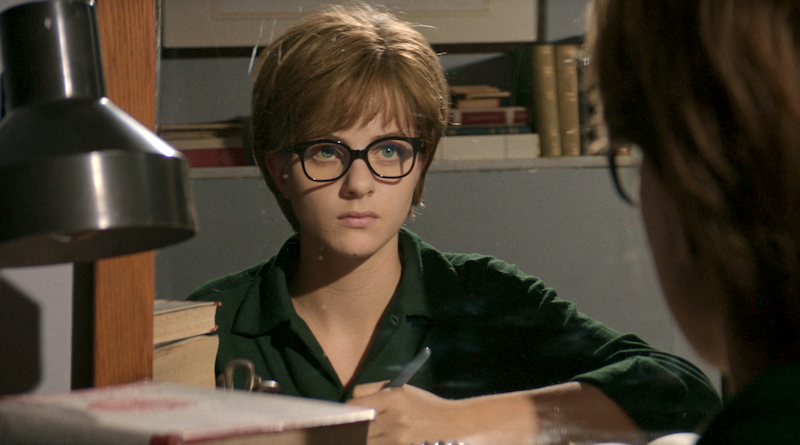
Once she's done writing, the courtship with Pietro picks up steam, although at no point does it really feel romantic, more like what I imagine as the early days of Bill and Hillary Clinton. "You have career ambitions? Me, too. Let's conquer the world together. Just remember, though, that I'm a man, so my shit always takes priority." As some random street gossip tells her after she meets Pietro, his family is important and she'd be an idiot to let him go. In the book, Pietro and Elena have spent more time together before she begins writing. She's already met his family and experienced firsthand how seriously he's treated in academic settings as opposed to her. It's better this way, because it more firmly cements the problems in their relationship that will only grow with time. When Book Elena considers Pietro, she feels competitive and jealous:
I saw that Pietro was treated as if he already had a professorship, I as a normal brilliant student. Often I decided not to talk to the teacher, out of rage, out of pride, out of fear of having to be aware of my constitutional inferiority. I have to do better than Pietro, I thought, he knows so many more things than I do, but he's gray, he has no imagination.
TV Elena expresses fewer judgments and comes off as someone who is fully swept up in the fantasy of belonging to a family like the Airotas. At lunch, it's interesting how Pietro jumps in immediately when his dad asks Elena if they can do anything to help with her thesis. He says, "Elena's done everything on her own and she is very proud of it." I hadn't picked up on it before, but this TV-exclusive exchange could be read as early foreshadowing of Pietro's ingrained misogyny. He thinks Elena is smart, but he doesn't see her as an equal with the same academic potential and isn't inclined to help her pursue a career similar to his own. It's fine for his sister, Mariarosa (Giulia Mazzarino), just not for his future wife. (See also: Pietro's nervousness over Elena's comments about America's war crimes before his father's positive reaction.)
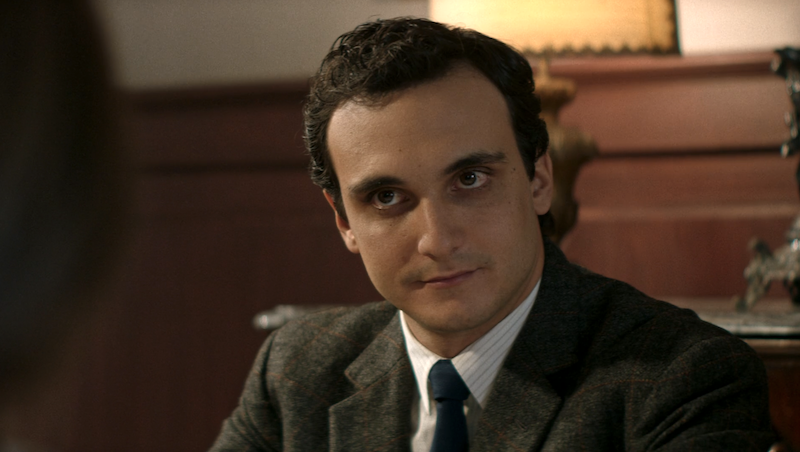
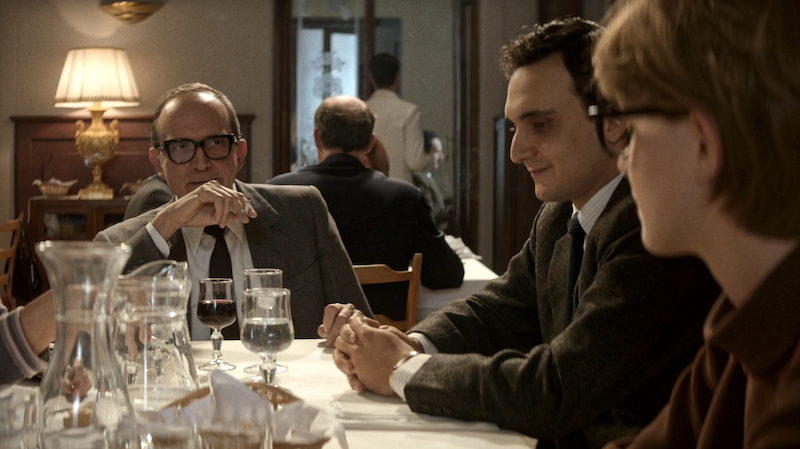
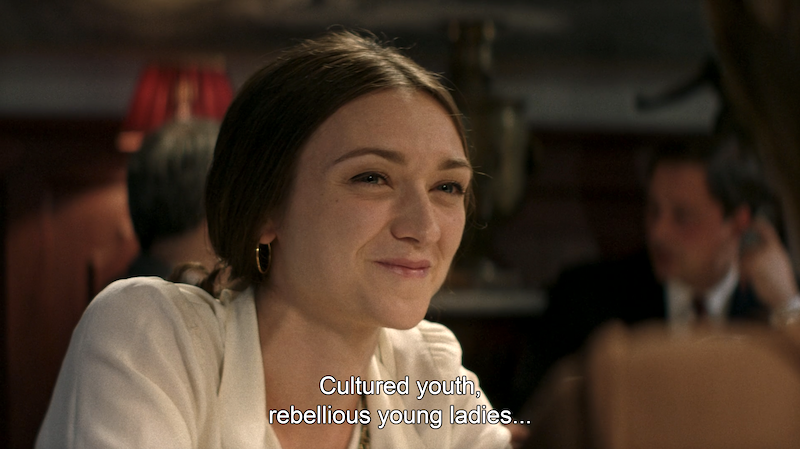
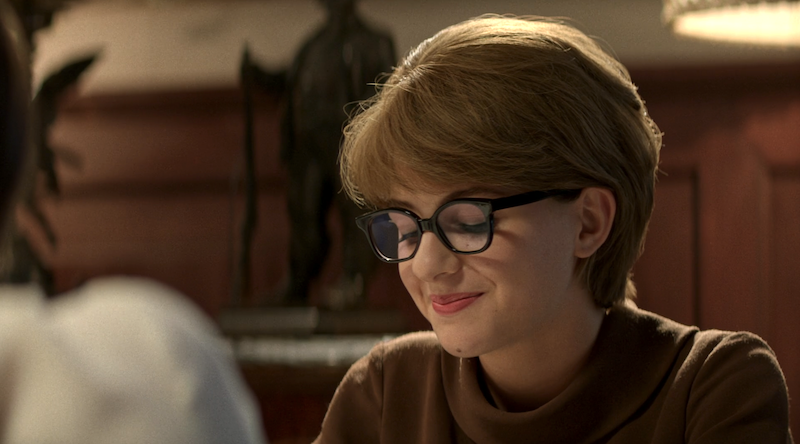
I could write 3,000 words solely about this exchange at lunch.
Pietro, emboldened by his family's approval, is more openly affectionate with Elena, and probably relieved to tick yet another marker of success off his mental list. After their respective graduations, he presents her with a ring, admitting that for the past few months, he assumed they were engaged. There's no way someone this awkward around women will make for a satisfying lover, and I want to jump through the screen and shout, "RUN." Elena, unfortunately, is charmed and accepts the idea of two years apart while Pietro establishes himself at university in Turin. She gives him a copy of her book — which, in Ferrante's text, he leaves at a restaurant and has to go back to retrieve — then invites him back to her room, an invitation he swiftly declines for fear of rule-breaking. Book Elena astutely notes, "There were entire libraries separating him and Antonio, but they were similar."
Elena's "return to Naples was like having a defective umbrella that suddenly closes over your head in a gust of wind." On the train back, she sits across from a couple who look way too old to have such small children; when the dad starts pounding wine in the middle of the day, you understand the kind of life that's led to such premature aging. As the camera pans from the train down to the tunnel that Lila and Elena walked through during their first excursion away from the neighborhood, a green bus pulls into view. After a cut, it exits to reveal Lenù and her dad through a cloud of dust. Many things are different, like a giant billboard for Rede hosiery and dirt roads that are finally being paved, yet the gossip mill persists. In a quick amount of time, Lenù learns that Stefano "has two wives and two kids," which her parents think is hilarious, and that Lila has "run off with her kid."
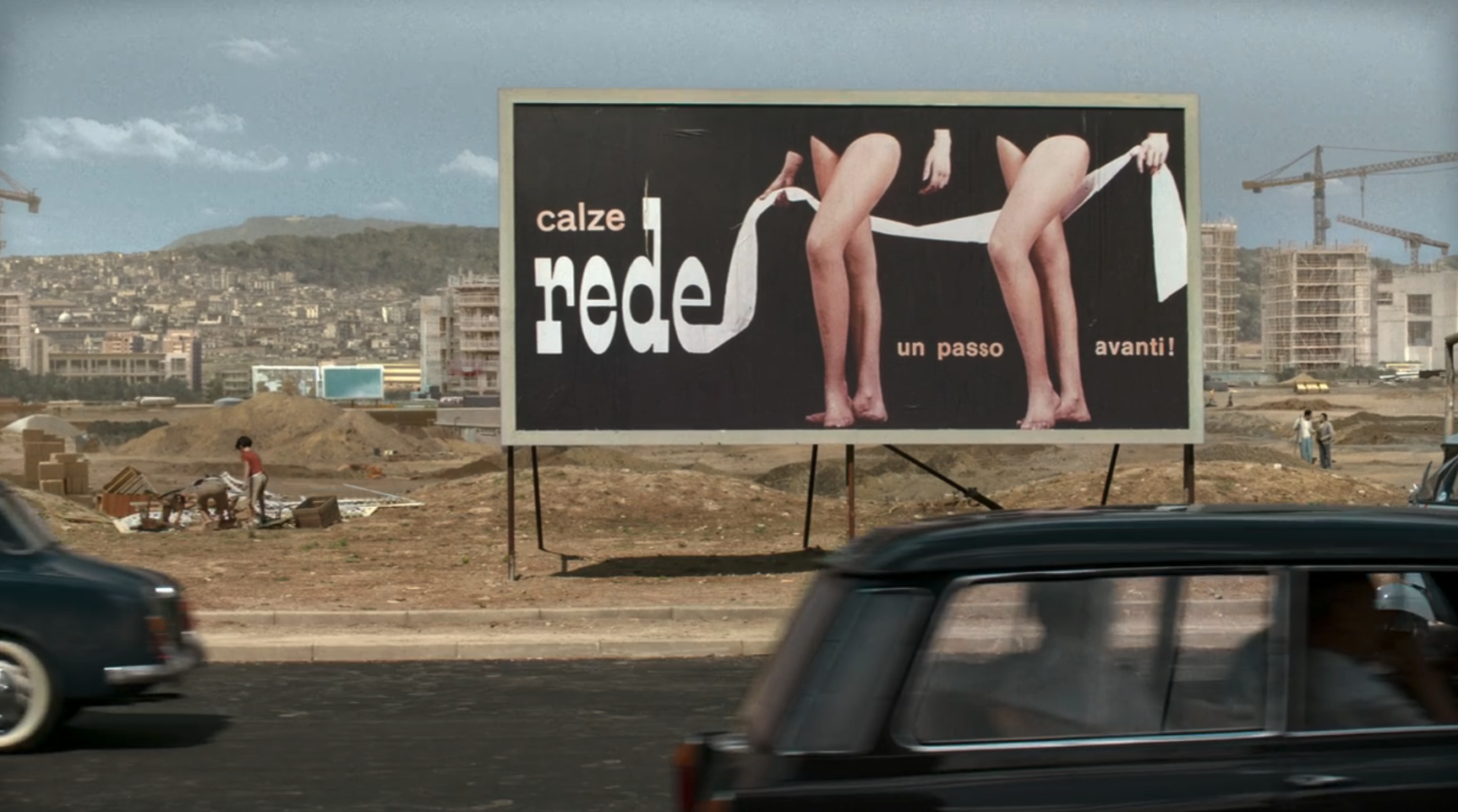
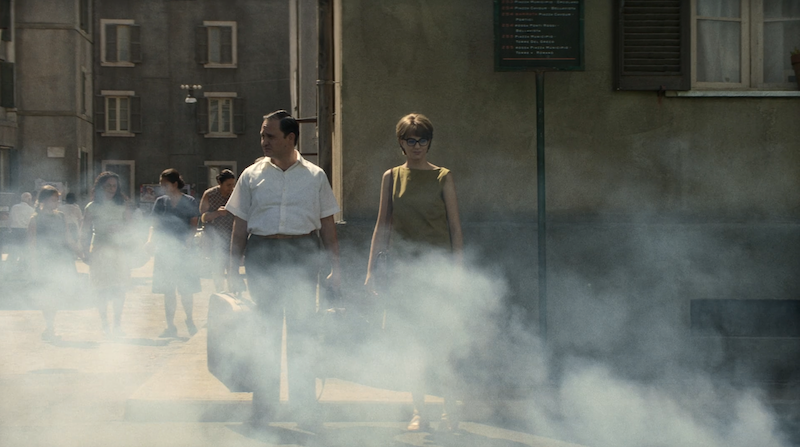
I wouldn't mind billboards if they were all designed as well as this.
In the novel, Elena "felt a desire to find [Lila] and measure the distance between us now," settling instead for secondhand speculation until two events push her to actually follow through. The first is Maestra Oliviero's (Dora Romano) death, which Elena learns about via letter, accompanied by a package of her elementary school ephemera. As she cries over the loss, ignoring her mother's chastisement of "she was old, don't be so dramatic," she lands on Lila's elementary school creation, "The Blue Fairy." At the time it was written, Oliviero refused to even read it, calling it a "waste of time" in lieu of the elementary school diploma, but as Elena flips through it, she sees the teacher's positive marginalia and is reminded for the umpteenth time of Lila's brilliance. She has the epiphany that "Lila's childish pages were the secret heart of my book," something I don't believe anyone else who has read the two would ever think, although she sees it as a sign that nothing good can happen in her life without Lila.
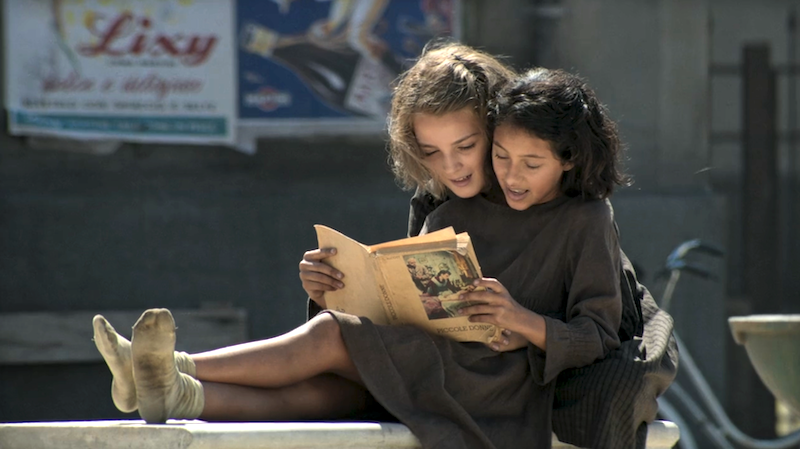
The second event also comes in the form of a letter, this time from Pietro, who informs Lenù that his mother's publishing house is interested in her novel. In a daze, she calls him from the Bar Solara as Gigliola (Rosaria Langellotto) eavesdrops. Elena asks Pietro for his opinion on the novel, and he diplomatically says, "It's good, but I'm not a literary critic." He does, however, advise her to remove "the racy bits," which she staunchly refuses. As Elena exits the shop and looks out at the square, she pictures herself and Lila as children, reading "Little Women" as the bittersweet piano score plays. It might be one of the saddest scenes in the series so far, underscoring the purity of their connection sans sinister external forces.
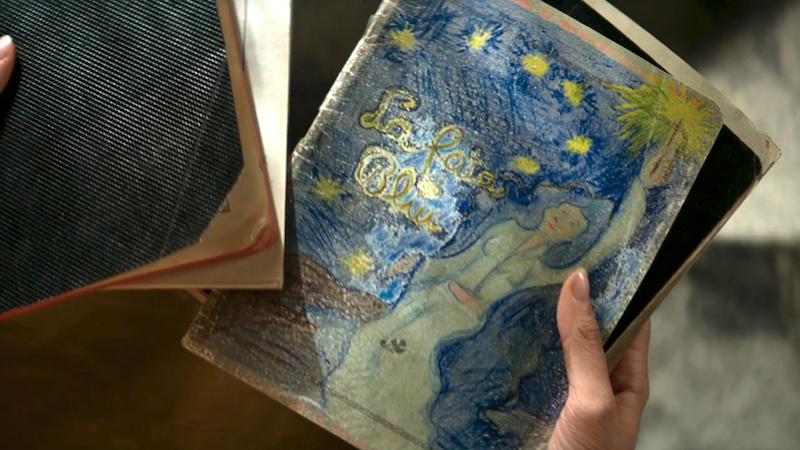
Someone translated a bit of "The Blue Fairy" in this Reddit thread and I'm intrigued.
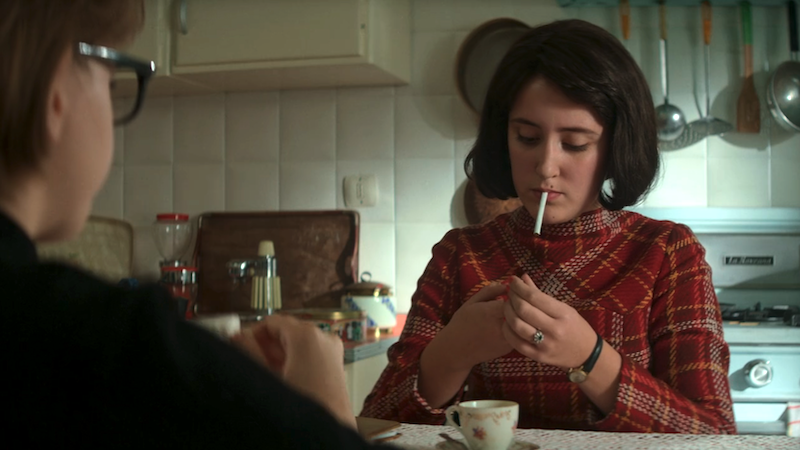
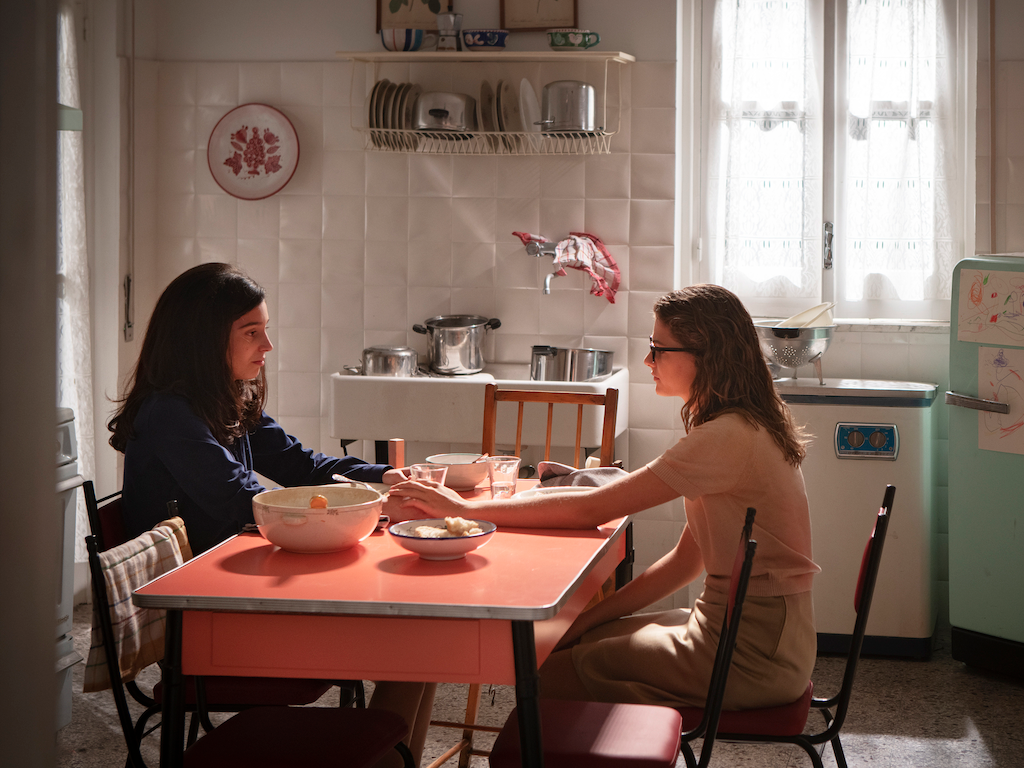
This memory leads Lenù back to Gigliola, who informs her that Ada is the one to consult for information on Lila's whereabouts. At the grocery, Lenù quickly discovers that Ada is now Lila 2.0: running the shop, caring for a baby she shares with Stefano, living at the apartment with the gold Carracci nameplate, even rocking a fuckass bob. As she fills Lenù in on everything she missed over coffee at the kitchen table, the scene transitions to an extended flashback, showing how Ada got to where she is. Her initial approach was aggressive, showing up unannounced at the apartment, threatening to kill Gennaro while manically cleaning and spouting off about the Sacra Rota. Before she even says anything, it's obvious that Stefano found out about this intrusion and beat her to a pulp. The second time she shows up to the apartment, her face is bruised, the tone is less hostile, and she tells Lila she's pregnant.
Because this section is from Ada's point of view, using her voiceover, we don't have insight into Lila's thought process. My guess is that she knew it was pointless to fight and that her best bet was to embrace the forced change dictated by Ada's pregnancy. Once Stefano is informed, she knows it's time to bounce, even if it means living in a San Giovanni shit hole and struggling as a single mom. It wouldn't have made sense to include it as a flashback, but I feel robbed of the scene from the book where Enzo insists on leaving their new address, stating, "We're not playing hide-and-seek." My friend Sonya wants to name her future dog Enzo in honor of literature's greatest short king. He's the only man in this series with integrity.
Elena's trip to San Giovanni is very Alice down the rabbit hole where each step of the journey is increasingly unsettling. After taking a bus full of gropers to an industrial, barren location, she walks past smokestacks and dirty-looking children to an apartment building where Lila is absent. Gennaro is there, being watched by a neighbor named Titina (Maria Rosaria Bozzon) who is nice enough, but certainly not giving him the high quality education that Lila was before her life was upended. Titina tells Lenù that Lila works for the Soccavos who "are not nice people. Father, grandfather, grandson... They're all scum."
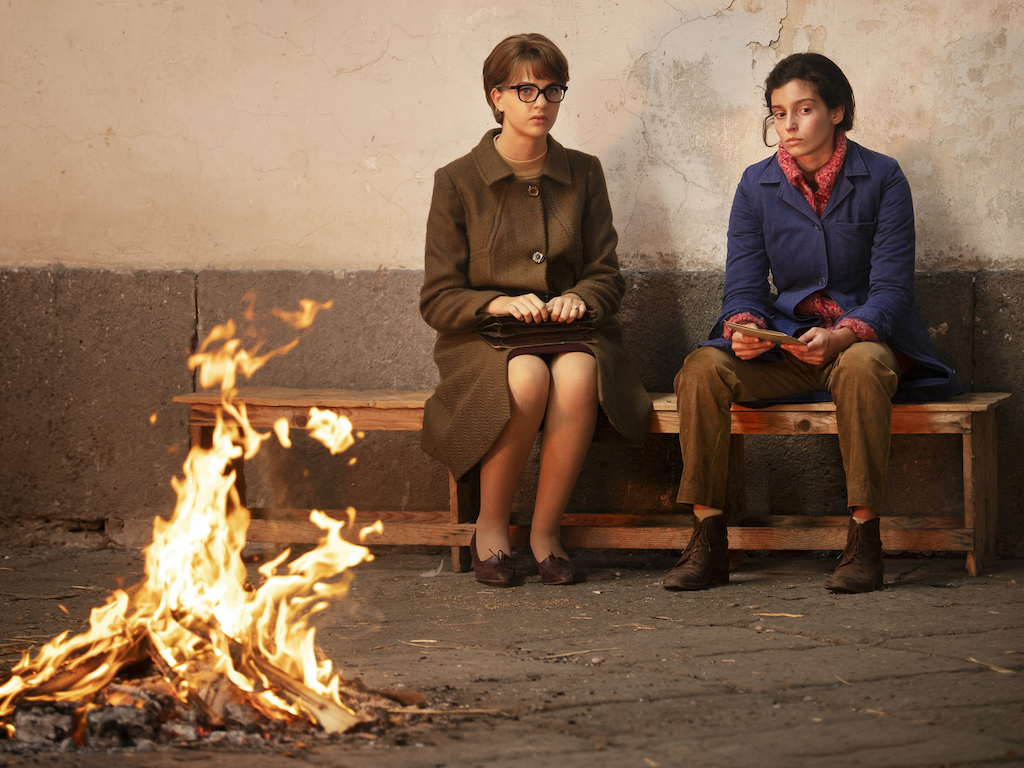
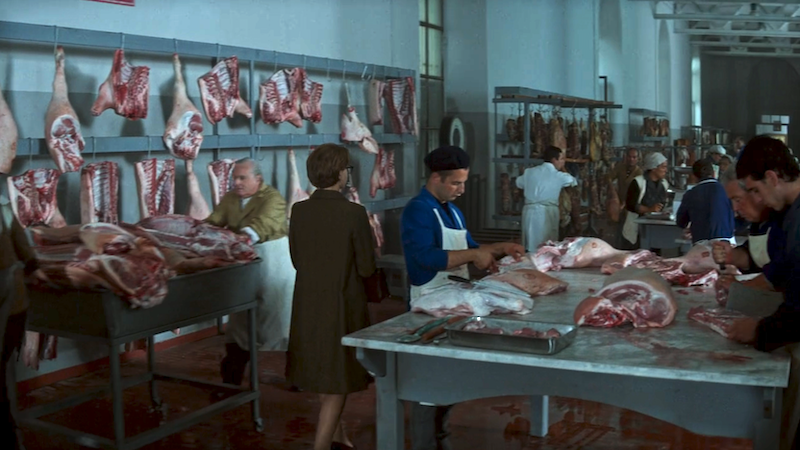
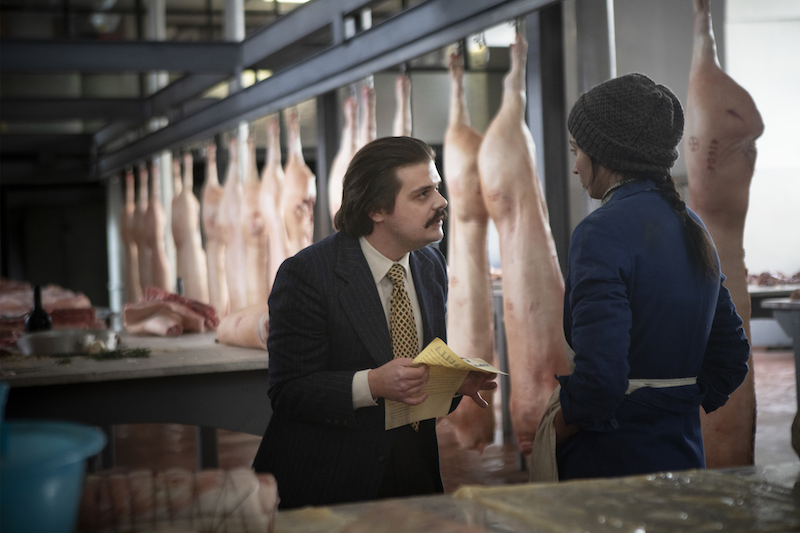
At the factory, Lenù is greeted by giant, ominous stone buildings, trucks full of pigs, and leering men. She invokes Bruno's name in a threatening manner that grants her access to the interior and searches for Lila amongst the hanging carcasses. When she spots her, looking feverish with red nose and cheeks, they share a look of uncertainty before approaching each other with pleasure. As they talk outside in the courtyard by a crackling fire, Lenù shares news of her novel, which is met with genuine happiness. In the book, there's potentially a later dig against it in response to Enzo's mathematics studies, although it's unclear if Lenù is being sensitive in her interpretation or if it's legitimate.
When Lila discusses Enzo, it's clear they're happy together even if all they're doing is studying. She's by no means thriving at the factory, and in the book it's more obvious how much trouble she's risking there by talking to Lenù, but the little joy she expresses doesn't feel forced. In Ferrante's text, Lenù reflects,
I understood that I had arrived there full of pride and realized that—in good faith, certainly, with affection—I had made that whole journey mainly to show her what she had lost and what I had won. But she had known from the moment I appeared, and now, risking tensions with her workmates, and fines, she was explaining to me that I had won nothing, that in the world there is nothing to win [...] and it was good just to see each other every so often to hear the mad sound of the brain of one echo in the mad sound of the brain of the other.
After Lenù leaves, she looks back to see Lila take "The Blue Fairy," which she claimed to not remember when it was presented to her, and throw it into the fire. Over the course of the series, Lila reinvents herself many times, destroying the old and embracing the new. The first episode/book begins with her disappearance, which includes the erasure of herself from all old photographs. When Lenù hears this, she thinks, "she wanted to vanish; she wanted every one of her cells to disappear, nothing of her ever to be found." The wedding photo — first sliced, then burned — was one iteration of this and the "The Blue Fairy" is another. In this version of herself, Lila does not wish to hang onto her "arrogant child" self or the idealistic person who believed she and Stefano were going to rise above the Solaras. Those selves are dead; she's moving on while Lenù is clinging to the past, desperate to "remain myself, chained to Lila, to the courtyard, to the lost dolls, to Don Achille, to everything. It was the only way to feel intensely what was happening to me."

The episode ends with Elena's first book reading, a humiliating experience since she's laid so much of herself bare on the page and now must defend it in a room full of fancy people (Lila would never). When Nino stands up to defend her against a contentious man who's sick of stories about "wretched women," she smiles wide, taking great pleasure in his praise as the staccato string score plays. It's a gleeful moment of being seen by another person but... does he see her, or is he just another man performing intellectual dominance in a room, this time in her favor instead of against her? As S3 and S4 will demonstrate, it takes Elena far too long to learn the distinction.
Random observations:
- In the novel, Pietro's family is from Genoa; in the show, they switch this location to Turin. An Oberlin professor named Stiliana Milkova is not a fan of this decision because "to make Turin the home of Elena’s future husband’s family, the seat of their intellectual power, undoes the emancipatory energy the city has in Ferrante’s novels." I don't remember how the show handles this location switch in later seasons, so this is me reminding myself to pay attention.
- In the book, Pietro and Elena both exchange things they've written as graduation gifts: he gives her his thesis on Bacchic rites (along with an engagement ring), and she gives him the only copy of her novel. Franco Mari would not approve of this narcissistic exchange.
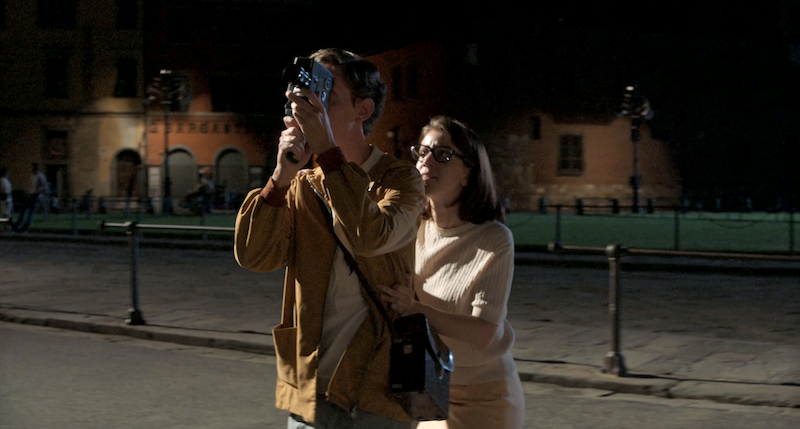
- My favorite extras in this episode are the couple in Piazza dei Miracoli, shooting with an 8mm camera. She guides him along as he looks through the viewfinder, and while they only appear for a few seconds, I want to know more about them.
- Imagine how much happier Elena would be if she dumped Pietro for Mariarosa. If I were writing sapphic fan fiction about this series, those two would end up together.
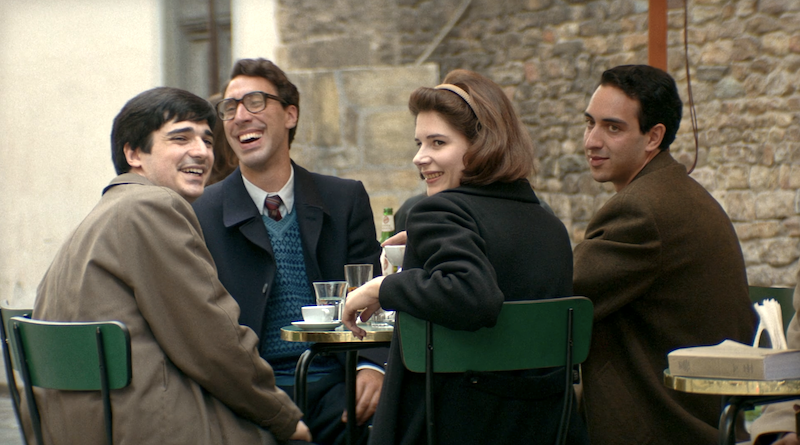
- The students who mock Elena at the beginning of the episode are ripped straight from "The Secret History."
Member comments