
Quick summary:
After Lila's pregnancy announcement, her détente with Elena persists throughout the school year. She throws herself into work at the grocery and designs a controversial avant garde art piece for the shoe store, doing whatever it takes to distract herself from the fact that her cushy life is entirely supported by blood money. Her relationship with Elena is closer than it has been in a long time, and there's even a point where she admits, then immediately couches, that she designed the first batch of Cerullo shoes at age twelve in order to impress her friend. Per their academic agreement, Elena passes the school year with high marks and is rewarded with an invitation to a party at Professor Galiani's house. Stupidly, she brings Lila with her and by the end of the night, they're back on the outs.
Corresponding book chapters:
"Erasure" covers Chapters 24 through the first paragraph of Chapter 38, taking us almost entirely through Lila and Elena's 17th year. When Chapter 24 starts, Elena is still babysitting at the Sea Garden. By the end of Chapter 37, she has completed her penultimate year of high school and will soon turn 18.
Notable choice (complimentary):
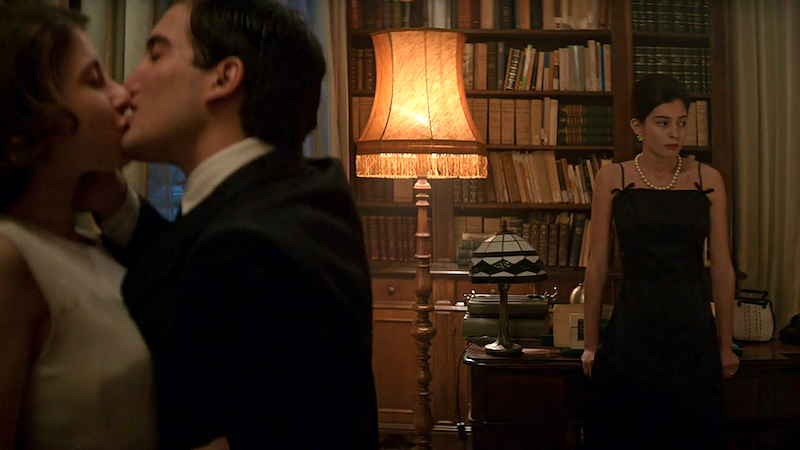
We lose the book context from Lila's journals that detail the night of the party, but any astute observer doesn't need them to understand her emotional state. From the second Armando (Giovanni Cannata) opens the door, heaping praise on Elena without even asking who Lila is, we know where the night is headed and how small even the most confident person might feel. When he compliments Elena's essays, there's a subtle change in Lila's facial expression from neutral to surprised jealousy or maybe crestfallen insecurity. Gaia Girace's eyes and mouth are downturned and there's noticeable tension in her jaw. Even the lighting shifts slightly between the shots, from equally favoring both girls' faces to slightly favoring Elena. Whatever Lila was expecting from the party, she now knows she's in for a different kind of experience.
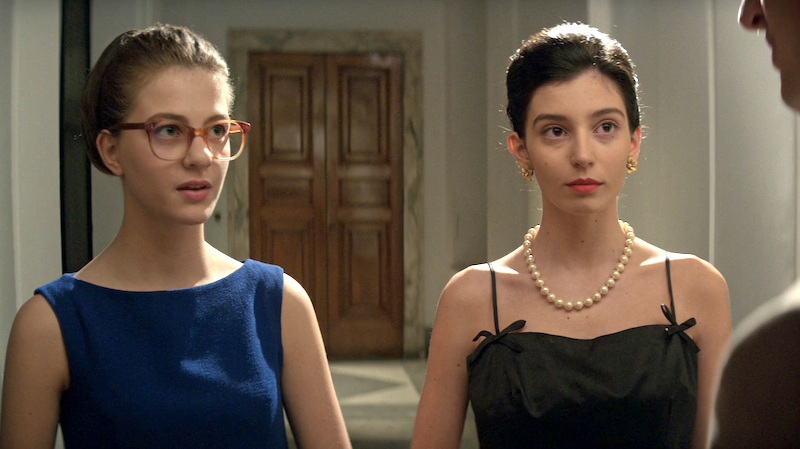
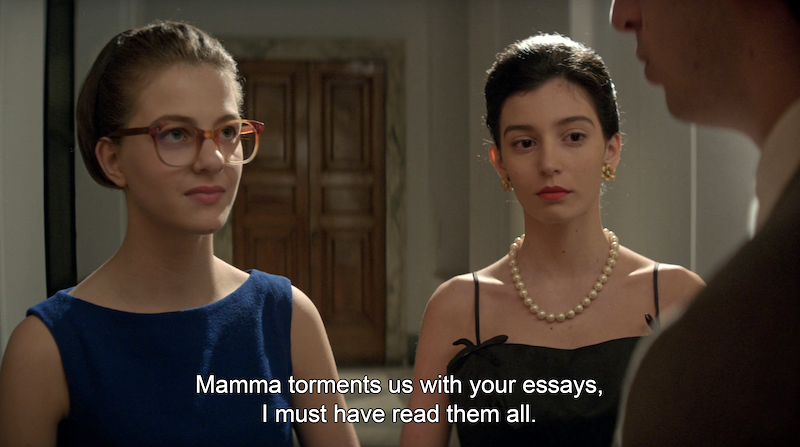
Lila's faces in this scene are straight out of Paul Ekman and Dacher Keltner's Emotional Intelligence Quiz.
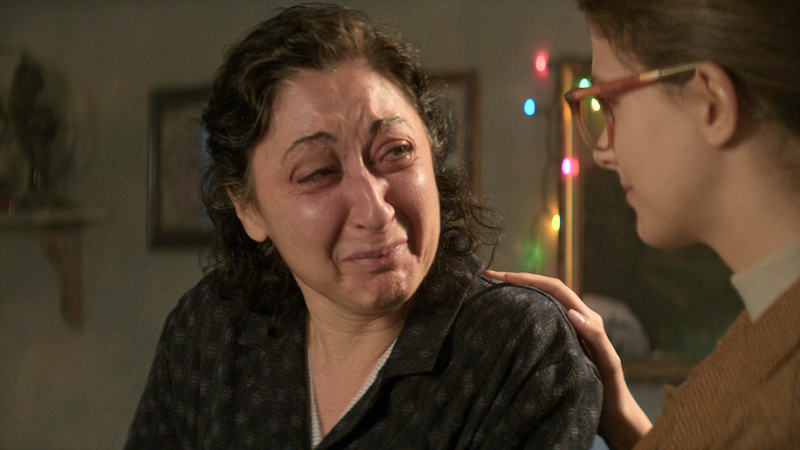
Another excellent performance comes from Anna Rita Vitolo, who plays Elena's mother, Immacolata. There's a scene where Elena brings home the school books from Lila and Immacolata starts sobbing. No explanation is given, although book Elena speculates,
It's difficult to say what had moved her: maybe her sense of impotence in the face of our poverty, maybe the generosity of the grocer's wife, I don't know. She calmed down quickly, muttered something incomprehensible, and became engrossed in her duties.
In the show, Immacolata opens a hefty book, sniffs, and says, "They smell nice." Then, as she looks down and softly begins to sob, "They're brand-new." Looking up at Elena, face scrunched, backlit by the soft glow of Christmas string lights, she repeats, "They're new." With minimal dialogue and carefully orchestrated body language, Imma morphs from a tough authoritarian figure into someone who has been necessarily hardened by poverty. In this display of uncontrolled vulnerability, we see how much she represses just to make it through each day.
Notable choice (derogatory):
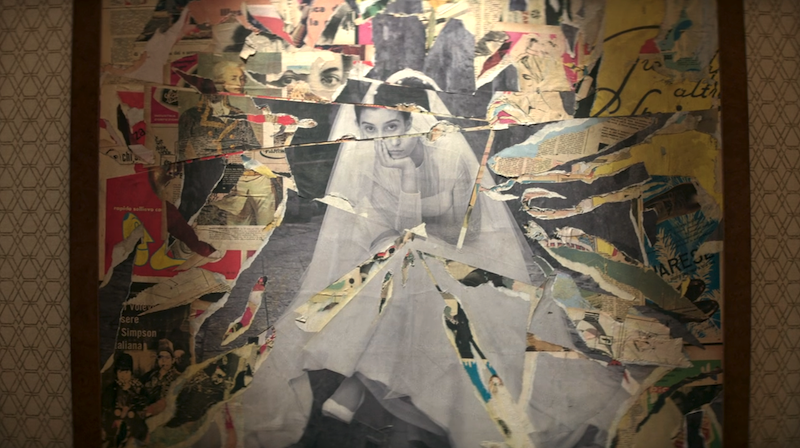
Some things are better left to the imagination, like Lila's photo collage that has everyone in a tizzy. Ferrante's description of it is purposefully vague:
The body of the bride Lila appeared cruelly shredded. Much of the head had disappeared, as had the stomach. There remained an eye, the hand on which the chin rested, the brilliant stain of the mouth, the diagonal stripe of the bust, the line of the crossed legs, the shoes.
It's a lose-lose situation because no matter whether the photo is shown or obscured, it's dissatisfying for the viewer. When I saw it for the first time, my response was basically a shrug, especially after all the build up as the other characters observed and discussed its merits. It's also not a particularly good advertisement for the shoes, so I'm not sure what Michele was smoking when he said, "You can see the shoes well, they stand out." My final nitpick is that, for an episode called "Erasure" partially c/o this collage, it still prominently features a very recognizable Lila. Nothing about it feels especially violent or like a physical manifestation of dissolving margins. If I saw this and read an artist's statement about pushing back against the patriarchal nature of marriage, I wouldn't be convinced.
Thoughts:
When "Erasure" begins, Lila's moving through early pregnancy the best way she knows how: by keeping busy enough to forget that her body has once again been infiltrated by a foreign assailant. Each time Elena visits her at the grocery store, there's some new drama underway. Initially, Lila's preoccupied by construction and spends much of her days ordering the workers around so everything is configured to her exacting specifications. She pushes back against her predicament/Stefano by throwing herself into manual labor and financially assisting those who need it, including the Pelusos and Cappuccios. The business of her wedding photo remains unsettled and she tells Lenù that if the vultures want to hang her on the wall of the shoe store, they'll have to kill her first.
Eventually, she concocts a satisfying solution to rescue her image from those hellbent on possessing it. As Elena describes it, "She had something in mind to divert her from her constant turmoil. A violent, definitive outburst to free her mind and body of pent-up energy." Equipped with scissors, glue, and a ruler, Lila enlists Elena to assist as she slices up her naive, hopeful past self and assembles an alternative version from the fragments.
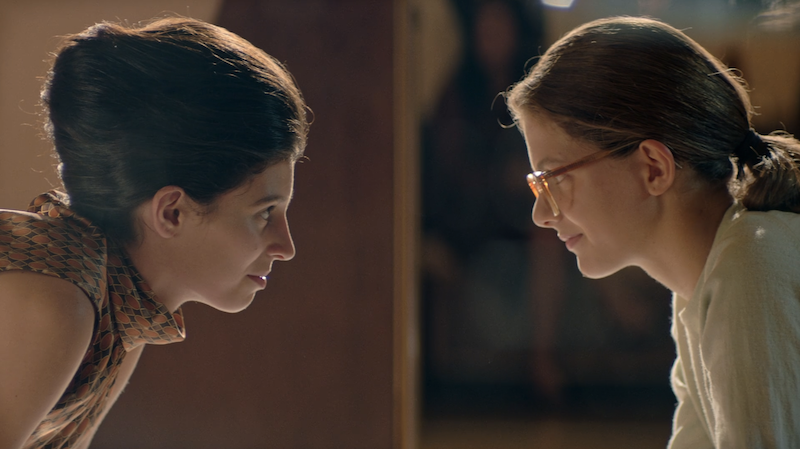
Leading up to, during, and after the big reveal of her collage, director Saverio Costanzo makes great use of careful observation shots, employing camera angles to highlight the power dynamics between everyone associated with the store. When Lila and Lenù kneel on the floor to begin work on the photo, the camera is at their matched eye level. Lila is in charge of the artistic direction, but she and Lenù have reached some kind of equilibrium in their friendship where they're enjoying the time spent together so much that petty slights and insecurities have temporarily faded. In the novel, Elena's more forthcoming, calling this time with Lila, "magnificent hours of play, of invention, of freedom, such as we hadn't experienced together since childhood."
As everyone else — Michele, Gigliola, Rino, Pinuccia, Marcello, and Stefano — observes, they're shot from a low, looming angle with arms crossed in judgment. Even though they collectively have the power of rejection, the outcome hinges on Michele's reaction. He's the person everyone exchanges glances with, the one who appears in the most shots and can barely divert his glance from Lila.
Based on history, you might expect Marcello, Lila's former suitor, to either hold a grudge against her or continue championing her in a bid to win her back, but he seems detached from everything that's happening. When the photo is complete and Gigliola and Pina begin hurling insults, book Elena hopes for a word of support from Marcello that never comes, realizing "his residual feelings for Lila were vanishing at that moment." There's even a point where Michele, who has already praised the photo, snaps at Marcello for suggesting there's any question over its inclusion in the store. Once his seal of approval has been stamped, everyone else must toe the line or suffer his wrath, especially brothers and fiancées.
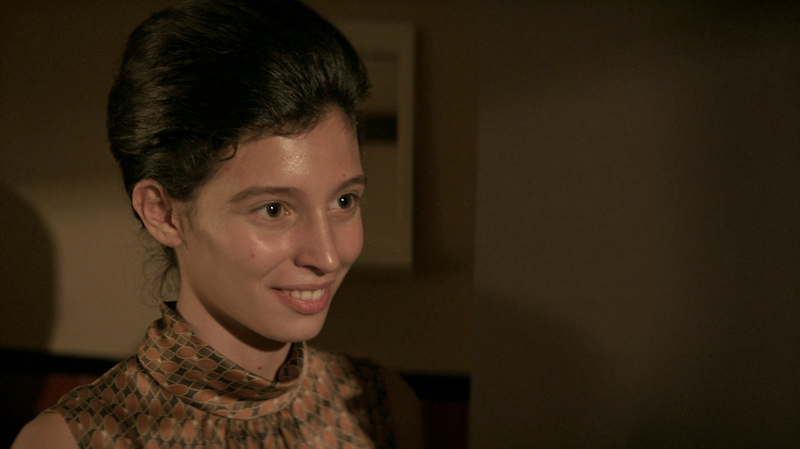
It's fitting that after this flurry of creativity and reclaimed identity, Lila has a miscarriage. As she shows Elena her bloody hand, asking if this means the baby is dead, there's a brief glimmer of joy before the darkness encroaches. If not now, motherhood will inevitably find her and in the meantime, there's plenty of other bullshit to deal with that makes happiness elusive.
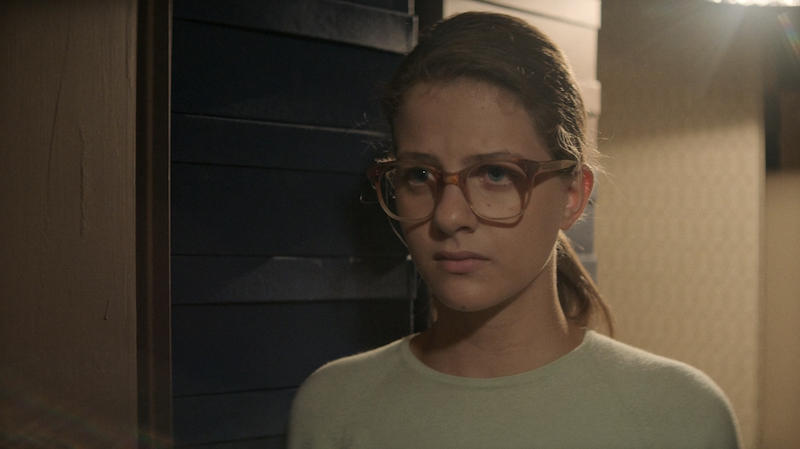
Two very different reactions to pregnancy loss.
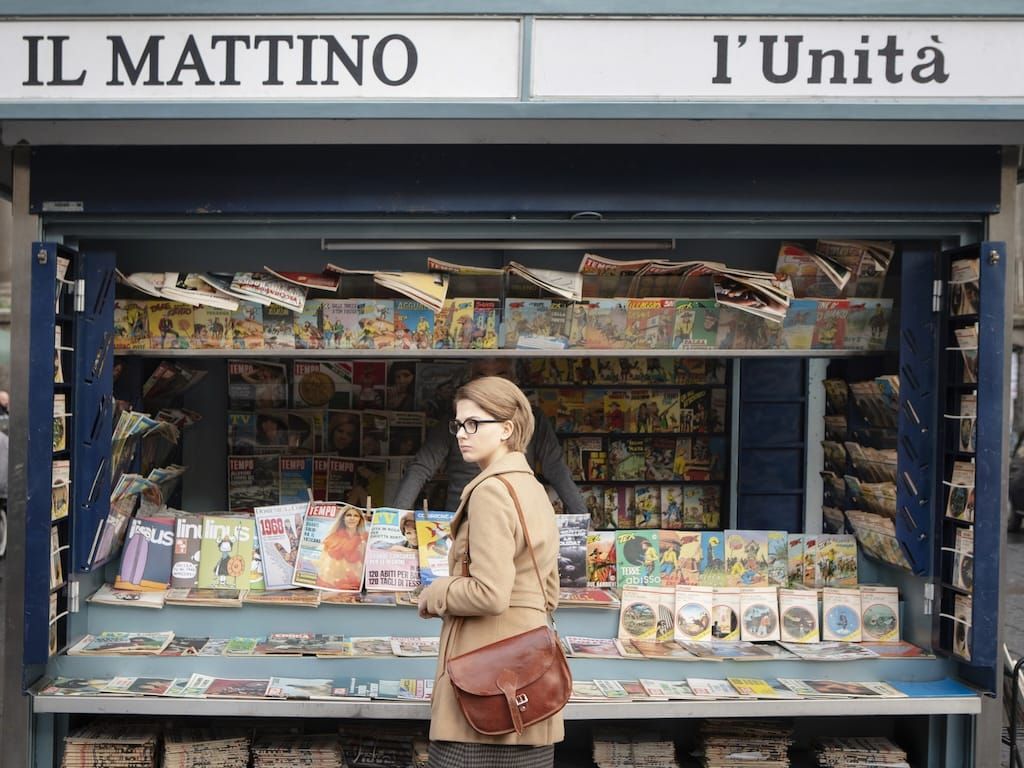
While Elena forces herself to read the newspaper in a bid to impress Professor Galiani with her knowledge of the world, Lila gets a firsthand look at the corruption and propaganda that makes it tick. The articles praising the shoe store that Elena saw in the paper and found so impressive? Paid for by Michele using his family's dirty money. (Hilariously, Donato Sarratore is the only person with enough integrity to smack talk Lila's creation in print.) Lila can't even enjoy the fruits of her own labor because it, too, has direct ties to the Solaras. She's trapped like a rat in a maze of neighborhood corruption and her only way to fight back is by covertly redistributing wealth. If her financial support helps Lenù succeed, that's as close as she'll get. She can push back against the system from within it, but there is no escape.
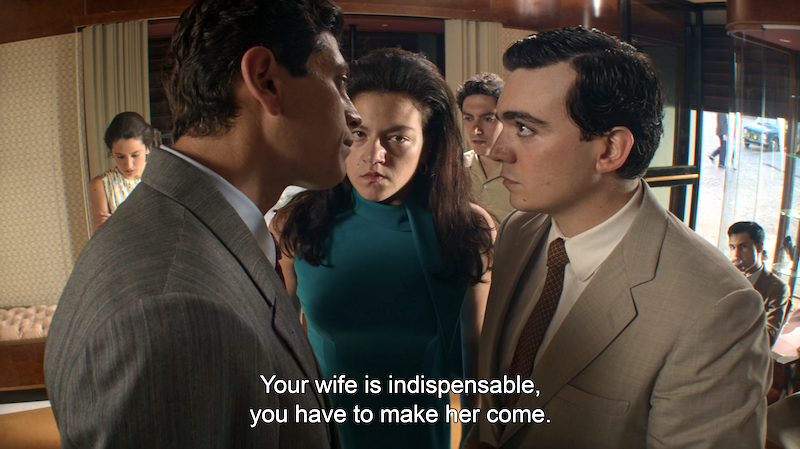
The men in the neighborhood are forced to extend a modicum of respect to Lila that's contingent on her ability to make them money. The women, who also benefit from her skills, see her as major competition for the small crumbs of influence available to them, so they treat her less generously. When the shoe store photo goes up in flames during a fight about Lila, Pina and Gigliola are quick to shout witchcraft, to blame her even though she's not there. She sets fires and kills babies using only her mind — watch out! The fisheye lens in this scene distorts everyone, giving them even more or less visual prominence than camera angle alone, and allowing them all to simultaneously fit into the frame.
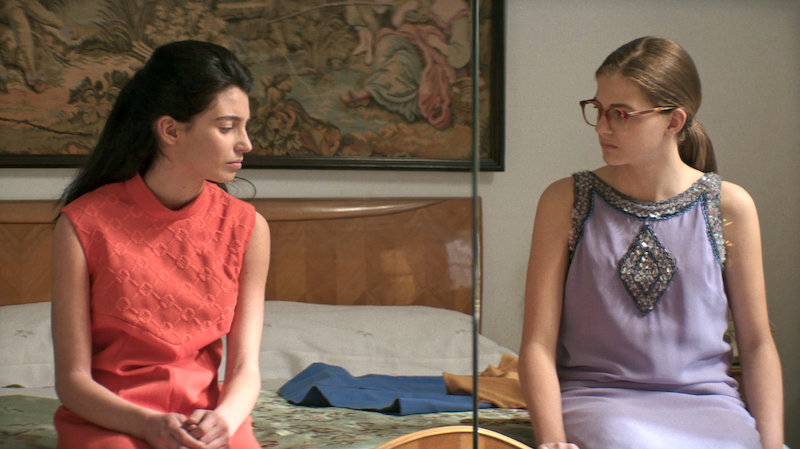
Lila, for the most part, laughs at their accusations, but balks at Michele's demand that she create new designs for the shoes, admitting to Elena she already tried and failed. During this exchange, the girls are in Lila's bedroom, looking at themselves in the mirrored closet door while trying on clothes. For the first time, Lila cops to her role in the competitive nature of their friendship, explaining she designed the original shoes, "to show [Elena] that, although I didn't go to school, I could do something." In the novel, this surprises Elena, who had assumed Lila shared her "stubborn diligence" but now understands her flashes of greatness aren't replicable unless precipitated by "the chaos of an occasion." This knowledge makes her temporarily soften toward Lila, who instantly darkens the mood by declaring, "I always have to prove that I can be better."
The show gives no information about how Elena processes Lila's comments. As Lila talks, the camera tracks in on her, moving Elena out of frame. Onscreen, the scene is more about Lila's understanding of herself and the way her desire to best everyone makes her unreliable. It's a bad omen that perfectly frames her behavior the night of Galiani's party. Giving her the benefit of the doubt, there's a chance she offers to accompany Lenù because she sees how nervous she is and wants to help; however, it's equally likely she views the party as a barometer for how they measure up against each other.
As they arrive at the party, Lenù's voiceover outlines her fear that Lila will either say something embarrassing or dazzle everyone with her brilliance. We're not privy to Lila's innermost workings, although I'd guess that what ends up happening is her fear manifest. By the end of the night, she receives blatant confirmation that within academic circles, she's nobody special. Her young marriage is a red flag; she doesn't know enough to participate in discussions about world events; and even her beauty is unremarkable compared to girls like Nadia, Professor Galiani's daughter, who Lenù describes as "the refined, luminous girl, who had compelled me to comprehend my dullness."
Lila's isolation is highlighted throughout: in a close-up of her wedding band during her introduction to Galiani, as she lags behind while Lenù confidently strides amongst the crowd. Aside from Nino, who tries to make conversation with her to Lenù's chagrin, everyone ignores her. Lenù's halfhearted attempts to include her don't pan out due to her own social deficiencies, so she spends the night silently observing, judging, letting her own insecurities roll around in her head until they exit as cruel defense mechanisms on the car ride home.
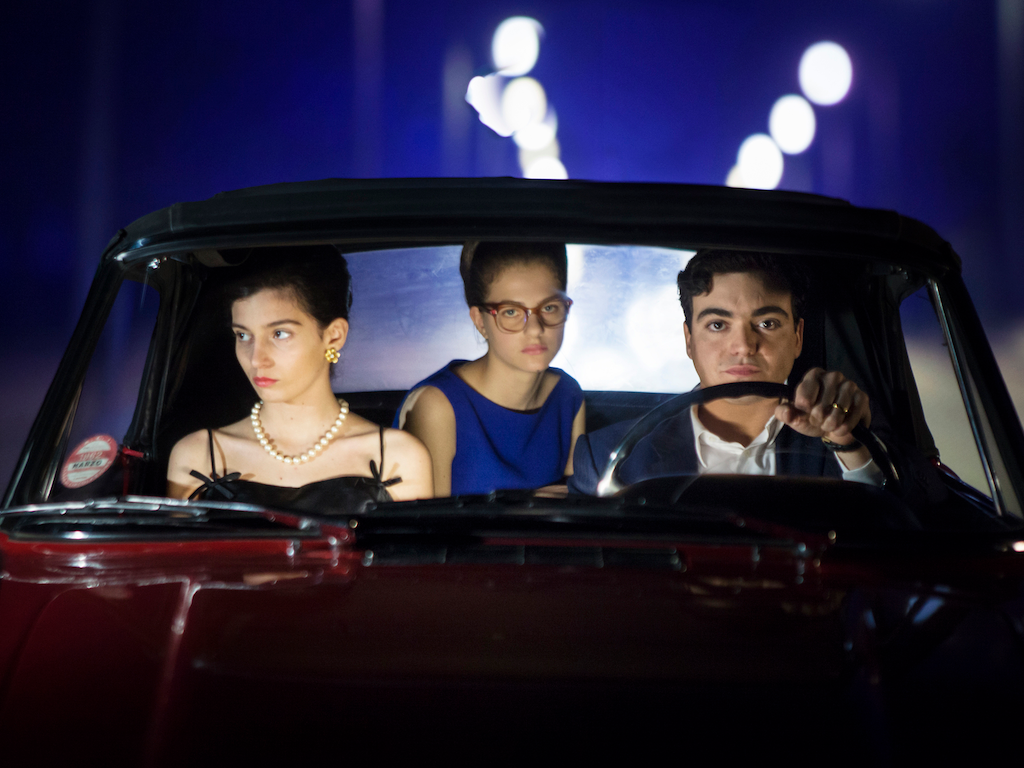
As Lila berates everyone from the passenger seat of the convertible, Lenù sits silently in the backseat, awkwardly hunched over, looking hurt and angry. Stefano is occasionally visible but most shots either feature both girls or just one in close-up. As Lila rails against the wealthy, privileged people at the party and the sad, pathetic strivers like Lenù and Nino, the lighting on her face grows harsher, making her look cartoonishly evil. As the score kicks in and she smiles lovingly at Stefano, nothing more than a pawn in her attempt to gut Elena, the car finally comes to a stop. Even after Elena has exited the vehicle, shrugging off Stefano's apology on his wife's behalf, Lila's taunts continue.
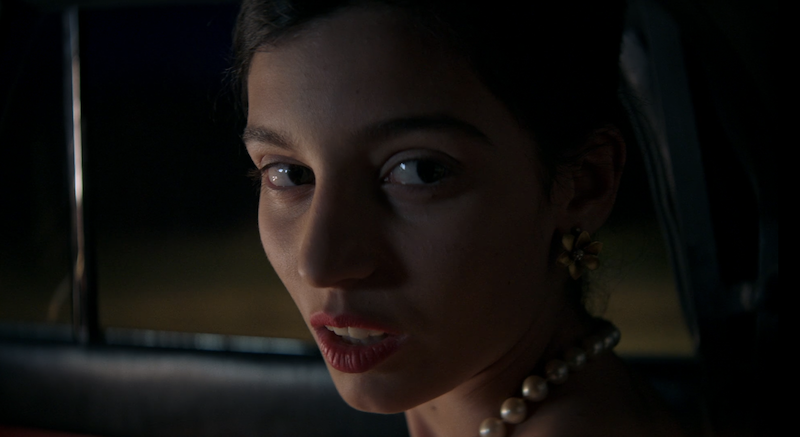
It's a masterful, ugly scene, made all the more powerful because nothing Lila says is entirely untrue. Are Elena's much-praised comments at the party actually meaningful? No, but she deserves credit for inserting herself into the intellectual bro-douche nonsense circle jerk. As much as I might roll my eyes at a youthful debate on the efficacy of nonviolent protest to enact change, it's crucial for wannabe intellectuals to express and challenge ideas. Maybe Elena is acting like a parrot, repeating opinions she doesn't necessarily believe in to curry favor with influential people, but so what? Getting ahead in the world involves some degree of pandering, and is it so wrong to have ambition?
Of course, Lila's vitriol comes from a place of shame. In the novel, older narrator Lenù reflects, "It never occurred to me, as, in fact, it had on other occasions, that she had felt the need to humiliate me in order to better endure her own humiliation." In the present, Lenù doesn't have any of that insight, simply viewing Lila's actions as unjustifiably cruel and creating necessary distance between them by avoiding the neighborhood.
The episode ends with Lenù taking a neighborhood walk with Nino after running into him and Nadia in Port'Alba. He shows up spontaneously with the obvious ulterior motive of forcing Lenù (and hopefully also Lila) to read something he's written for a publication called Cronache Del Sud. In the book, sweet summer child Lenù doesn't even realize this is why he's there. She initially thinks he just wants to share an intellectual publication with her and when she realizes he's actually written something for it, she's moved to tears. Oh, to be young and really fucking horny and dumb...
I read, I didn't understand much, I reread. The article talked about Planning with a capital "P," Plan with a capital "P," and it was written in a complicated style. But it was a piece of his intelligence, a piece of his person, that, without boasting, quietly, he had given to me. To me.
It's fitting that Melina's cries of "Donato" are what drive Nino away from the neighborhood. As Lila says after reading Sarratore Sr.'s article on the shoe store, "Like father, like son." Nino might hate his father and vow to become nothing like him but they share DNA along with a pathological disdain for self-reflection, so it's only a matter of time. In the following episode, "The Kiss," Nino, Elena, and Lila all end up on Ischia, so you can imagine the mind games about to unfold.
Random observations:
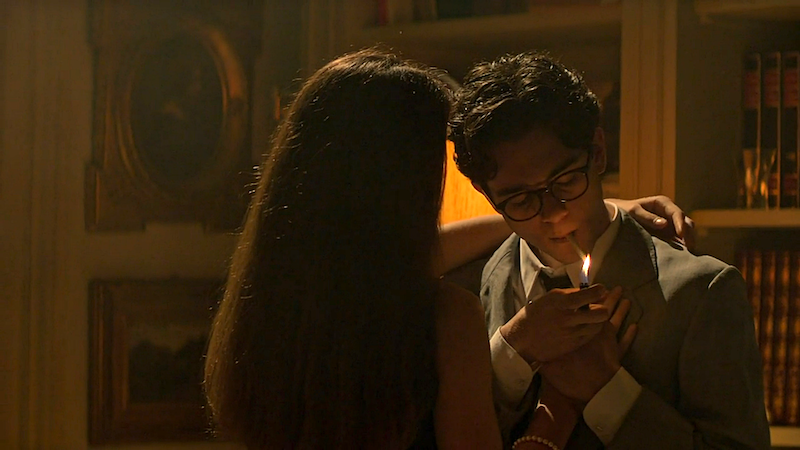
- Lila's wardrobe and styling are more mature this episode with lots of skirt suits, high necklines, and pinned back hair. While this doesn't match the book, she wears pearls to Galiani's party, ffs. Is this her version of the businesswoman's special?
- I love that Pina uses her pregnancy to emasculate Stefano. Everything she says is gender stereotyped nonsense that ultimately leads to violence against Lila, but at least it makes Stefano feel like shit.
- "I like talking to you," Nino tells Elena after doing 95% of the talking.
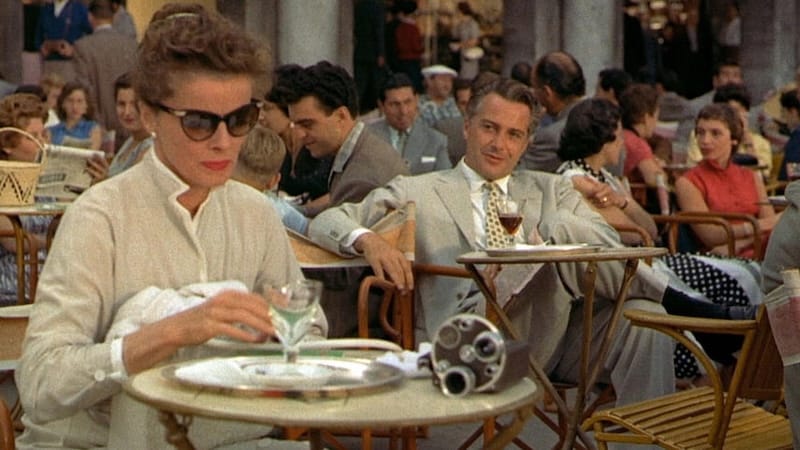
- For posterity, here's Rossano Brazzi admiring Katharine Hepburn in "Summertime" (Lean, 1955), the film that made him internationally famous.
- Secret smoker Gigliola remains one of my favorite side characters until the very end. (Be forewarned: the show does her dirty, though).
- I don't think Ludovico Ariosto's "Orlando Furioso" (1516), which we see Galiani's class reading in "Erasure," is explicitly mentioned in the Neapolitan novels, but Ferrante discusses it in "In the Margins" (2021). Elena also reads Dostoevsky's "Humiliated and Insulted" (1861). While Ferrante has written about Dostoevsky's influence on her, I can't find anything about this book specifically.
- It makes me happy to see little details taken from the text — like the Carracci brass nameplate, the stone lions near the shoe store, and Lila's stormy sea painting — and incorporated into the production design.
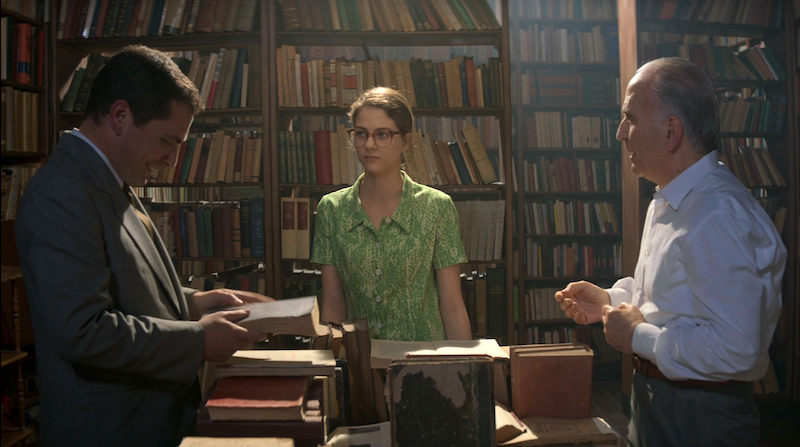
- You can tell these two Porta'Alba bookstore proprietors suck based on how they treat Elena during this brief interaction.
Member comments