
Quick summary:
The post-honeymoon goodwill between Lenù and Lila rapidly dissipates as both girls betray each other in different ways. Lila uses Lenù, and the pretense of Antonio's impending military service, as an excuse to play mind games at the Bar Solara. As a result, Antonio breaks up with Lenù, which she's upset about even though he's repulsed her from the jump. In turn, Lenù accompanies Stefano to the dressmaker's to retrieve Lila's wedding photo and never mentions the trip to her friend. From that point on, Lenù begins defending Stefano to Lila in the vein of "he wouldn't hit you so much if you just fucked him." The girls keep one-upping each other in the game of who can treat who the shittiest without openly declaring war until Lila's news calls for a détente.
Corresponding book chapters:
"The Body" spans Chapters 15-23 with close accuracy, although there are subtle dynamics at play that are easy to miss if you haven't read the book.
Notable choice (complimentary):
The neighborhood really comes alive onscreen, and I love all the shots of people going about their business in this episode. Elena Ferrante isn't a visually descriptive writer, so a great deal is left to the imagination while reading. Even in the passage where she focuses on the women of the neighborhood, she's not particularly evocative:
They were nervous, they were acquiescent. They were silent, with tight lips and stooping shoulders, or they yelled terrible insults at the children who harassed them. Extremely thin, with hollow eyes and cheeks, or with broad behinds, swollen ankles, heavy chests, they lugged shopping bags and small children who clung to their skirts and wanted to be picked up. And, good God, they were ten, at most twenty years older than me.
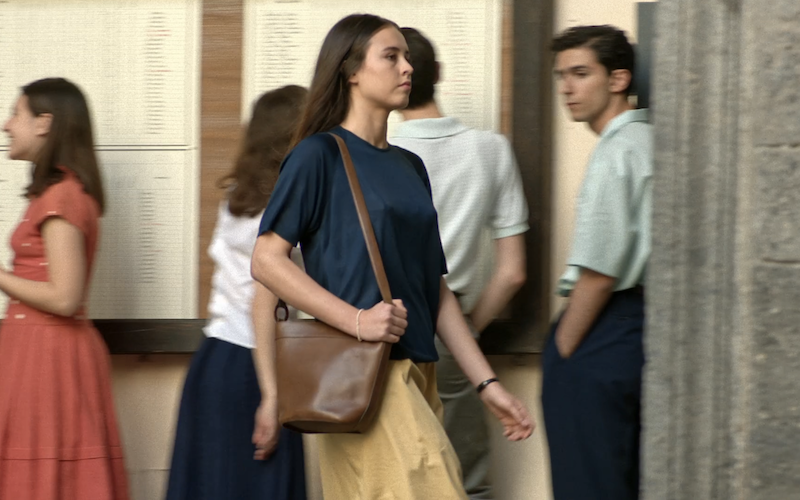
In the show, we experience this scene as Elena does with cuts from her disturbed face to isolated shots of routine happenings: women chasing after kids, consoling them, disciplining one while juggling another. Even small girls are tasked with childcare responsibilities for their younger siblings; if those don't exist, they're playing with dolls. Girls are raised to become caretakers who inevitably burn out due to lack of money and help. Men are visible in these scenes, but they exist in their own (childless) worlds peripheral and superior to the women.
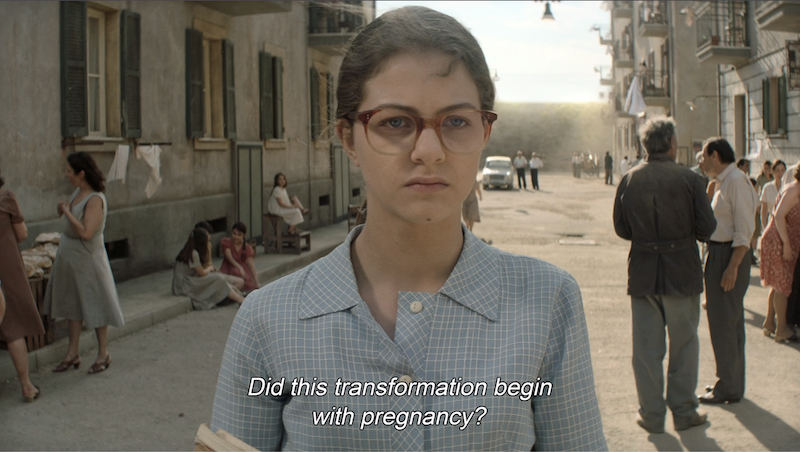
Elena, too, is separate from them. She stands in the center of the street, watching from a distance with an armful of books. As her voiceover and the score kick in, the camera cranes upward. At first, she's alone in the shot, surrounded by the dusty street as the hem of her dress flaps in the wind. After a cut, the camera is further away and she's directly in the middle of the neighborhood chaos. Will she succumb to this life, letting it swallow her whole, or will she seize the opportunities her luck and intelligence have afforded her? In one scene, Saverio Costanzo distills several of Ferrante's themes and enhances them with filmmaking techniques.
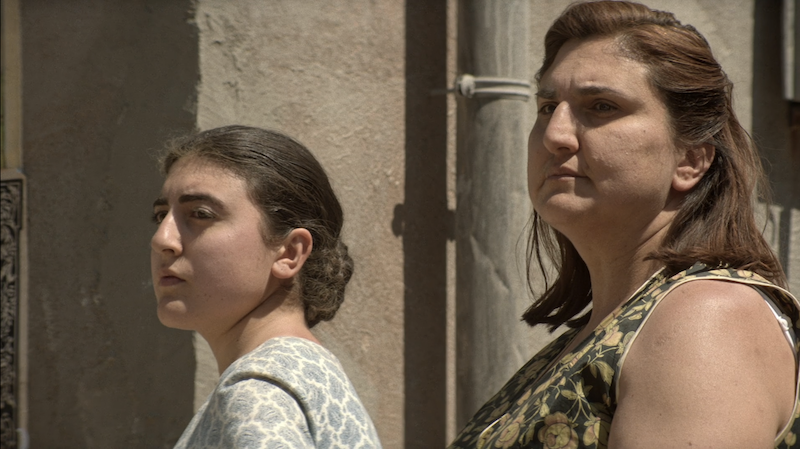
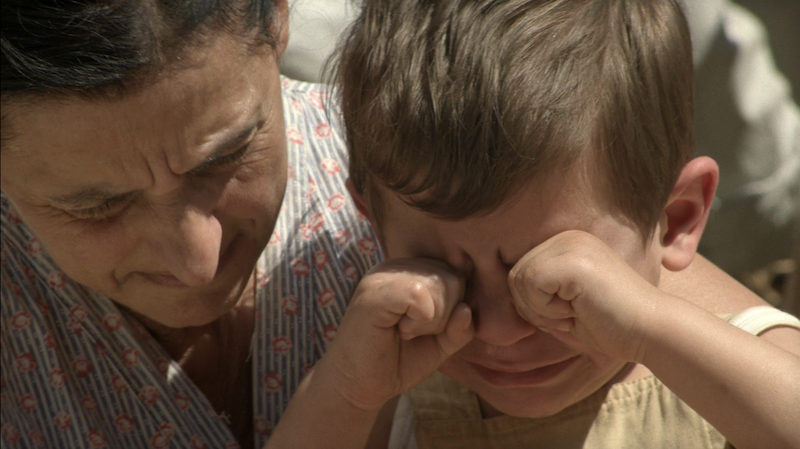
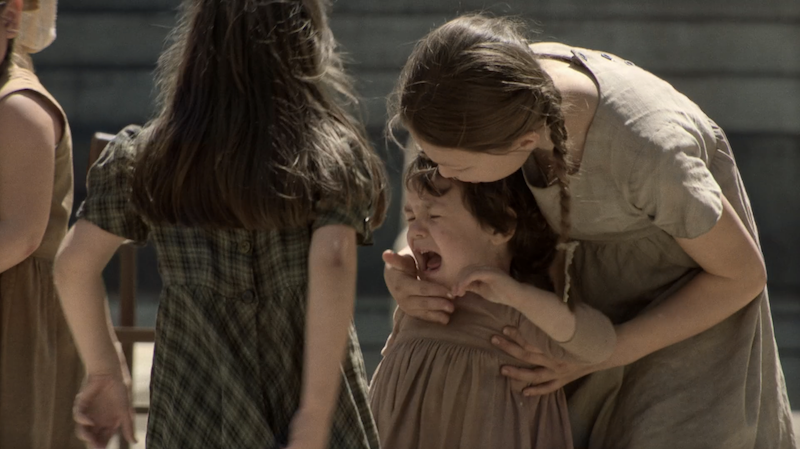
I make the same face as Elena during 95% of my visits to friends with toddlers.
Notable choice (derogatory):
The only minor gripe I have is missing context when Lila brings up Melina and Signora Peluso during a tense conversation with Elena. In the show, it's difficult to know how to interpret the exchange:
Elena: You're married, everyone's waiting for you to have a baby.
Lila: Did you know that Melina hardly eats anything? Did you know Giuseppina Peluso has palpitations and can't sleep? When she visits her husband in jail, on the way back she cries unconsolably. The very idea of getting pregnant disgusts me!
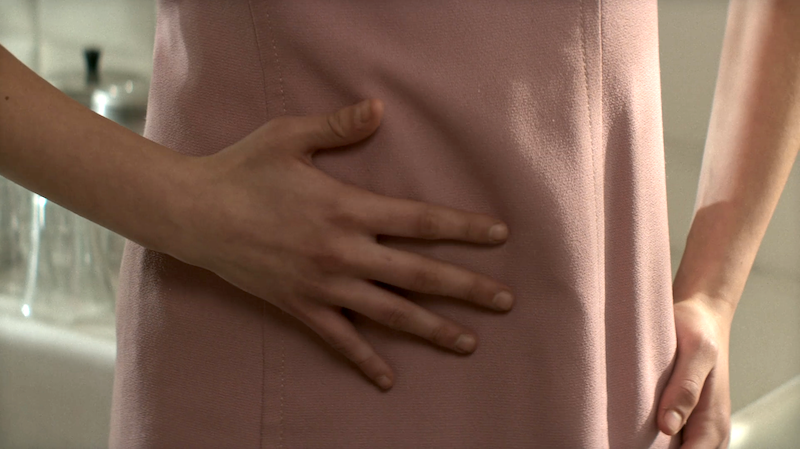
What do Melina and Giuseppina have to do with anything? Is Lila trying to make Elena feel bad about being disconnected from the neighborhood or is something deeper at play? It's an emotional scene that features a close-up of Lila's hands caressing her hips before resting on her stomach. The idea of pregnancy, which even her best friend who knows about Stefano's abuse enthusiastically supports, has thrown her for a loop. In the novel, Elena muses,
I noticed that, more than usual, she had an involved way of talking. She chose emotionally charged words, she described Melina Cappuccio and Giuseppina Peluso as if their bodies had seized hers, imposing on it the same contracted or inflated forms, the same bad feelings. As she spoke, she touched her face, her breast, her stomach, her hips as if they were no longer hers, and showed that she knew everything about those women, down to the tiniest details, in order to prove that no one told me anything but told her everything, or, worse, in order to make me feel that I was wrapped in a fog, unable to see the suffering of the people around me.
Whether or not Elena's speculation is accurate doesn't matter; it’s helpful to have any insight into what makes Lila mention these women. Later in the episode, there's a stated fear of being unable to escape the world you've been born into, of turning into your parents, of becoming like all the sad, miserable women trapped in depressing, lonely existences. In this scene, Lila is saying, "I'm doomed to the life of the neighborhood. Once I get pregnant, there is no escape. I’ll either be eating soap or getting punished for my scapegoated husband’s alleged misdeeds." It's not that this doesn't come through after analyzing the full episode, it’s just a little more mysterious than it is in the book in this standalone moment. The aforementioned scene — where Elena observes the women of the neighborhood and feels disconnected from them — is better orchestrated.
Thoughts:
In "The Body," Lila desperately clings to her sense of autonomy as the world rips away any illusion of control. Throughout the episode, she struggles against the life that's been laid out for her and when she realizes the fight is futile, the hope she once harbored for herself shifts to Elena. If her future holds young motherhood and a volatile marriage, she might as well help her best friend succeed. Of course, watching someone else live the life you actually want for yourself is enough to drive even the best person to bitterness and resentment, so the decision is not without its drawbacks.
For as much time as Elena spends analyzing Lila, she struggles to give her the benefit of the doubt. No matter the situation, it doesn't take much to convince her that Lila's motivation comes from a place of malice. Elena is so insecure that she automatically assumes other people must hate her as much as she hates herself. In her mind, it's not possible for a person, especially not one she respects/admires, to act from a place of their own vulnerability. Because she's so wrapped up in her own self-loathing, she often fails to recognize the simplest explanation for Lila's actions. Her friend might act confident, like she knows exactly what she's doing and why, but she's a likewise imperfect sixteen-year-old who's been thrust into complex adult scenarios with no guidance.
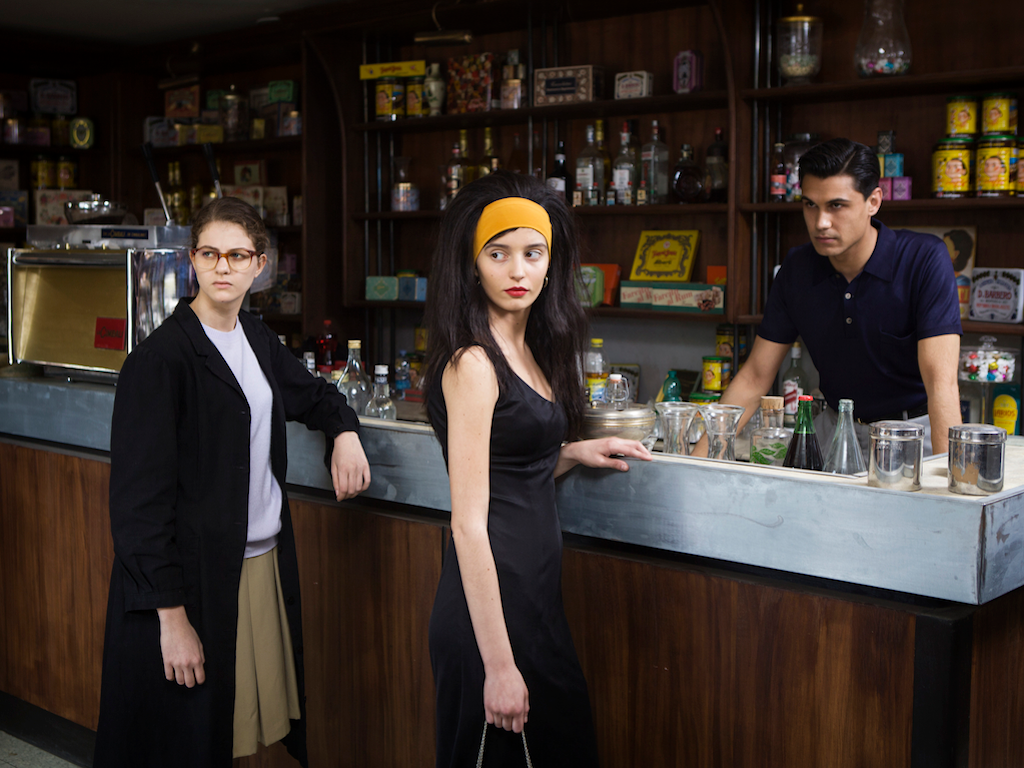
Take, for instance, the opening scene at the Bar Solara. Lila is undoubtedly using Elena/Antonio as an excuse to whip Stefano an elaborate, public middle finger. In her defense, she did warn Elena that Antonio would never ask the Solaras for a favor. She even goes so far as to say it's a pointless endeavor because there's no way they'll help him. In the book, when Elena announces her intention to approach them anyway, she says, "I was consulting Lila precisely because I took it for granted that she would tell me not to." So, to recap: Elena knows Antonio is against this and she herself thinks it's a dumb idea but goes through with it anyway because Lila doesn't stop her. Then, when Lila ostensibly does what Elena wants while also manipulating the situation to her advantage, she's suddenly the villain responsible for wrecking a "happy" relationship? I don't think so, honey!
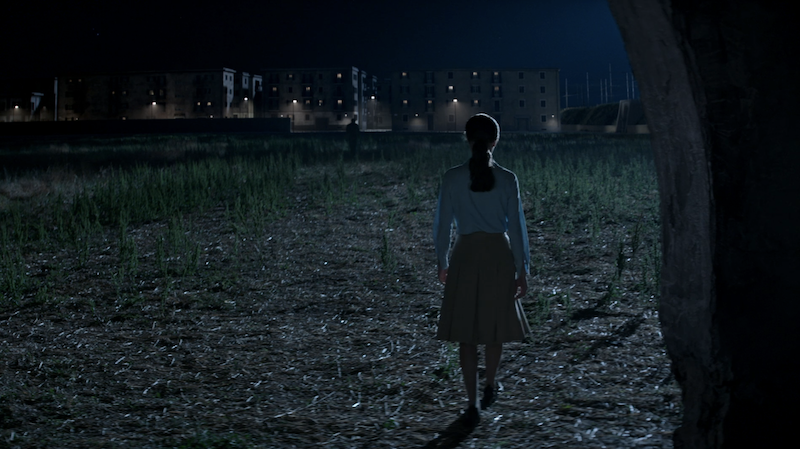
It all plays out slightly differently in the book vs. the show, but the end result is the same. Antonio, embarrassed and offended by Elena's actions, breaks up with her. Stefano, enraged and later openly mocked by Lila, beats the shit out of her. After this all goes down, Elena's voiceover declares,
I was angry with Lila and I didn't want to see her for a while. I thought about how she used me to provoke the Solaras, to get revenge on her husband. I thought about how she got dressed up, about how much the humiliation and suffering were making her mean. Since she'd become Signora Carracci she changed more every day.
None of this is untrue, but would Elena still feel this way if Antonio hadn't broken up with her? Probably not. Elena's only annoyed by Lila's brash actions when they fail to benefit her. She's also not above lashing out and getting revenge in her own passive aggressive way. Instead of explaining her irritation, Elena runs an errand with Stefano that she's well aware will once again complicate her friend's life by giving everyone with a financial stake in the new shoe store yet another detail to fight about. What's worse is that she begins to empathize with him as he monologues to her in the car about how Lila "kills the babies in her belly with that evil force of hers." By the end of the errand, Lenù feels honored that Stefano confided in her and asked her opinion, promising him she won't mention anything to Lila and will try her best to "help her behave."
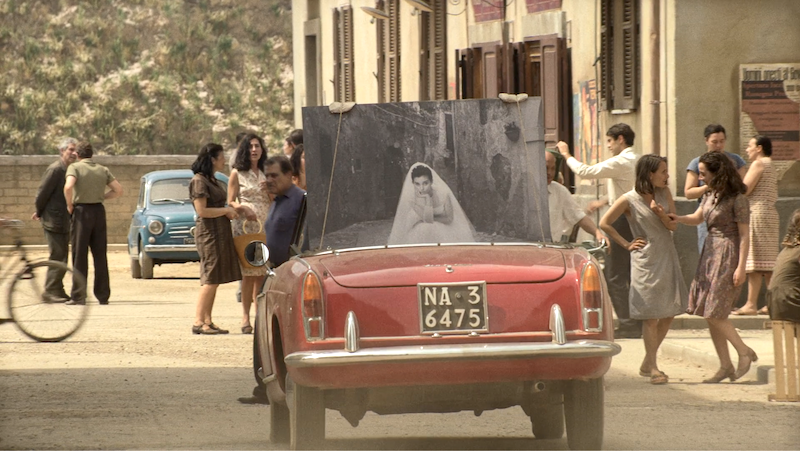
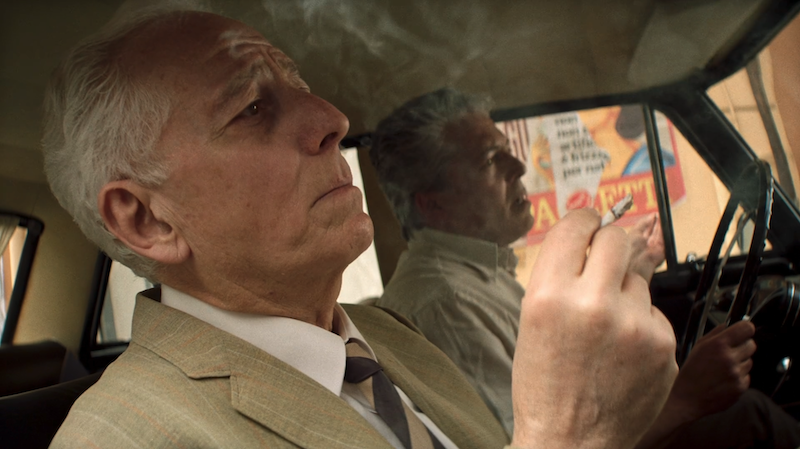
It didn't take much to shift Elena's allegiance from victim to perpetrator, and in subsequent scenes she defends Stefano more staunchly than ever before. This, combined with the fact that Lila surely knows about the dressmaker's, leads to increased, unaddressed tension between them. When Elena and Stefano returned to the neighborhood with Lila's photo, several great observation shots illustrated that this event was never going to be kept secret. Antonio and Enzo both follow the car from different sides of the street, exchanging "what the fuck" glances. As it rounds a corner, there's a clever pan away to reveal a close-up of Pasquale on a motorbike, watching it disappear. It was a very public display and even if Elena hadn't seen Enzo and Pasquale, she fully locked eyes with Antonio. There's no way she couldn't have known word would get around about the trip. Instead of telling Lila and staunching the wound, Elena says nothing and then acts confused when she's no longer a trusted confidant or included in group hangs.
For me, the most intriguing part of the episode is the bet Lila proposes to Elena. In the opening scene at Bar Solara, Michele expresses a desire to display the photo of Lila at the new shoe store. She demurs, telling him it's Stefano's decision, which leads to the photo collection quest on the Rettifilo. From there, debates break out over Stefano's intentions: will he give the photo to the Solaras for the shoe store, thus pissing off future managers Pinuccia and Gigliola, or will he prove that he learned something from the shoes debacle and decline to further commodify his wife? Lenù argues for the former and Lila tells her she's wrong, making the following bet (condensed for clarity):
Lila: If you lose, you can't ever pass again without A or A+.
Elena: And if you lose?
Lila: I'll enroll in a private school. I'll start studying again and I swear I'll get my diploma with you. Actually, I'll do better than you.
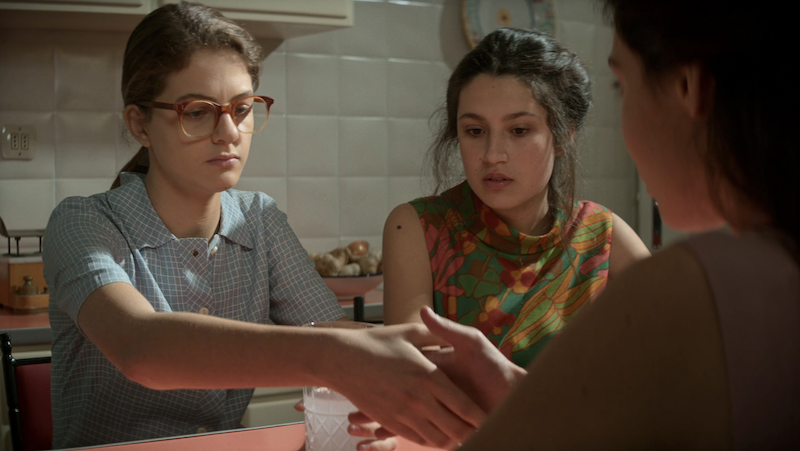
Lila is not an idiot, nor does she possess the magic ability to murder her unborn children. She knows this bet is pointless because no matter win or lose, there's no world in which Stefano allows her to pursue an education. She'll help out at the grocery until motherhood claims her and she becomes one of those women in the neighborhood who probably spend their days dreaming about the sweet release of death. If she wins the bet, her reward is a better chance that Elena achieves greatness in her stead. Elena doesn't see it this way, instead spiraling over the idea of Lila returning to school sans any acknowledgement of how impossible this would be.
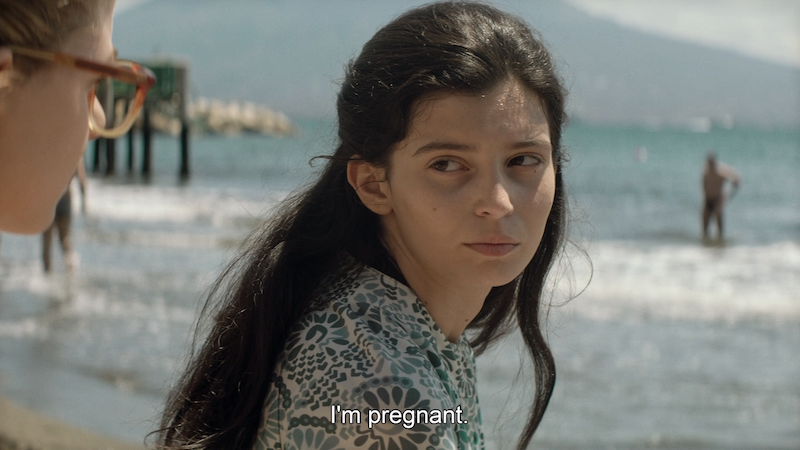
It's difficult to know for sure why Lila makes this bet. Perhaps she's a good friend who legitimately wants to see Elena do well, even when they're on the outs. Maybe she figures that although her own life is fucked, she can still vicariously experience what it might have been through Elena. Another possibility is that she wants to believe there's still a chance for her to achieve greatness; even if she knows it's unrealistic, merely voicing the idea is a way to defy Stefano. As the gulf widens in her friendship, one she presumably values as much as Elena, maybe she sees education as a way to close it again. Lila doesn't have to be enrolled in school to help Elena study like she's done in the past, back before the threat of marriage and kids loomed large. At the end of the episode, sitting on towels at the Sea Garden, Lila announces her pregnancy, suddenly making the hypothetical future far less malleable.
Random observations:
- If you think Lila's wigs are bad this episode, just wait! And don't get me started on the orange headband. Ava Gardner in "The Sun Also Rises"? More like a queen scrambling to get into quick drag during a mini-challenge.
- Ah, yes, "Discourse on the Origins of Inequality" (1775), a classic summer beach read. Do we think Elena registers the parallels between her relationship with Lila and Rousseau's discussion of amour de soi and amour-propre?
- Once again, the blocking in this episode is top tier, especially in the opening Bar Solara scene where it's used to demonstrate who has the upper hand at any given time. Costanzo and cinematographer Fabio Cianchetti also make great use of rack focus shots to similar effect.
- In the book, Lila flings herself into the sea post-pregnancy reveal, immediately calling for Antonio to help because she doesn't know how to swim. By the end of the book, this will change c/o the worst father-son duo since Fyodor and Dmitri Karamazov.
- More good extras:
- Lila and I do the exact same (perhaps unhealthy) thing when we're over a close relationship yet unwilling to end it: quietly shift the person from trusted confidant to recipient of frivolous information.
- Book Elena at her most relatable: "I had too many worries and, whatever I did, the feeling of always being in the wrong."
- One of my favorite passages from this chunk of the book is Elena's revelations about Nino's girlfriend, Nadia, someone we will learn was raised in a markedly different environment:
No, neither Lila nor I would ever become like the girl who had waited for Nino after school. We both lacked something intangible but fundamental, which was obvious in her even if you simply saw her from a distance, and which one possessed or did not, because to have that thing it was not enough to learn Latin or Greek or philosophy, nor was the money from groceries or shoes of any use.
Member comments