
Quick summary:
Lila and Nino are now engaged in a full-blown affair that grows more brazen each day. Much to Elena's vexation, they quickly move from sneaking around to showing affection in public. As their romance escalates, Elena feels increasingly isolated from them and resentful over how frequently she's left alone with Bruno, who has aggressively pursued her in Pinuccia's absence. Much of what transpires is standard teen relationship drama, only Lila is married to a mobbed up abuser, so the stakes are higher.
After Michele Solara spots the couple holding hands on the beach and Stefano's extended Ischia stay approaches, they know they don't have much time left and, with Lenù's help, plan to spend the night together in Forio. As Lila and Nino fuck each other for the first time, Lenù is raped on the beach in Barano by the elder Sarratore. When the girls return to the house in Cuotto the next day, a furious, accusatory Stefano is waiting and the vacation unceremoniously comes to a close.
Corresponding book chapters:
"The Betrayal" begins with a voiceover detailing Elena's post-kiss thoughts from Chapter 56 as she swims alone in the ocean. It ends in early Chapter 76 on the ferry back to Naples. Thus far, each episode covers 60-70 pages of the Europa Editions paperback, minus E2 "The Body," at just 34 pages. From an adaptation standpoint, this season feels appropriately paced and faithful to the books.
Notable choice (complimentary):
There are a few moments where events are slightly altered to increase onscreen tension. For example, Michele Solara's discovery of Lila and Nino is significantly drawn out for maximum anxiety. In the book, Stefano isn't waiting for the girls at the house when they return from their night away, but it's much scarier to see him already there in the show.
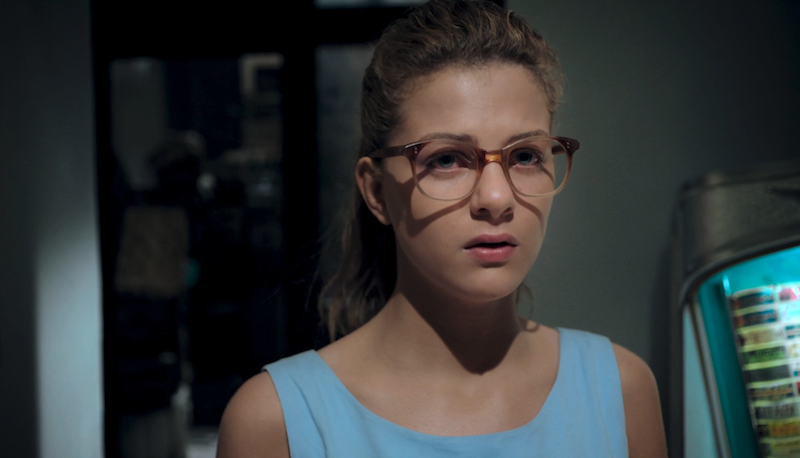
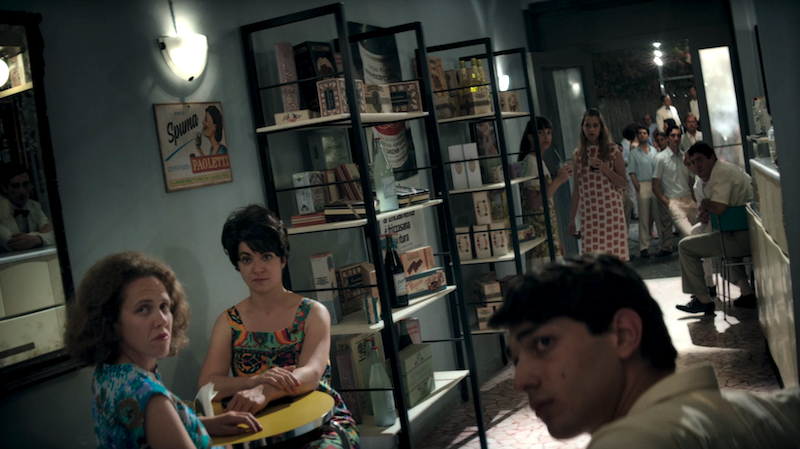
My favorite change is the way the show portrays Lila and Nino's Forio makeout sesh. When book Lenù catches them in the back garden of the ice cream shop, it happens over two short, not particularly descriptive paragraphs. Lenù can't find them, spots the garden, sees them kissing, then leaves. In the show, she weaves her way through the shop as live music plays outside with a cut to the singer in a high-necked pink dress laconically waving/crooning "bye bye." She asks a worker, surrounded by colorful paper cups and straws, where to find the phone booths, and he points to the back of the shop.
The camera faces her as she walks back, in and out of shadow, doubled as she passes a large mirror. She skips over one empty phone booth, sees a dark head in the next one, but opens the door to find a stranger. A worker passes by in the darkened hallway with a crate of bottles and her eyes follow him to the back of the shop. After he leaves, she passes through a room of stacked crates as the uneasy, horror movie-esque score intensifies. Between the slats, she sees flashes of groping hands and a raised skirt. She hurries out of the room in a panic, those images immediately repeating in her mind.
As the sound drops out of the scene, Lenù faces the camera with a look of panic on her face; a cut reveals the reverse shot of frozen, staring ice cream shop patrons. Several eerie beats pass, then reality kicks back in with Gino Paoli's "Vivere Ancora" emanating from the jukebox. Director Alice Rohrwacher's interpretation takes a minor scene in the book and appropriately amplifies it into a stomach-churning betrayal.
It's giving "Twin Peaks" and "Pushing Daisies."
Notable choice (derogatory):
The sapphic undertones present in the book sometimes don't come through as well in the show, which I noticed most in S1's pre-wedding bath scene and now during Lila's affair with Nino. As book Lenù contemplates the night the couple is about to spend together, she realizes,
For a moment everything weighed on me less: the lies, the images of the adultery that was taking place, my complicity, a jealousy that couldn't be defined because I felt at the same time jealous of Lila who was giving herself to Nino, of Nino who was giving himself to Lila.
Any English professor worth their salt would challenge this read, but Lenù wants to fuck them both, right? Maybe not literally, although remember how happy she was when they were briefly a joyful threesome before the wretched kiss:
I felt proud to be there, at that moment, with the people who had always been important in my life, whose importance couldn't be compared even to that of my parents, my siblings. I took them both by the hand, I gave a shout of happiness, I dragged them into the cold water, spraying icy splinters of foam. We sank as if we were a single organism.
Even after the kiss, Lenù finds consolation in the fact that both friends need her:
Neither she nor I would ever have him. But both of us, for the entire time of the vacation, could gain his attention, she as the object of a passion with no future, I as the wise counselor who kept under control both his folly and hers. I consoled myself with that hypothesis of centrality. Lila had come to me to tell me about Nino's kiss. He, starting out from the confession of that kiss, talked to me for an entire day. I would become necessary to them both.
It's not shocking that sexy fan fiction has been written about this summer on Ischia. It practically writes itself.
There's also the deep eroticism of Lenù's "what you do, I do" refrain that comes to mind as Donato, the father, rapes her while Nino, the son, has sex with Lila. There are many instances in the book where Lenù thinks about her and Lila as a joint pair, where she feels Lila's pain or pleasure so acutely it's as if she's experiencing it firsthand. Jill Richards's essay, "The Queer Counterfactual," explores different interpretations of Ferrante's literary choices and how they feed into a queer reading of the narrative. It's hard to infuse a visual medium with an equivalent layer when so many other elements are at play, so this is more of an understandable limitation of the show than an adaptation critique. Close-ups and shared glances can only convey so much compared to the compounded effects of reading a lengthy text in first-person POV over time.
Thoughts:
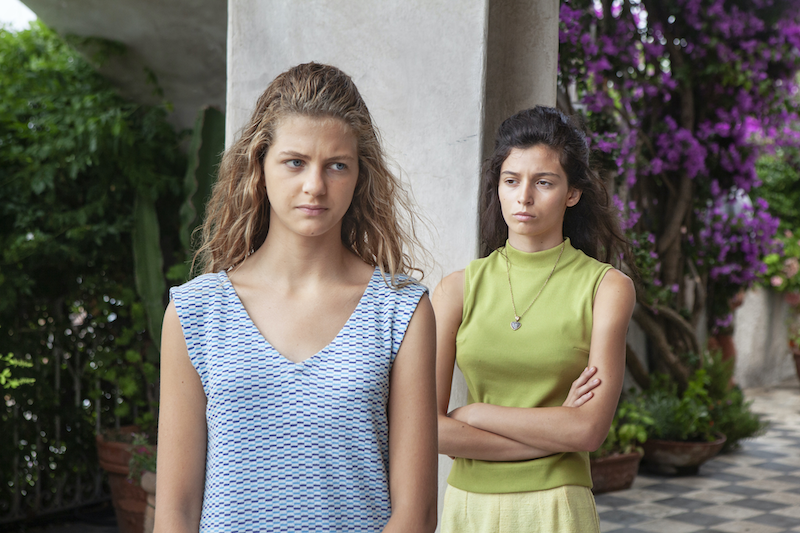
At this point in the narrative, Lila goes from being an intellectual, mythical enigma to a girl in love who says and does things that seem crazy to any rational observer. This is not to diminish her prowess, just to note that Elena has always placed her on a pedestal as if she, too, does not possess the ability to lose all good sense c/o horniness. Elena has questioned Lila's judgment in the past (like with Stefano), but always maintained some belief that she must be playing 3D chess, working toward a grand plan that no one else is privy to. With the Nino situation, Elena realizes, perhaps for the first time, that maybe Lila doesn't know what the fuck she's doing.
The morning after Lila's kiss admission, Elena forces herself to meet up with Nino even though she's been awake all night crying, trying to figure out how to escape the weird situation she's been thrust into. In the opening scene, as she furiously swims ocean laps, she wonders why she never told Lila about her feelings for Nino. She's introspective enough to recognize her own faults, yet fails to rectify them.
As she and Nino discuss the situation, Elena pushes back in practical ways — Lila is married and even if she wasn't, she "grows cruel when surrounded by affection and respect"— without ever delving into no brainer territory by expressing her own romantic interest. For her, it's better to never know what could have been as opposed to boldly facing rejection. The same applies to Lila. If Elena plainly described her crush and Lila still pursued Nino, what does that mean about their friendship? Elena would rather live in a realm of plausible deniability than have confirmation of people's worst qualities.
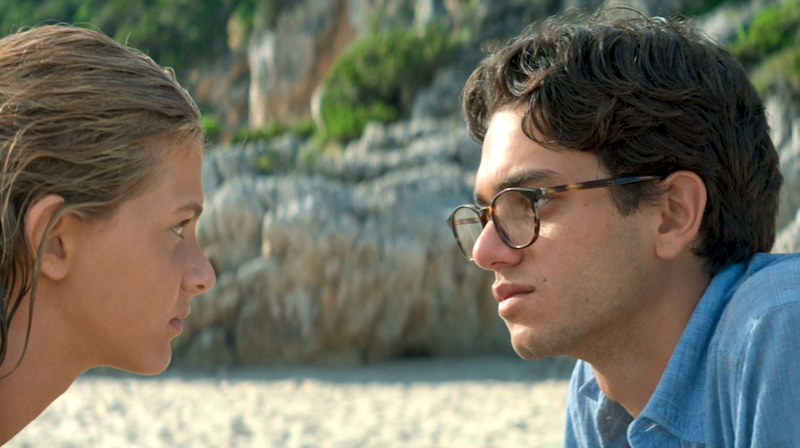
It's sad to watch Lenù gaslight herself throughout the episode. She goes from believing Lila's marriage will prevent anything real from transpiring with Nino, to reassuring herself there will always be a place for her as their emotional support animal. She's routinely stuck in the middle of their schemes, cajoled into lying for them while also lying to them in an attempt to safeguard her own sanity.
She draws the line at relaying conversations with one to the other, but frequently covers for Lila's behavior. She acts like a doormat and is therefore treated like a doormat even though, without her, Lila and Nino would never be able to see each other. There's no acceptable reason for a married woman to hang out with two young men, so Elena's presence keeps things from looking openly untoward. If she wanted to, she could shut down their tête-à-tête by refusing to facilitate it, but some part of her (the writer) has enough perverse curiosity to remain involved.
Once the ice cream shop makeout occurs (following Lila's empty declaration swearing off Nino), there's no denying reality: the summer of fun and friendship is now centered around adultery. While Lila and Nino traipse around the beach holding hands and kissing in the surf, Lenù is forced to spend time with Bruno, who views her as a one-to-one replacement for Pinuccia, even attempting to appease her grouchiness with coconut.
As she jealously watches Nino and Lila in the distance, her voiceover divulges, "I saw them as fallen divinities. Once so clever, so intelligent, now so stupid, caught up in a stupid game." Or maybe... they were always stupid and you were just blinded by your own low self-esteem? Anyone who hasn't previously questioned the accuracy of Lenù's perception should be questioning it now. She has always given Lila and Nino far too much credit and in this episode, the universe is practically screaming, "THOSE LOSERS DON'T DESERVE IT."
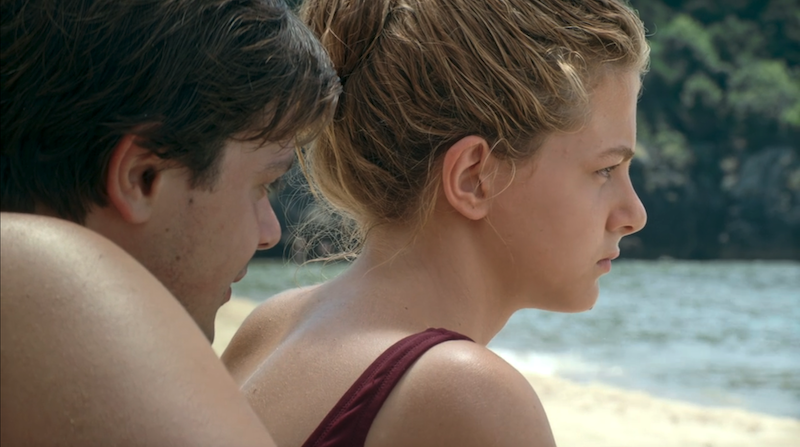
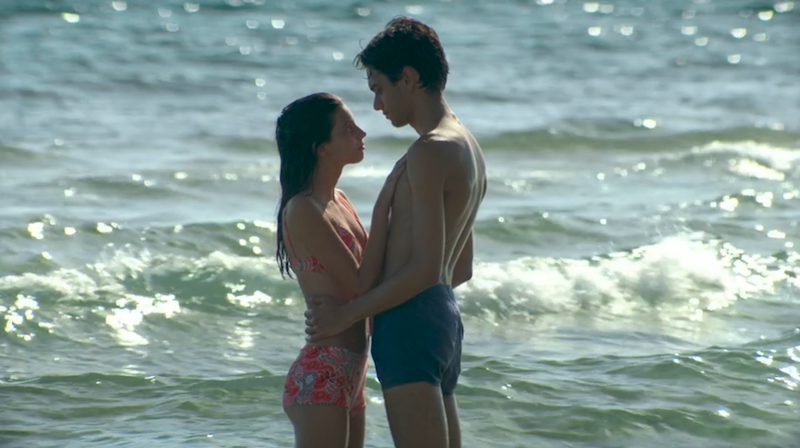
Lenù's still in her ratty, maroon one-piece whereas Lila's on swimsuit number four. Even Nino has multiple pairs of trunks.
Nothing screams "dumbass teen drama" quite like the business with Nadia's letter, which brought me painfully back to high school. Nino reads it in front of Lila to make her jealous, she immediately demands he write a breakup letter, and he counters with the suggestion that she call Stefano to end her marriage. The whole ordeal leads to Lila promising to leave the island with Stefano, giving Elena false hope that she and Nino can now be together. She chases him down in Forio only to find that he's willing to do anything to be with Lila, even quit studying and find a job. He gives her a letter for Lila that she shockingly doesn't read immediately. In the show, it feels like a respect for their privacy; in the book, it's only because she doesn't have the right opportunity.
Once Lila reads the letter, a breakup missive to Nadia, she has a renewed commitment to Nino, telling Lenù, "You should be proud of me, the cleverest guy in the world has left the teacher's daughter for the shoemaker's daughter!" In other words, "I have always felt less than you because of our differences in education but now the smartest boy you know has chosen me over someone much fancier than both of us, which means I'm peerless and you should be impressed." The patriarchy runs deep and no one is immune to its trappings. When a person is made to feel powerless, all they want is to feel a little power as a reminder that their fate is not sealed. This behavior is Lila grasping for power at the expense of her own friend while begging that same friend for approval. It's as pathetic and cruel as the world they occupy.
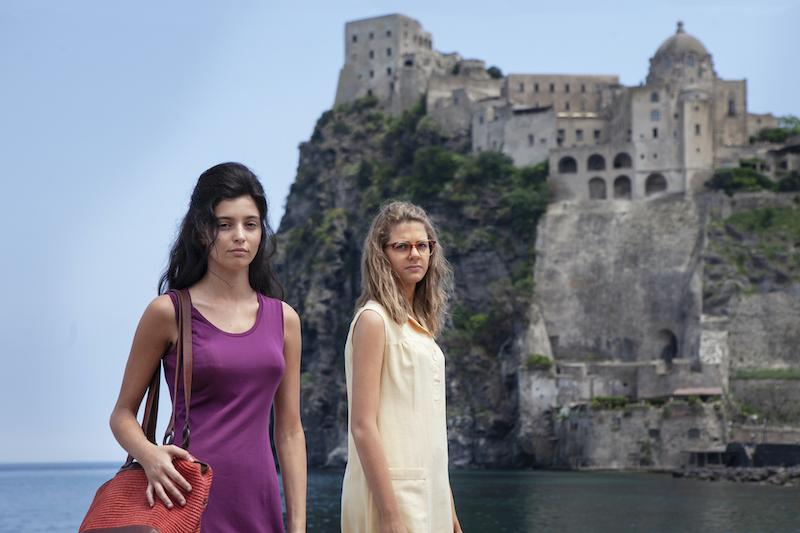
After spending a late night at Bruno's mansion, where he sexually assaults Lenù with unwanted kisses, Lila becomes obsessed with the idea of spending the night with Nino. She has a whole lie planned out — they'll tell Nunzia they're attending a party for Maestra Oliviero and sleeping at Nella's — and manipulates Elena into orchestrating it. The morning of the fake party, Michele and Gigliola spot Nino and Lila holding hands on the beach, giving Elena understandable anxiety over their later plans. When Elena voices her nervousness, Lila hits her with a condescending, "I hope at least once in your life you feel what I'm feeling now." Lenù is not the type to lash out, so she internalizes this comment, letting the shame of it drive her into dangerous territory.
The rape scene with Donato Sarratore is perfectly complex, giving Elena (and the viewer) the illusion of control in a situation where she, a child, is violated by a man old enough to be her father. Even older Elena, the one telling the story, assigns her younger self undeserved agency, not necessarily because she believes it exists, but because the truth's mental load is too heavy to bear. As she sits alone on the darkened beach, her voiceover reveals a desire for self-annihilation:
All at once I realized why I'd never had Nino. I didn't know how to let myself go beyond, I didn't possess that emotional power, I lagged behind, waiting. [Lila] took the things she really wanted. I wished that right there on the sea shore murderers would come out of the night and torture my body, that the worst would happen to me, something so devastating it would stop me from facing that night, the hours and the days to come, reminding me with increasingly crushing proof of my unsuited condition.
At the end of this terrible string of thoughts, Donato appears with words of flattery and gross, oily poetry. By the time Elena rests her head on his shoulder, he's ripping off her underwear and thrusting into her as she fully dissociates. Her wish for destruction has come true, but this doesn't mean she consented to it. As with Donato's initial assault in S1's "The Island," everything is shot in closeup with primary focus on Elena's face. Once it's over and she walks away from the beach, she threatens Donato with the Sarratores in an attempt to wrest back control. Her voiceover explains,
I didn't once regret accepting what had happened, I had no second thoughts and I felt proud of it. That's how I wanted it to be and I imposed it on myself, but that man, I never wanted to see him again.
"That's how I wanted it to be and I imposed it on myself" is very different from "That's how it was." As Joan Didion wrote, "We tell ourselves stories in order to live" and sometimes "I was raped by the father of the boy I love" is not the preferred story. Notice, also, that she says she didn't regret accepting what had happened, which again, is different than not regretting what happened. Read it too quickly and the nuance is lost.
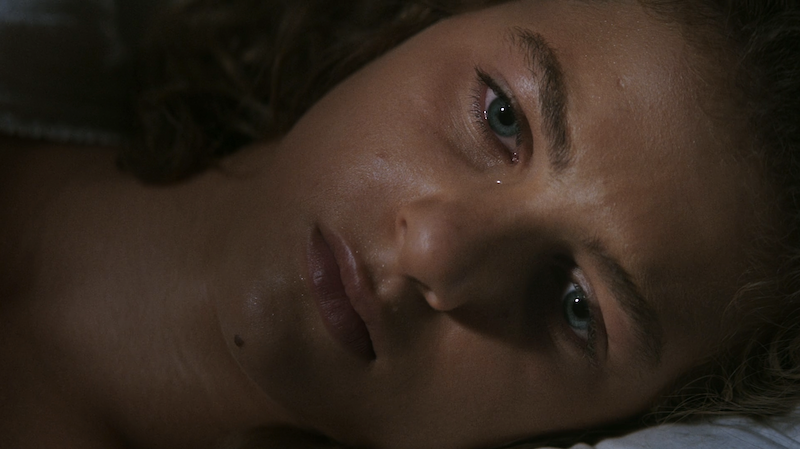
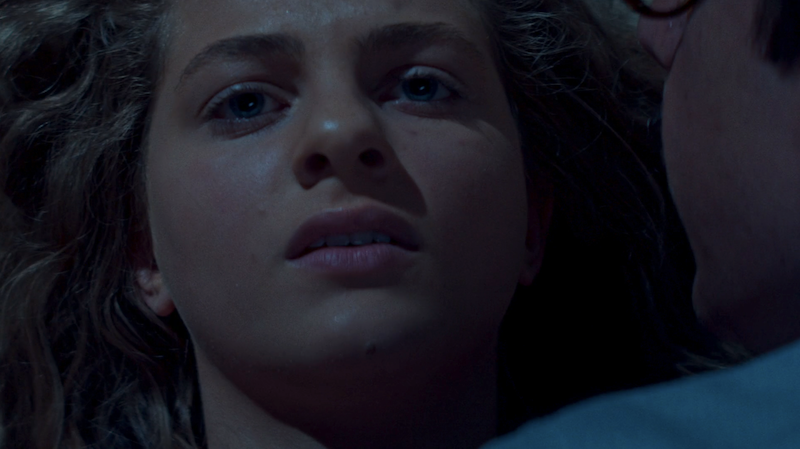
"The Island" and "The Betrayal" are in competition for how low Donato Sarratore can go (the limit does not exist).
On the way back to Cuotto the next morning, Lila, donning yet another tragic wig, gushes to Lenù about how she wants to start studying again so she can understand Nino. Lenù, reeling from sexual assault and heartbreak, shuts down Lila's hopes by telling her she's too academically behind and not suited to Nino in the way that Nadia was. The scene is mostly shot-reverse-shot in a minicab with isolated reactions from each of the girls as the score creates an eerie, unsettling ambiance.
Book Lenù, unlike show Lenù, has knowledge of Lila's journals and reflects that she would have been overcome with violence had she been aware of what they contained at the time. She also contemplates telling Lila about her own sexual encounter (with Donato's identity withheld) in order to coax out details about sex with Lenù. Onscreen omissions like this are necessary for time, but it's hard not to feel like we're missing out on some of Lenù's complexity. The complete interiority is part of what makes the novels so great and there's no way for that to come across in an adaptation. The fact that it works as well as it does is a testament to everyone involved.
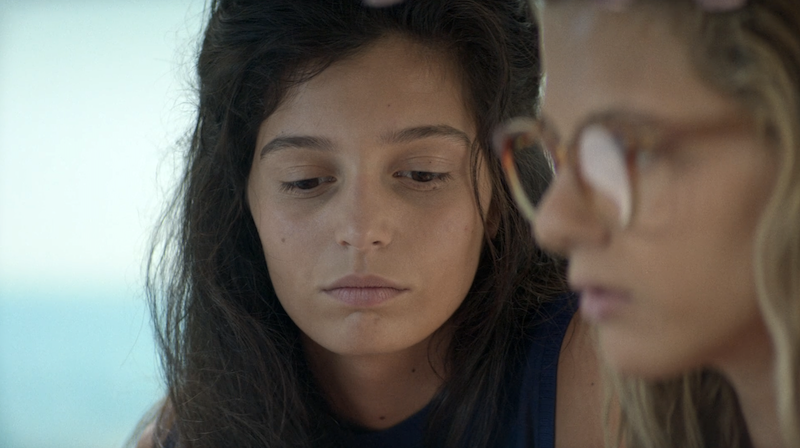
The confrontation scene with Stefano is less brutal than it is in the book, despite the screaming, crying, physical violence, and Chekhov's knife. It contains all the high points from the text, like Lila telling Stefano Nino "fucked me a hundred times" and calling him worthless. It's a well-composed scene that still pales in comparison to Ferrante's description:
A moment later her husband had grabbed her again and, holding her by the arm, but as if he were steadying a cup by the handle, pushed her into the bedroom and closed the door. I heard the key turn in the lock, that sound terrified me. I had seen with my own eyes, in those long moments, that Stefano really was inhabited by the ghost of his father, that the shadow of Don Achille could swell the veins of his neck and the blue network under the skin of his forehead.
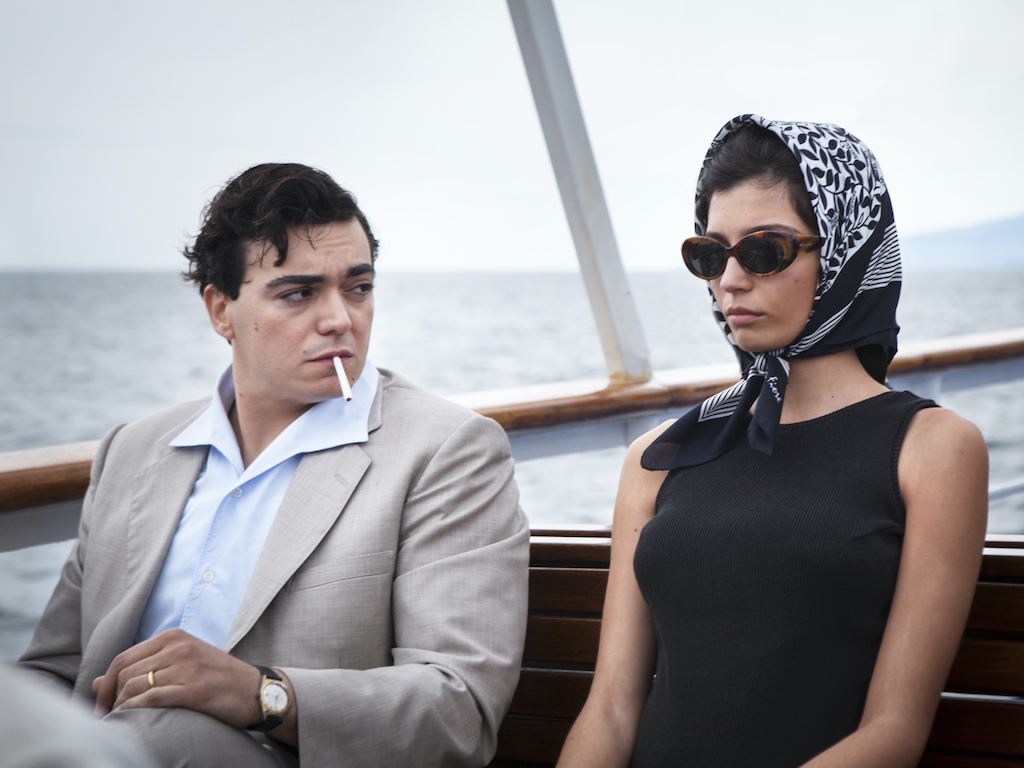
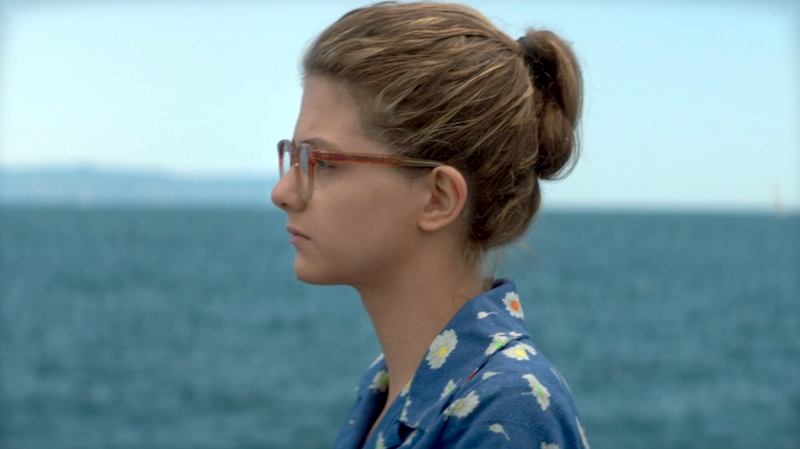
On the boat ride home the next day, everyone sits in silence. When Lila looks toward Lenù, she averts her eyes. Fixing the camera with her gaze, her voiceover declares, "I decided that from that moment I would live only for myself. And when I was back in Naples, I wouldn't seek out Lila anymore. I wouldn't seek out Nino anymore." As the credits roll, for the first time over a scene and not a solidly colored background, Lenù stands at the ship's deck, listening to a man playing the guitar as Ischia recedes in the distance. It's a gut punch of a scene that elicits empathy for both girls: Lila is trapped and desperate, Lenù is free but has no one to turn to or rely on but herself. These are harsh realities no 18-year-old should have to confront.
Random observations:
- So, Nino is aware that condoms exist, he just doesn't like to use them. Does this remind you of anyone?
- I love that Elena was totally oblivious to Pina's Bruno romance and needed Lila to explain why she left. The only person who would fantasize about Bruno is one trapped in a marriage with Lila's moron brother.
- I'm jealous of every oversized beach towel on Ischia:
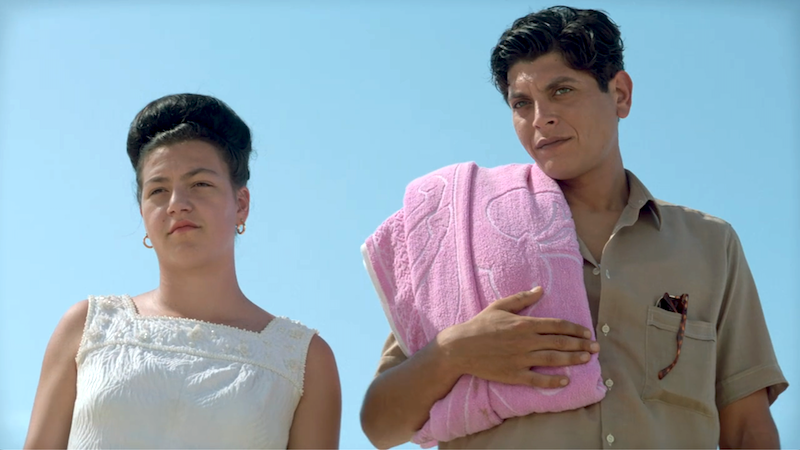
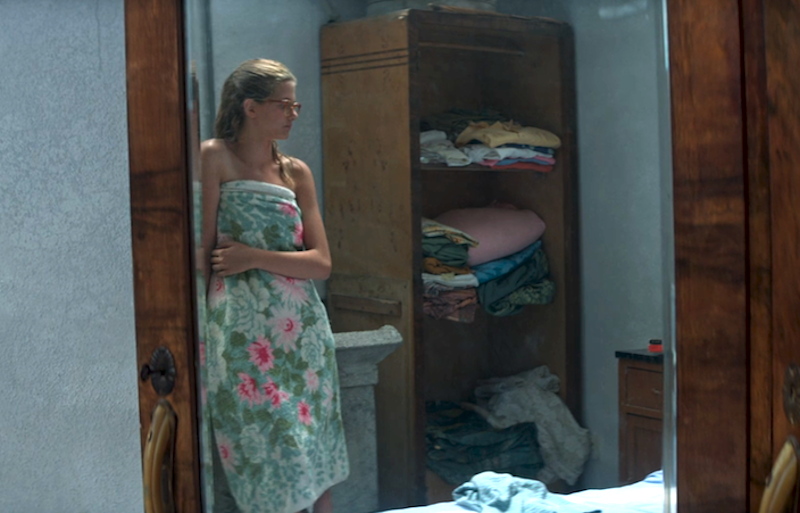
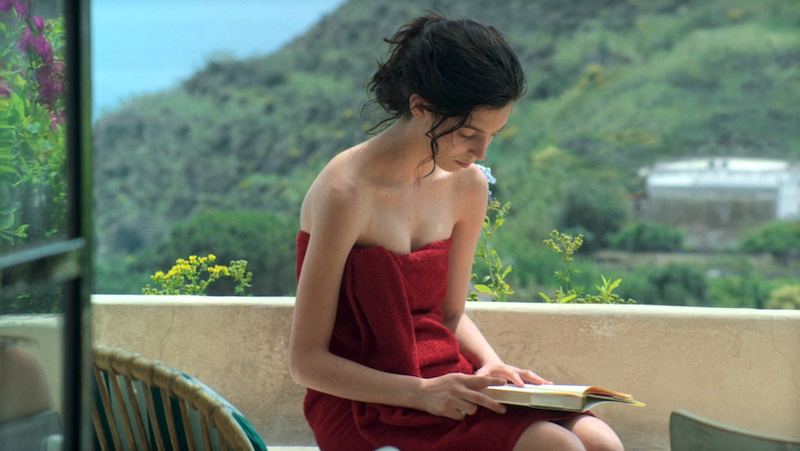
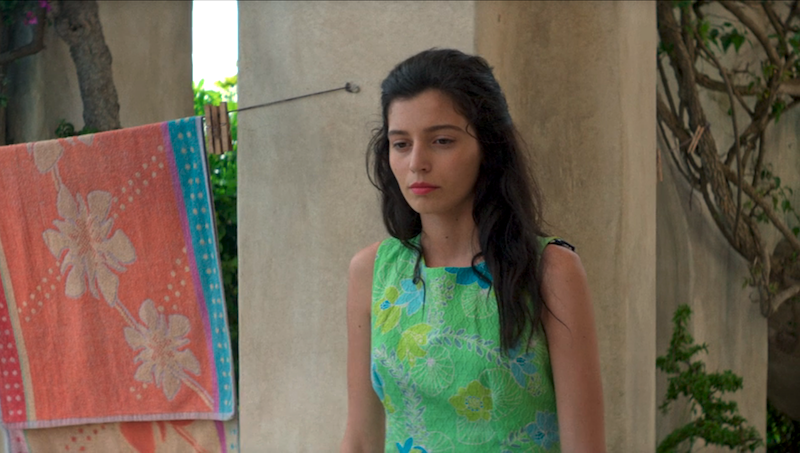
I never found Michele hot until I saw him with this pink floral towel tossed over his shoulder.
- Here's another sensual description of Lila from Chapter 61: "She was lying on the window side and in the moon's glow the hair on her neck gleamed, and the curve of her hip. I was lying on the door side, Stefano's side, and I thought: Her husband sleeps here, every weekend, on this side of the bed, and draws her to him, in the afternoon, at night, and embraces her." I rest my case.
- Another scene from the book that I missed on screen: the one where Nella tells Elena that Maestra Oliviero called Lila the best student she ever had. It culminates in an observation about the male fear of castration that Lenù finds simultaneously chaste and vulgar, deeply pathetic, and reminiscent of her mother's limp. It's yet another older woman characteristic she observes and preemptively wards off. In her defense, a woman in her 60s referring to a penis as a "thingy" gives me the ick, too.
- Book Lenù thinks Donato is a good dad because he patiently teaches his children how to fly a kite. He hasn't thrown any of them out a window, so I guess he deserves a medal. In the same vein, Lila and Lenù think Nino is a catch because he's a different brand of shithead than the ones they're used to. In time, they'll learn that men of all varieties, even (performative) intellectual sophisticates, are disappointing.
Member comments