
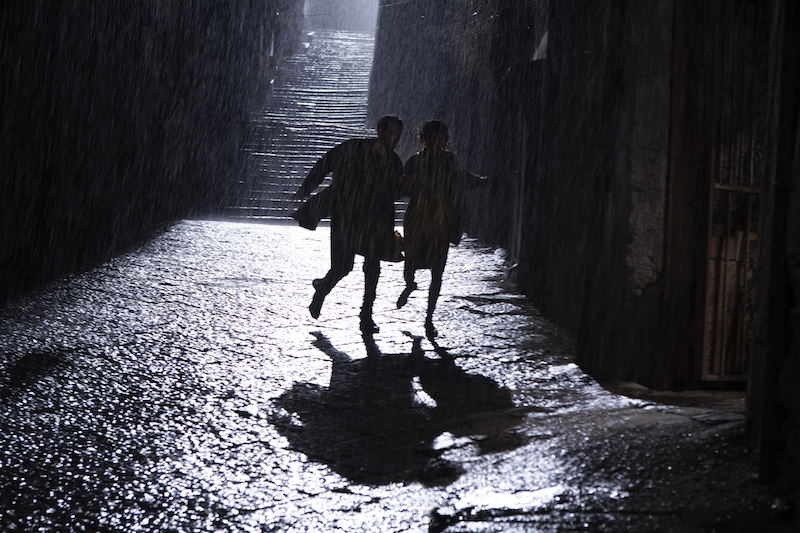

Quick summary:
Lila and Nino find a way to keep their affair going back in Naples, but it quickly falls apart once she leaves Stefano and they start living together. As soon as the relationship becomes real — with a pregnancy and commitments beyond just fucking — Nino loses interest. In classic fragile male ego fashion, Lila's opinions and intelligence threaten him, so he starts blaming her for his shortcomings. It doesn't take much effort for Antonio, who now works for the Solaras, to scare Nino off, forcing Lila to return to her old life after 23 days of freedom.
As Lila's prospects deteriorate, Elena finishes her final year of high school and is encouraged by her professors to take the college entrance exams for the Pisa Normale. She is admitted (which the show weirdly glosses over/saves for the following episode), leaves, and embarks on a new life away from the violent threats of the neighborhood. One girl is trapped while the other escapes, stoking long-held resentments on both sides.
Corresponding book chapters:
"Rage," spanning Chapters 77-95, compresses and shifts the novel's narrative, saving details about Elena's time at Pisa for "Ghosts" (which I'm now realizing is actually called "The Secret Notebooks" on HBO). The adaptation remains faithful to the novel's major events and developments, but the choice to omit Lila's journals until late in the season necessitates some structural changes in the final three episodes.

Notable choice (complimentary):
I have a love/hate relationship with Elena's mom, whose impulse is always to denigrate her daughter before offering begrudging support. Immacolata is a memorable, crucial character in the novels, but Anna Rita Vitolo's performance is so layered that she inspires empathy I rarely feel on the page. One could argue this is a sentimental onscreen interpretation, although I think it's more nuanced and akin to how an adult thinks about their flawed parents in the rare moments when they detach enough to form an objective assessment.
Immacolata, a product of her time and generation, probably never received encouragement from her own parents, so she doesn't know how to provide it for her daughter. For an immature parent, there's a level of jealousy and insecurity that comes with watching your kid transcend the life you couldn't even dream of escaping. This negativity comes out first, followed by a desire to do better than the previous generation that's unfortunately hindered by the damage they caused. Generational trauma — hooray!
In the novel, Elena's parents are indifferent when she explains she's going to Pisa to take the university entrance exam. Her dad tells her they won't be able to help her and her mother says nothing, wordlessly leaving 5,000 lire (part of Elena's forked over tutoring wages) on the table. Later, when she's admitted, they're more openly manipulative:
"If you earn money, send it to me by mail; now who's going to help your brothers with their homework? They'll do badly at school because of you. But go, leave, who cares: I've always known that you thought you were better than me and everybody else." And then my father's hypochondriac words: "I have a pain here, who knows what it is, come to your papa, Lenù, I don't know if you'll find me alive when you get back."
The show combines these scenes, taking the viewer on a rollercoaster through Immacolata's "Go to Pisa! Who gives a shit!" rage to her absolute insistence, in direct defiance of Elena's insecurities, that if she goes to Pisa, her only option is to get in. After slapping some money down on the table, she looks at her daughter with an expression not exactly of pride, but of belief, which is maybe what Elena needs most in this moment.
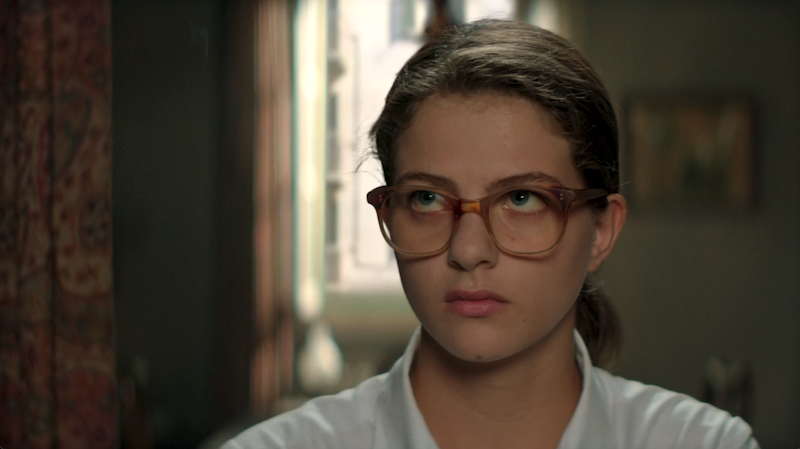
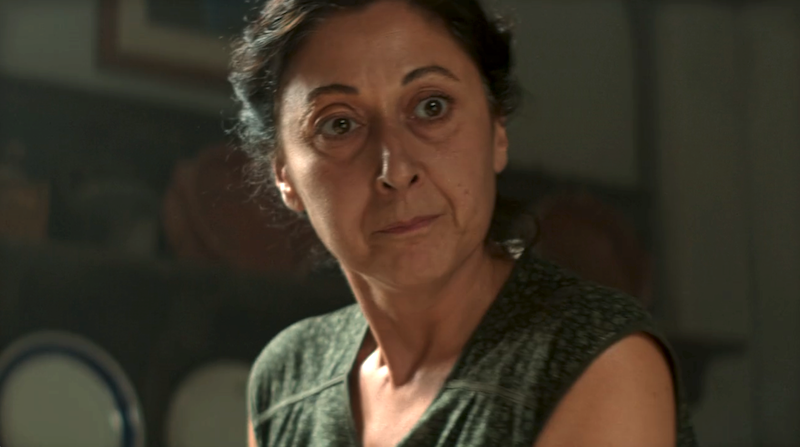
"You're going to Pisa, dammit, and you're going to make everyone there your bitch!"
Notable choice (derogatory):
I haven't watched the following episode, so I'm assuming this is eventually addressed, but it's weird to me that there's no acknowledgement of Elena's Pisa admittance. We see her leave on a train with her suitcase to go take the exam, and then I guess we're supposed to assume she got in because when no one knows where Lila is, they all convince themselves she's visiting Lenù in Pisa. If Lenù was in Pisa just to take an exam, why the fuck would Lila be visiting her? If Lenù was accepted to the university, why didn't the show give us one brief scene or throwaway line to clarify?
In the 1960s, the train from Naples to Pisa took 9 hours at most, so I can't imagine Lenù spent more than 3 days there to take the exam. I guess another option is that no one knew the details of Elena's time in Pisa, just that she was there for something school related and it was therefore plausible for Lila to link up with her; however, I find this difficult to believe because the people in the neighborhood know everything about everyone. Watching "Rage," even before rereading the novel, I was confused about the timeline, so I have to imagine first time viewers felt the same.
In the novel, Lenù's time in Pisa comes before Lila's story, and we understand the events are happening simultaneously. I imagine the episode got broken up because there wasn't time to focus on both girls, but I still think it would have made sense to at least include one scene of Lenù at university before picking that thread back up in E7. Otherwise, it's unclear where Lenù is and why she's unaware of Lila's ~three week absence.
Thoughts:
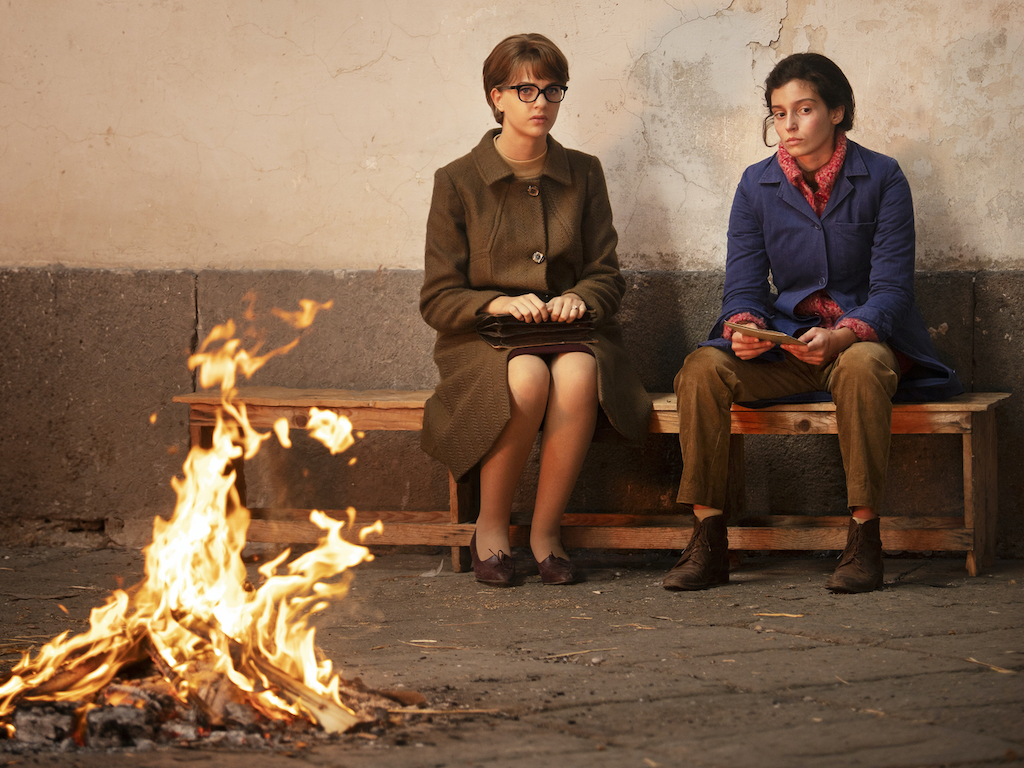
When the episode begins, six months have passed since Ischia and it's now January 17, Festa di Sant’Antonio Abate, the day of purification and rebirth by fire. While visiting Pina and her baby, Fernando, Lenù learns that Lila is now working at the shoe store. Per usual, there's drama with the Solaras, who have started producing and selling their own line of shoes in a bid to cut out the Cerullos and Carracis. Pina and her mother, Maria, think Lila's decision to work there has something to do with a secret pact between her and the Solaras to design a new line of shoes. Despite their strained relationship, Lenù defends her friend, explaining, "If something catches her attention, she gets caught up, but then she loses interest." This is certainly what Lenù wants to believe has happened with Nino, although at the same time, she doesn't understand her friend's ability to "go back to dealing with those Camorrists" after falling in love on Ischia.
Outside at the neighborhood bonfire, Elena catches up on the gossip she's missed — and would probably rather not know — c/o school. Enzo is there, back in town for two days before returning to complete his military service. Carmen, his fiancée, bitches about Lila, who has made Stefano's life miserable thanks to her dealings with the Solaras. Ada reveals that Antonio was discharged from service because of a nervous breakdown, and when Lenù talks to him, he tells her a disturbing story about childhood puppets infiltrating his hand. As the camera roves around them, the bonfire coming to life in the background and the score adding an ambient eeriness, there's a sense that this is a very different Antonio than the person Lenù once dated. He feels sad and hollow, a shell of his former self who can't cope with the horrors of the world and cares about nothing beyond basic survival. When the family mental illness hits in 1960s Italy, there's no recourse. Everyone brands you as "crazy" and diverts their eyes as you eat soap on the street.
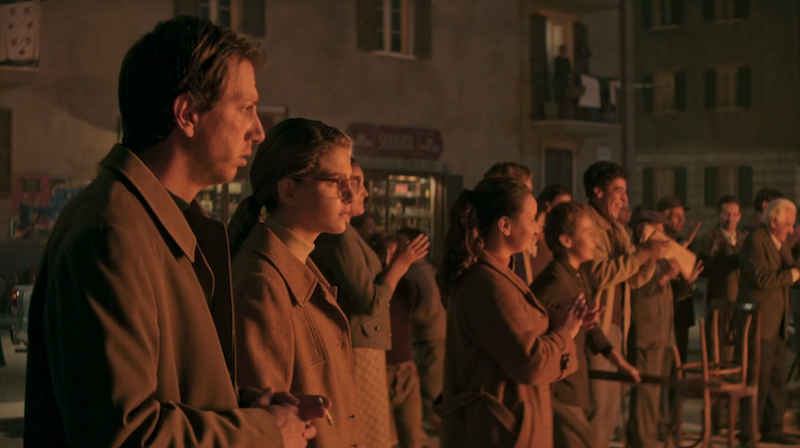
The bonfire, which isn't mentioned in the book, is the perfect lead-up to Giuseppina's suicide. As soon as Carmen leaves to get her mom, something feels wrong. Breaking from the group, the camera follows her as she walks around the flames, eventually disappearing into the crowd. Why follow just to abandon her? Because when she reappears, it's all the more unsettling. Antonio is the first to spot her, leaning on the balcony railing, barely visible through the blaze. When everyone arrives in the apartment and Pasquale kicks down the bathroom door to find his mother's limp body hanging from the ceiling, my initial thought was that it's surprising more people don't take this route.
As described in the book, Giuseppina was hardworking, full of life, and still able to find joy even though her family had been deeply wronged by her husband's false imprisonment. Eventually, she got worn down after one hardship too many and couldn't bear to continue. The single foot painted with red nail polish that Antonio hones in on is the perfect representation of this breaking point. The shift from "fine enough to paint toenails" to "life's not worth living" can happen in a blink, especially for a poor person with nonexistent support networks. Lenù's vow to leave the neighborhood, which she makes on multiple occasions, is one response to growing up in a place like this. Another is to stay, to cling to the (naive) hope that there's a way to fix or transcend its toxicity before death starts gaining appeal.
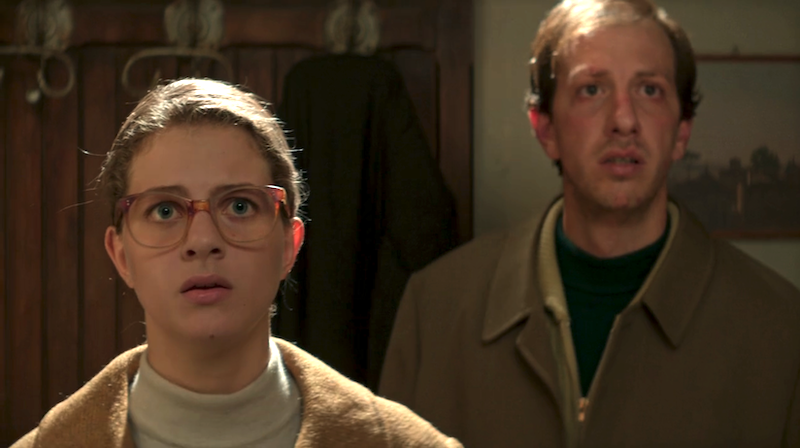
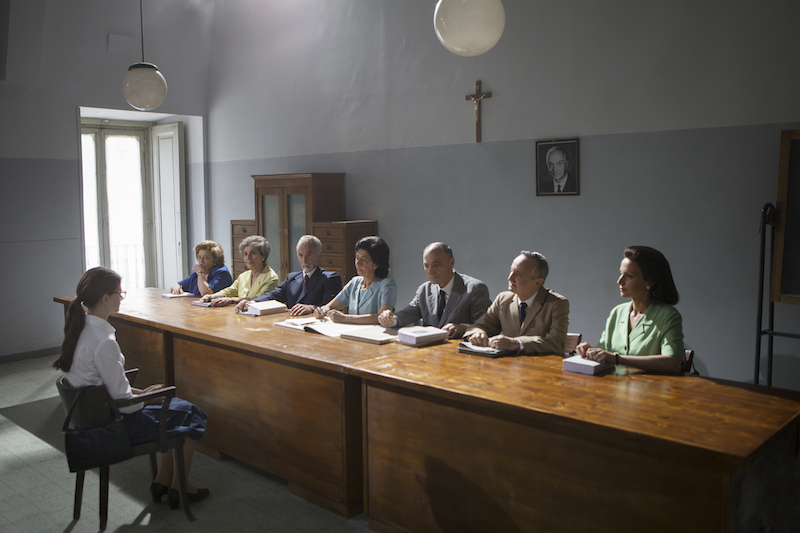
It's no wonder that, when Elena takes her high school completion exams, she agrees wholeheartedly with Giacomo Leopardi, one of Italy's greatest nihilists, telling the professor that beauty is "face powder applied over horror. If we remove it, we are left alone with our fear." When given the opportunity to escape Naples for Pisa, Lenù doubts herself as always while taking deliberate steps to make it happen. Yes, she's been handed many opportunities and had a fair amount of luck, but she deserves credit for working hard and taking scary chances that might allow her to carve out a life for herself far away from the violence of her youth.
When Lenù wanders around Naples after school, she has Nino and Lila on the brain thanks to Professor Galiani's questions about the immature Ischia breakup letter ("Nadia's convinced he left her for you"). It's been almost one year since she's spoken to either of them and when she finds herself near the shoe store, she knocks on the lowered gate and almost immediately regrets it. Lila, with a radiant smile and tragic bobbed wig, happily greets her without even a hint of malice and beckons her into the darkened shop. Once inside, Nino emerges from a shadowy door at the back and sits like a hostage next to Lila while she outlines their future together. As she speaks of her pregnancy, the apartment they've rented, and her plans to leave Stefano, sound and vision distort as if the room has suddenly submerged under water.
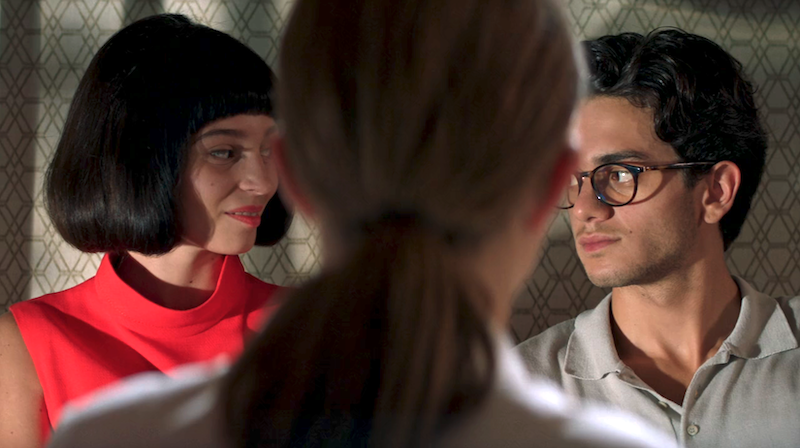
Lenù pokes holes in their plans with questions of practicality before ultimately giving up and leaving, citing a busy schedule before she departs for "the Normale, an important university" (that she hasn't been accepted to yet, but manifest your destiny, girl). As soon as she mentions this, Nino lets go of Lila's hand, jolted back into the rigorous reality of academia that he's failed to take seriously as of late. Throughout this scene, Nino looks downtrodden, unsure, held captive, and it's very clear that he's going to let Lila upend her life for him before fucking her over. Nothing ruins a sexy little affair quite like pregnancy, financial anxiety, and being forced to care about someone other than yourself for once in your goddamn life, you stupid piece of shit.
Instead of backing out before she puts herself and her unborn child at risk, Nino lets Lila confront her husband and undergo a beating that only ends because she had the foresight to hide a knife. If not for Maria's suggestion that Lila might be in Pisa, there's a good chance Stefano would have hunted her down and killed her. Deep down, he must have known she was with Nino, but why confront that emasculating truth when you can gaslight yourself into a more palatable alternative?
For all his faults (and there are many), Stefano does seem to love Lila in his limited, fucked up way. The issue with most of the men in the neighborhood, him included, is that they don't see women as people. They're taught that husbands are expected to provide, and believe that as long as they do, everything else will magically fall into place. When they've fulfilled their end of the bargain and still don't get what they want, it must be because their wives are deficient, which they can attempt to fix with a beating. There's only one societally prescribed solution to the problem, and most don't have the emotional intelligence to brainstorm other ideas.
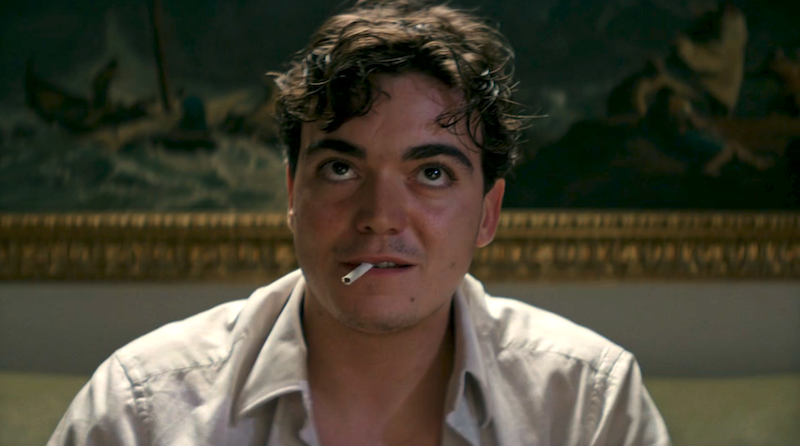
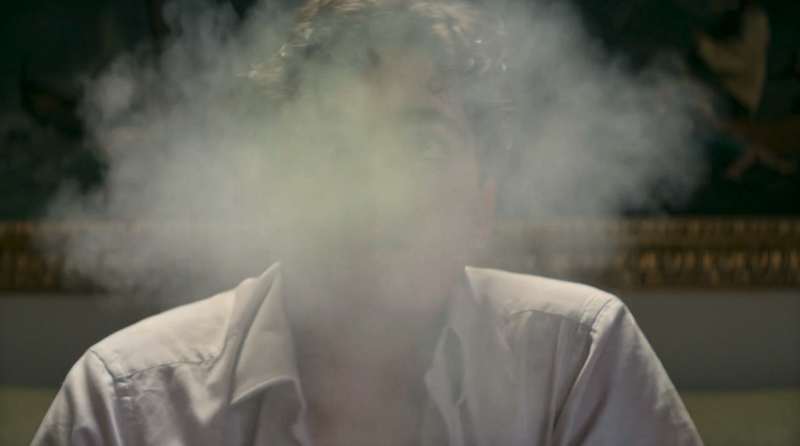
Stefano is most likable when he's chain-smoking cigs, drinking, and watching TV in the dark while on the verge of tears.
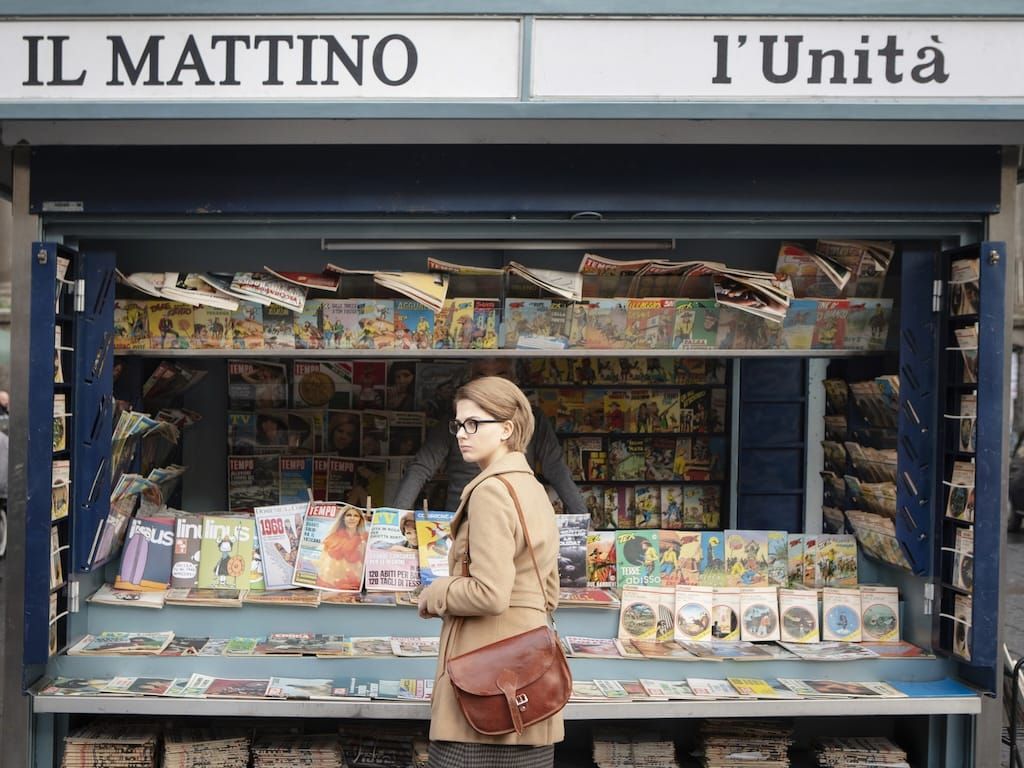
Compared to Stefano, Nino seems evolved. He's smart, cultured, and takes Lila's ideas seriously... as long as they don't make him feel stupid, he's never publicly challenged, and everything else in his life is going well. His discontent with Lila begins when she refuses to leave a lecture after Pier Paolo Pasolini's "La Rabbia" (1963). Nino calls Pasolini "a faggot who stirs up trouble" and manages to drag Lila away once the fascists show up with their own shouts of "faggot." Back at the apartment, she tries to help him study and he, feeling like a failure after a newspaper article rejection, throws a nasty little hissy fit, tells her to get a life, and unceremoniously leaves. Ferrante's original version is much worse because when this all happens, we know that Lila had previously helped him publish something in Il Mattino. Elena describes the article like this:
It wouldn't have taken me long to figure out that many of the lines in that article—not the most erudite, but those few intuitions that did not require great expertise, only as inspired moment of contact between things that were very distant from one another—were Lila's, and that the tonality of the writing in particular belonged to her. Nino had never been able to write in such a fashion nor was he able to later. Only she and I could write like that.
Lila approaches the relationship with Nino like a partnership, but what he wants is an adoring, smart sex robot that he can power down once he's had enough. When Antonio beats the shit out of him, he's technically on his way back to her, but only because he's horny:
In the evening he telephoned Bruno and, in a frenzy, left to go see him. He ran through the rain to the bus stop, barely caught the right bus before it left. But suddenly he changed his mind and got off at Piazza Garibaldi. He took the metro to Campi Flegrei, he couldn't wait to embrace Lila, take her standing up, right away, as soon as he was in the house, against the entrance wall. That now seemed the most important thing, then he would think what to do.
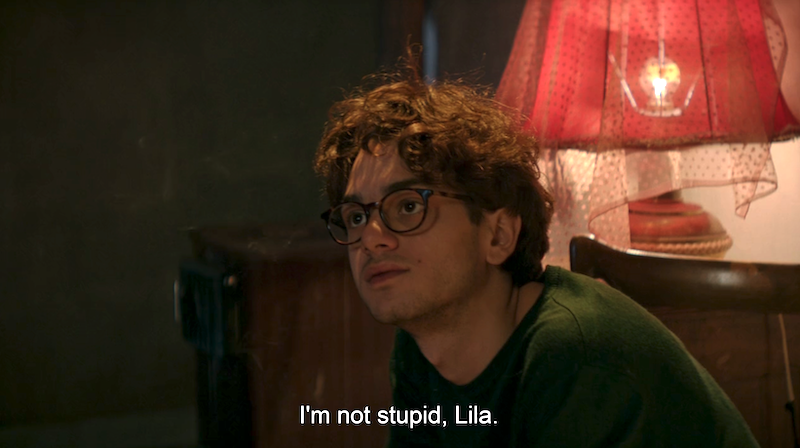
Enzo's eventual rescue mission, precipitated by Antonio's insistence that Lila needs help, feels a little random without the context Ferrante provides in Chapter 94. Showrunner Saverio Costanzo establishes an early connection between Lila and Enzo that is reinforced throughout S1, but the issue is that Enzo has been largely absent in S2 so when he shows up at the apartment with confessions of a long-harbored crush, it doesn't hit as hard as it could. Like Lila, Enzo has been trying to figure out how to change his life by secretly studying for an engineering diploma. He was always smart, but never had the opportunity to pursue an education because of family difficulties. Ferrante describes him as a man who "not only did nothing to please women but did nothing to please the entire world." He's a self-possessed motherfucker, and maybe that's why Lila trusts him. He also promises that if she returns and the marriage doesn't work out, he'll help her escape.
In the final scene, Lila greets Stefano with the news that she's pregnant with another man's baby. Enzo waits outside, listening for screams that never come, before walking off into the night. Everything has returned to how it was, only it will never be the same again.
Random observations:
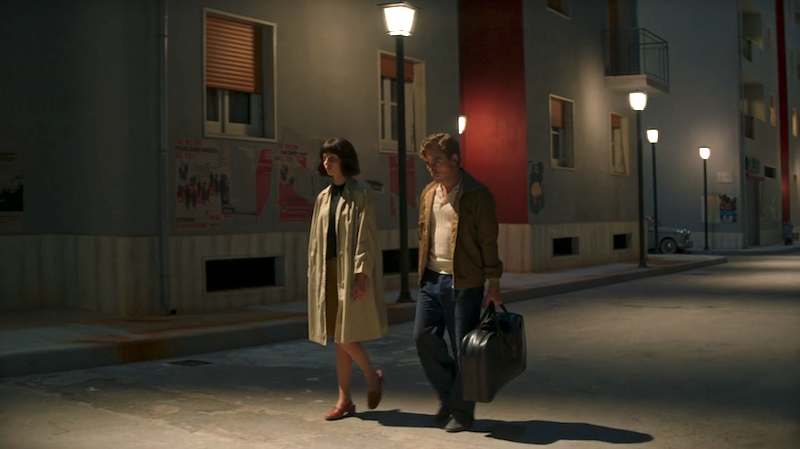
- The rain scene pictured in the header image is set once again to Gino Paoli's "Vivere ancora," the same song playing on the ice cream shop jukebox during the start of Nino and Lila's affair.
- Fun fact: Giacomo Leopardi is connected to Elena Ferrante via her translator, Ann Goldstein. In 2013, Goldstein did the first English language translation of Leopardi's 4,500 page opus, "Zibaldone," originally published in Italian between 1898-1900, and taken from his personal notebooks after his death in 1837.
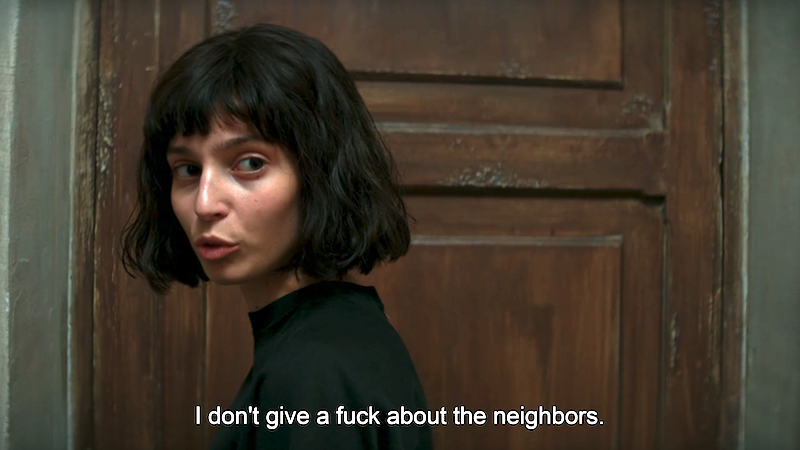
- My favorite moment from the episode is the quick cut from the Carracci and Cerullo families deciding Lila must be in Pisa, to Michele on the phone at the Bar Solara, snarling, "I don't give a fuck if your sister takes trips to Pisa!"
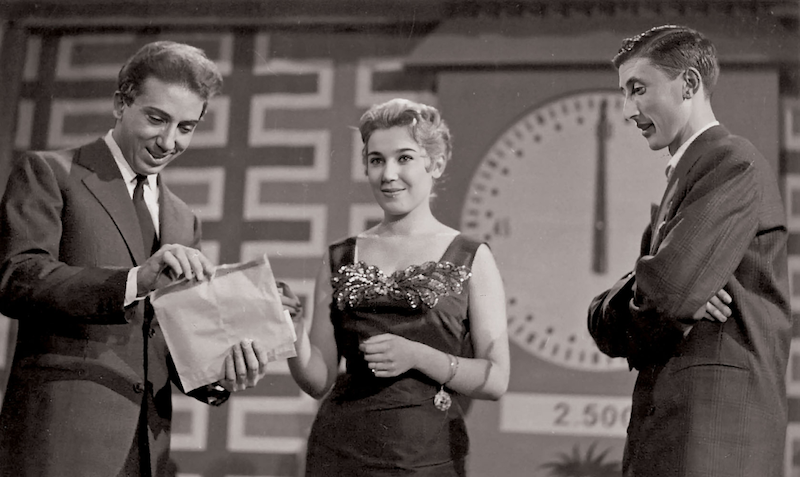
- In the novel, Pinuccia says Lila goes to work dressed like "Mike Bongiorno's assistant." Bongiorno was an American-born Italian television presenter who had several popular quiz shows on RAI, the national public broadcasting company of Italy (also partially responsible for this Ferrante adaptation). I'm not sure if Pina had a specific assistant in mind, but here's Edy Campagnoli from the 1950s quiz show, "Lascia o raddoppia?"
- If Lila was born in the 90s, she'd have "A bitch since the day she was born" in her Instagram bio.
- It's not mentioned in the novel or show, but I would love to know how Nino reacted to the news of Lila's pregnancy. Elena describes his feelings, likely as recounted to her much later, on the night he abandoned Lila: "Lina isn't right for me, Lina is pregnant, what's in her womb scares me; so I must absolutely not return." A homophobe who's scared of pregnancy? I look forward to this joker's downfall.
- Elena earns 70,000 lire tutoring over the summer, which is about $1,200 in 2026 money. She keeps 20,000 for herself and then her mom gives her back another 5,000, so she heads to school with $430. If she hadn't secretly pocketed the 20,000, she'd arrive at the Normale with $86 to her name. Bleak. As a point of comparison, Lila's shitty apartment in Campi Flegrei is 20,000 lire ($350)/month.
- This is what I think of every time my idiot neighbor parks his idiot Tesla in front of my house instead of his own:
Member comments