

Quick summary:
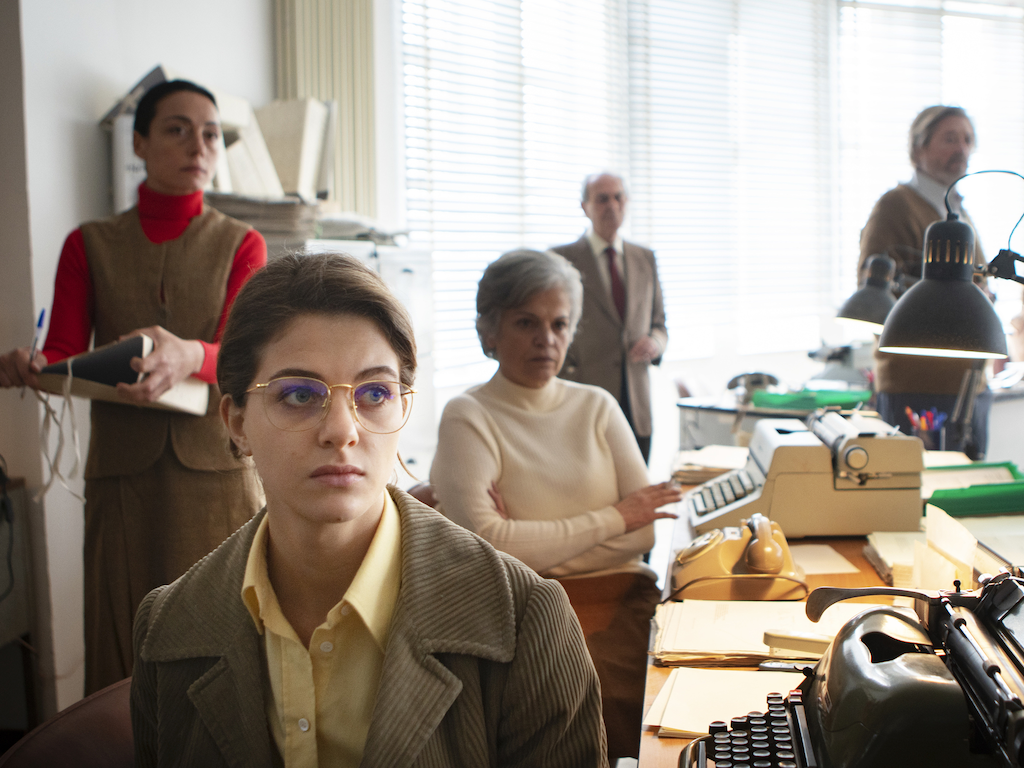
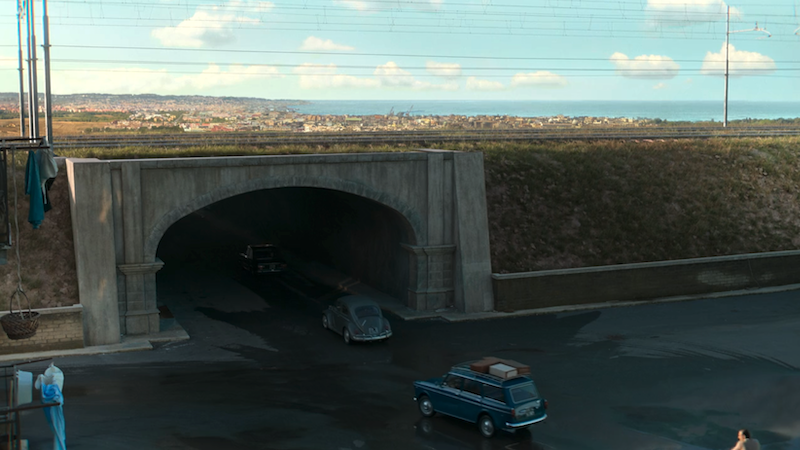
Elena (Margherita Mazzucco), with the full power of the Airotas behind her, devotes herself to getting Lila's (Gaia Girace) life back on track. She schedules doctors' visits, makes Bruno (Francesco Russo) pay restitution after eviscerating him in l'Unità, and introduces Enzo (Giovanni Buselli) to Pietro's (Matteo Cecchi) computer expert acquaintance. When Lila says she wants to move back to the neighborhood, Elena does reconnaissance work to determine how much pushback she'll receive from her enemies. What she learns disturbs her, but not enough to deter Lila and Enzo from moving into an apartment near the tunnel, the first neighborhood boundary the girls cross as children, the place that makes Lila aware of her inability to ever truly leave.
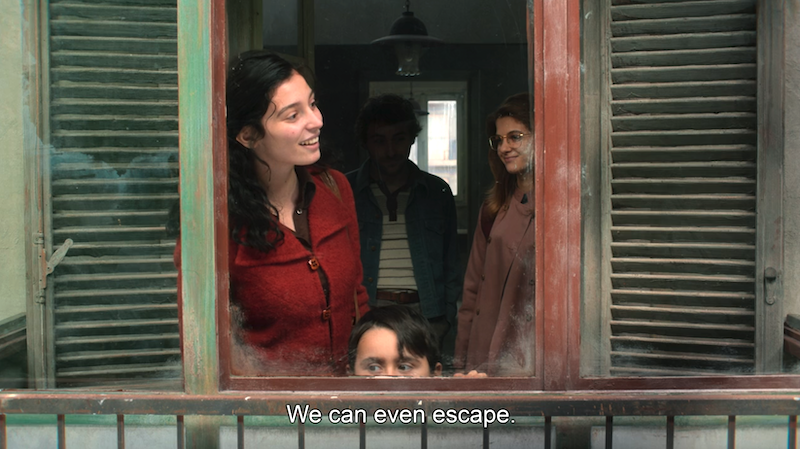
You can, but you won't, and neither will your progeny.
Corresponding book chapters:
"The Treatment" covers a shorter chunk of the book, from Chapter 47 through 57 at just 39 pages. There is no such thing as a filler episode of "My Brilliant Friend," although this one feels less substantive than the others and a bit slower-paced.
Notable choice (complimentary):
The visit to Gigliola's (Rosaria Langellotto) new apartment in Posillipo is as horrifying in the show as it is in the book. I might even go so far as to say that it's better because of Langellotto's performance and the cinematography. Aside from the alcohol, which isn't part of Ferrante's version, the scene is a faithful adaptation, ending on Gigliola's foreboding insistence that Michele (Alessio Gallo) would never hurt Lila, only those closest to her. I don't want to spoil anything for those who haven't finished the series, but for those who have, think about this in relation to Tina in "The Lost Child."
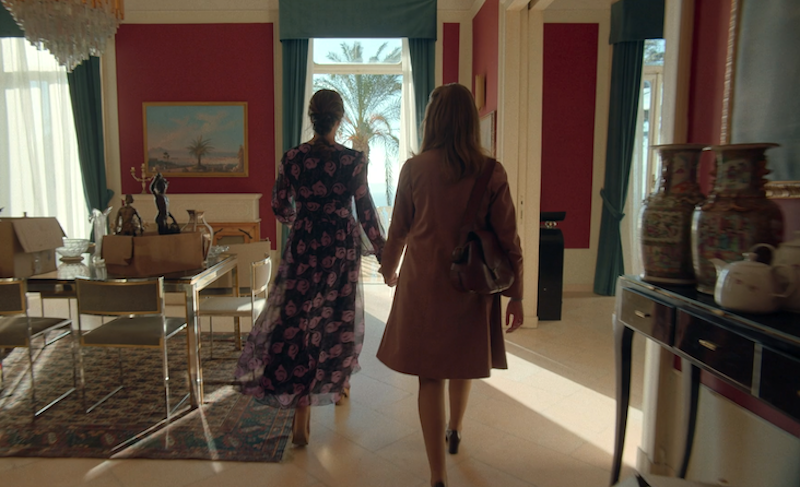
When the scene begins, it's a sunny, beautiful day. Gigliola checks her appearance in the mirror in a dark, blood-red room as the bright outdoor light from the balcony illuminates the space behind her. As she greets Elena, she's all smiles, proudly telling her about the important people who live in their building. As they walk toward the balcony, the sheer layers of her purple floral dress flow away from her body, giving an effortless air to her appearance. For a brief moment, she projects unbothered wealth and prosperity until the facade drops as thoughts of Michele's humiliations creep in. She tries rationalizing her situation by comparing it to worse ones, like Ada's or Pinuccia's, but Gigliola isn't stupid enough to believe her own bullshit and senses that Elena isn't either. After admitting how alone she is despite her impending marriage, she and Elena move back into the apartment.
Once she confesses her unhappiness, Gigliola can't stop. As the daylight fades, so does her falsely prosperous persona. She's trapped in a loveless relationship with a man who doesn't respect her, yet she feels powerless to leave because where the fuck would she go? She tells Elena, "I'm talking like this because you wrote that book and you know suffering." By the time Elena leaves, she knows that Michele Solara has fucked 122 women or, as he considers them, "dolls with a few holes." Lila is the only woman he claims to respect, which used to bother Gigliola until she realized how satisfying it is to see Michele try in vain to win her over while she "make[s] him spit blood." Langellotto skillfully vacillates between pomposity, sadness, anger, and despair, taking Gigliola from generic, jealous neighborhood friend to fully rounded character with her own astute observations.
Notable choice (derogatory):
I'm glad some of the sex talk from Chapter 46 made it into this episode during Elena and Lila's quest to procure the pill, but the conversation doesn't hold the same weight as it does in the book. When TV Elena says, "For me it's not like that," it's obvious she's holding back, but we're not privy to any of the thoughts surrounding her reticence. The show includes a voiceover that gives her general reflection on women acting in service of men (who rarely acknowledge female desire) without any personal insights.
Ferrante gives us a better idea of why Elena keeps certain information from Lila. In the text, when Lila speaks about Bruno's assault in the drying room, Elena first considers mentioning her own experiences, yet holds back for fear of equating two different situations. Class anxiety is certainly present in this hesitation, as she previously experienced a wave of guilt over the idea that, under different circumstances, "[Lila's] life could have been mine, and if it isn't it's partly thanks to her." She probably fears coming off as a privileged asshole complaining about being groped in a fancy hotel while her friend fights for her life amidst subhuman working conditions.
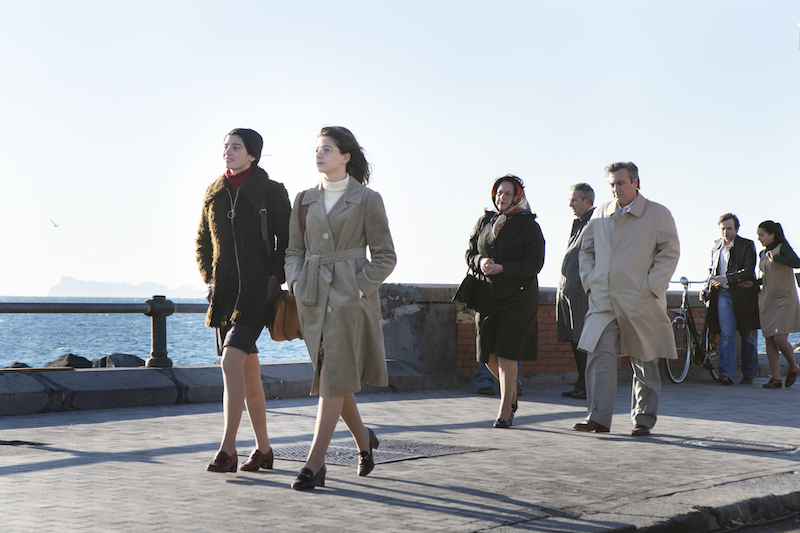
When Lila further opens up, revealing sex has never once given her the pleasure she expected as a girl, Elena knows she can't remain silent and maintain closeness in the relationship. Instead of laying herself bare, she rejects Lila after silently contemplating her true feelings:
At the idea of having to speak about myself—the dialect disgusted me, and although I passed for an author of racy pages, the Italian I had acquired seemed to me too precious for the sticky material of sexual experiences—my uneasiness grew, I forgot how difficult her confession had been, that every word, however vulgar, was set in the weariness in her face, in the trembling of her hands.
This context is lost in the show, so Elena's "For me it's not like that" retort comes off as a bitchy lie, which Lila playfully calls her out on. In the book, Elena's thoughts meander into a lengthy rumination on Nino's previous comment about Lila being "made badly even when it comes to sex" and what this might mean in terms of women advocating for their own pleasure. These layers to Elena's reservation don't come across as well in the show, so the scene reads as more simplistic.
Thoughts:
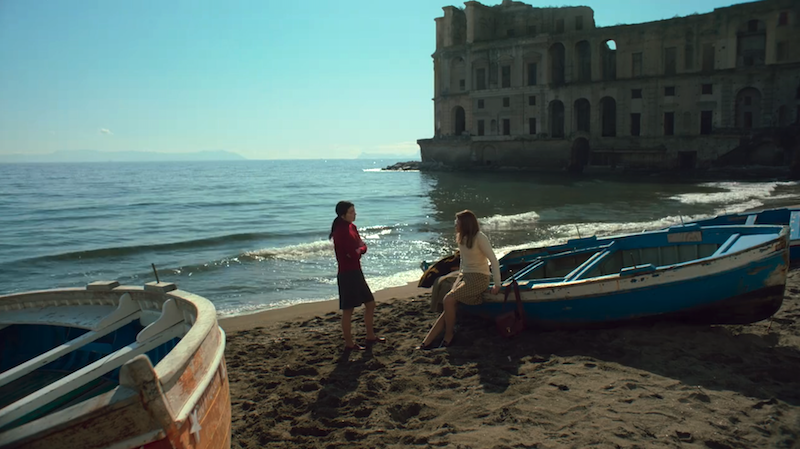
If there's one thing Elena loves, it's feeling needed by Lila, in large part because this means she has the upper hand for once. As she arrives back at her parents' house at the beginning of the episode, her voiceover compares Lila to a neglected plant beginning to turn green again under her care, noting, "I felt a certain sense of power, as if her withering gave me the chance to show off my new status." On one hand, Elena remembers what it was like when Lila had money and frequently used it to help her without being asked. She wants to pay back this generosity, but it's attached to the hope that doing so will make Lila recognize that she now belongs to an important family. Throughout the episode, Lila does clock this change at various points — during the doctors' appointments, after Enzo's computer meeting — and seems disgusted by it even though it benefits her.
Before Elena leaves San Giovanni, she tells Pasquale (Eduardo Scarpetta) and Enzo that Lila isn't well and can no longer work at the factory. Pasquale doesn't take kindly to this information, calling Elena "a petty bourgeois who cares more about her friend than the working class." He isn't wrong about the need for collective action, but he's unnecessarily judgmental of Elena's desire to protect Lila. Enzo, who shares her sentiments, albeit less vocally, isn't hit with the same criticisms. What does Pasquale want her to do, let Lila die in exchange for potential progress at the factory?
In the book, he gives a big speech about "the peasants of the south, the workers of the north, the populations of Latin America, of northeastern Brazil, of Africa, about the Negroes, the Vietnamese, American imperialism." Pasquale is so attuned to the horrors of the world that he minimizes the suffering right in front of him. If someone else, like Nino, were giving this speech, I would say it's an attempt to showboat in front of Elena; in Pasquale's case, it feels truly driven by a commitment to the cause. Unfortunately, his dedication leads to rigidity and self-righteousness, which often makes him see people through an ideological lens lacking nuance. Those without his fidelity are dismissed: Elena as an uppity bitch unwilling to risk a little discomfort for change, Lila as a once useful tool who has abandoned the proletariat at her friend's insistence.
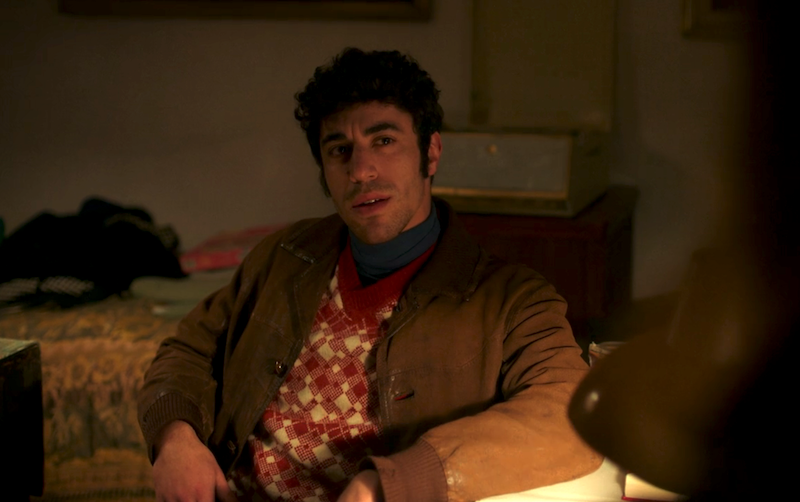
When Elena returns home, calls Pietro and Adele, and quickly formulates a cohesive plan of action for Lila, it's hard not to see Pasquale's point. What happens to the exploited Soccavo workers who lack well-connected friends capable of successfully obtaining their back pay? Are their stress-induced health problems likewise treated by a panel of no-fee doctors? Elena isn't wrong for using her privilege to help Lila, nor is Adele for encouraging her to write about the factory in hopes of changing it. Elena isn't used to her heightened status yet, and as she begins to comprehend it, she reminds herself that she's "no longer the little match girl always down to her last match." She has time, resources, and energy, combined with the unearned confidence that her new position gives her the power to change the world she comes from. She believes she's capable of solving Lila's problems, fighting against injustice, and proving to Pasquale that she's more than just a navel-gazing intellectual.
In this episode, the first cracks in Elena's plan show when she reads her published article about the factory to Lila. Imagine winning the lottery, helping your dearest friend who has fallen on hard times, and being met with crickets. In the show, a detached Lila is more focused on preparing rapini than on Elena's words. The article's contents aren't divulged in the book, but what we hear of it in the show is, for lack of a better word, cringe. Here's a snippet:
As we walk in the street with lowered eyes, we don't notice others who brush past, we don't ask who they are, how they live, the sacrifices they make, the despair in their eyes, the wrath they feel when they show us their hands wounded from boning animal carcasses, scarred forever by toil and neglect in their workplaces, the hands of workers who at night collapse not saying a word.
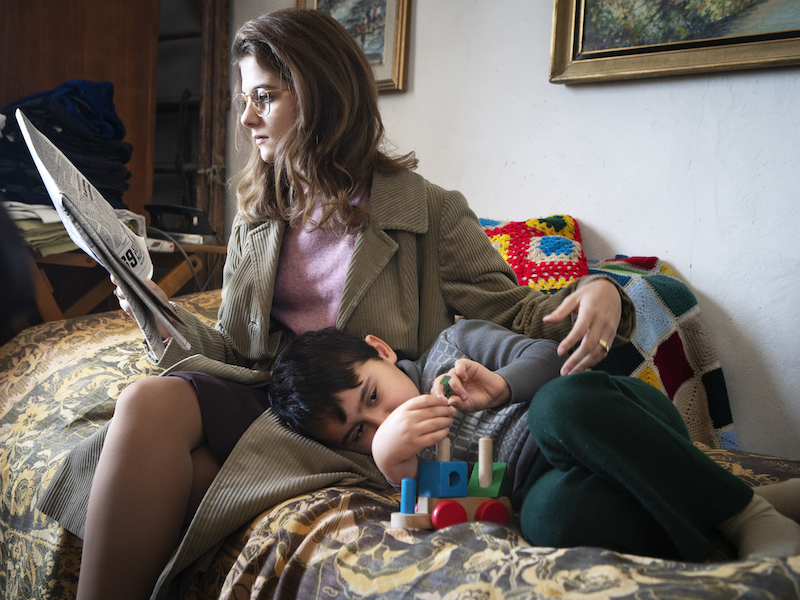
It reminds me of Samantha's speech at the breast cancer benefit before she says, "fuck it" and takes off her wig in part one of the "SATC" finale. The language is out of touch but well-intentioned, making it feel very different from Lila's plainly conveyed committee speech in the previous episode. Lila doesn't critique any of this, though; she simply tells Elena, "The teacher's Communist kids won't like this way of doing things." Instead of trying to figure out why, Elena is immediately defensive, citing the compliments she received at the newspaper and hand-waving Nadia's importance. After doing this, book Elena observes, "For a few seconds I had the impression that Lila didn't recognize me but saw before her a spirit who was exploiting her weakness." I think what Lila understands in this moment is Elena's similarities to Nadia and Pasquale. They all want to use her for something — to advance the movement, bolster their own reputations and egos — whereas all she wants is to survive.
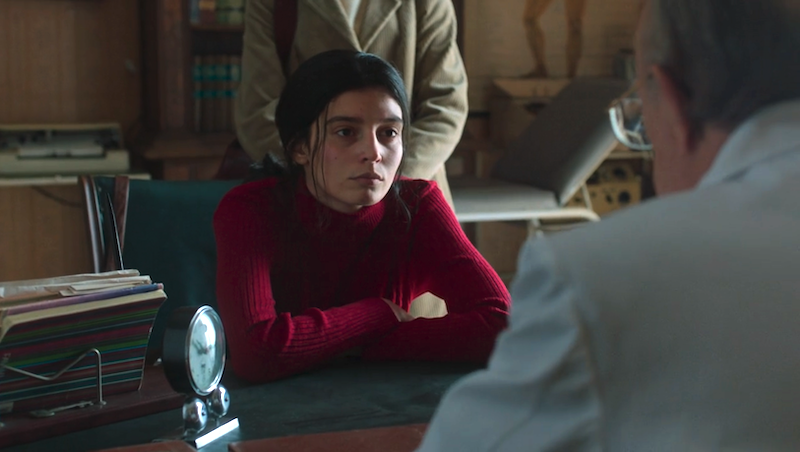
Annoyingly, survival requires a visit to the cardiologist to make sure she doesn't have a heart murmur. It's a dehumanizing experience from the moment they sit down in the fancy waiting room full of art and elegantly draped fabrics. Looking around, Lila tells Elena, "You're beautiful like these statuettes. You're the lady and I'm the maid." In the exam room, the doctor makes polite chitchat with Elena about the fabulous Airotas as Lila wordlessly follows his instructions, seeming like an afterthought at her own appointment. He doesn't really pay attention to her until she pushes back on his recommendation for a neurological exam, declaring, "Nervous illnesses are for ladies" and invoking Melina. Ladies get to relax in the countryside until their good humor is restored; broke whores like Lila are labeled as "crazy" and simultaneously pitied and ignored.
The neurologist, who at least speaks directly to Lila, is a quack, but he gives her the name of a "lady doctor" who prescribes birth control pills when she aggressively requests them apropos of nothing. Before they leave his office, he tells Elena that his wife liked her book, causing her to self-consciously avert her eyes as Lila looks up at her, saying, "What's with the face? It's a good thing." Lila is both proud and jealous of Elena, disgusted by her new family connections and appreciative of them. During their sex talk, Elena delights in the reveal that Lila has read her book even if no opinion on its quality is given. She's desperate for recognition from her friend but when she gets it, as in the neurologist's office, she doesn't know how to accept it at face value.
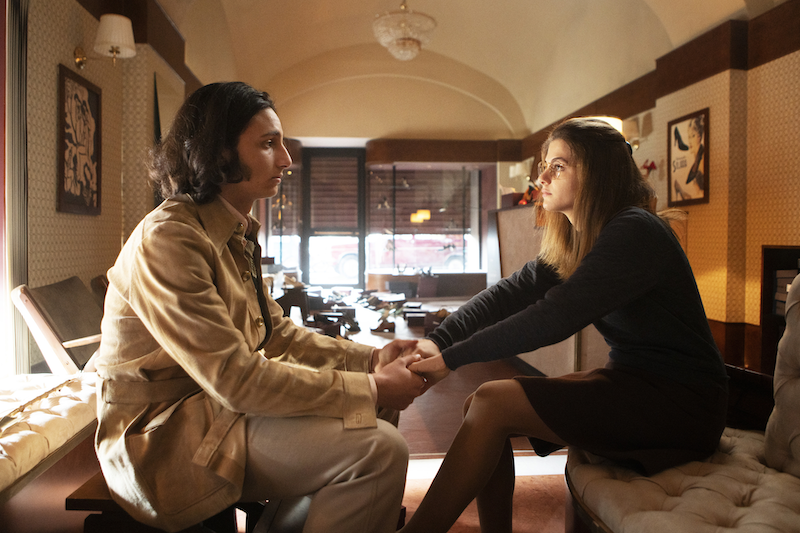
Elena also struggles to give Lila the benefit of the doubt when she talks to Alfonso (Fabrizio Cottone) at the shoe store and learns that he's queer, a confession he made to Lila some time ago. In the book, she walks away from the interaction annoyed, recognizing "a reversal that rapidly changed a phase of apparent growth in the relationship between Lila and me into a desire to cut it off and return to taking care of my own life." She claims to feel hurt that Alfonso "confided something to Lila and not to me" but is probably equally annoyed to hear him say "If I had been born a woman I would have wanted to be like her." This scene feels more significant in the text due to Elena's interiority and post-conversation irritation; in the show, the takeaway (expressed via voiceover) is more about Elena's realization that the Carracci family is too absorbed with their own problems to make trouble for Lila.
Combined with Gigliola's assurances and the back pay secured from Bruno c/o her article, Elena feels good enough about Lila's prospects to support her move back to the neighborhood. In the book, it's a less straightforward trajectory, and Elena must first work through feelings of bitterness related to the secrets Lila kept about Alfonso and Michele. She wonders, "Was it possible that she hadn't realized Michele's absolute dependence on her, or for her own reasons had she decided not to say anything?" With Michele, Elena sees Michele's love for Lila as
an obsessive form of appreciation of a woman, not devotion, not subservience, but rather a sought-after form of male love, a complex feeling that was capable—with determination, with a kind of ferocity—of making a woman the chosen among women. I felt close to Gigliola, I understood her humiliation.
Elena, with all due respect: Michele is a gangster who wants to put Lila in a cage so he can admire her like a zoo animal. He doesn't respect her; he merely wishes to own something elusive. Most men do not respect her. Nino was threatened by her; her own father calls her a whore to her son; Stefano (Giovanni Amura) is no longer openly hostile, but only because his wrecked life/finances have zapped his energy. Alfonso and Enzo are the only men who seem to understand her and, instead of manipulating her to be a certain way, appreciate her for who she is.
It's interesting to observe the way Elena sees Lila — as this mythical, intelligent creature capable of inciting men's worship — compared to how Lila sees herself — as an unstable woman a few short years away from approaching someone on the street and swiftly revealing their child's true paternity. Previously, Lila had insisted that Nino was Gennaro's father and now, with one crude observation from Melina, is convinced it's Stefano. Now that she's back in the neighborhood, committed to renting Don Carlo's widow's apartment, what other surprises are in store?
Random observations:
- I wish I had been more like Mariarosa during my casual sex era but instead of fucking people who could offer me free legal work, I chose EDM DJs and trustafarians.
- I would love a neurologist to prescribe me long walks, trips to the woods, reading, and crocheting. Pregnancy as a cure for my ailments? Not so much.
- Apparently, the Sky View Tower from "Final Destination Bloodlines" opened on May 17, 1969, the day of Elena and Pietro's wedding. Maybe that doctor wasn't totally off base when he told her the date was unlucky.
- Book Elena reads Henry Fielding's 1749 novel, "Tom Jones," which I somehow was never assigned in school. It's a 1,000-page comic novel that follows a charming womanizer (like a benign Nino) from birth to adulthood in 18th-century England. It sounds like it has structural parallels to the Neapolitan novels, plus Ferrante references Fielding in "Frantumaglia," so I should probably read it.
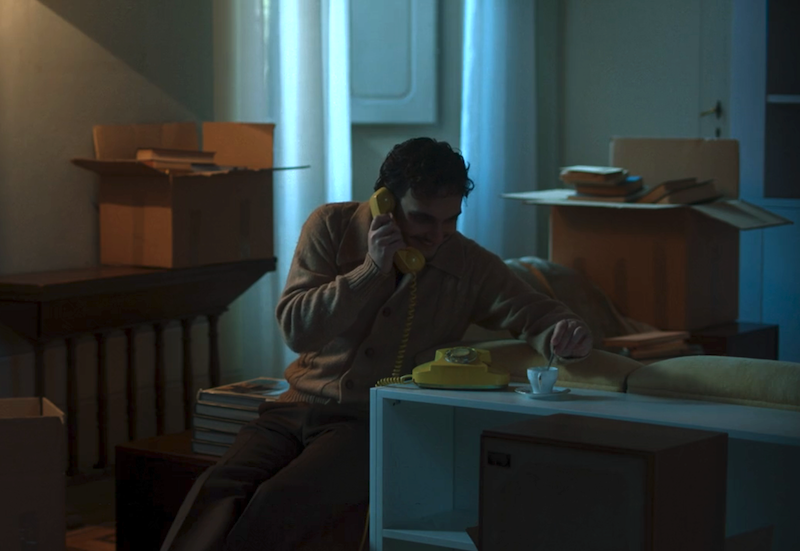
- I never felt like Pietro had any sex appeal until I saw this:
- TV watchers: if you're wondering why the name Don Carlo sounds familiar, it's because he's the former owner of the Solaras' new venture, Everything for Everyone. When Lila was a child, she saw Melina eating soap purchased from his cellar shop, an event that forever haunts her because she believes she's witnessing her future.
- In the book, Elena witnesses a moment between Enzo and Lila where he looks at her with an admiration "that for an instant made me jealous." If this doesn't make you worried about her relationship with Pietro, it should.
Member comments