
I have been consuming too much internet lately and it's making me feel crazy. Why do I know Andrew Garfield's top 8 drag queens? I mean, his choices are good, but that's not really information I need swimming around in my brain. What I need even less are postpartum protein wrap recipes, alongside "Mitch McConnell Returns to Capitol Hill In Jar Of Formaldehyde," next to a picture of people I once knew and marginally liked in college yet haven't talked to in 10+ years and would hide from in a grocery store. A lot of people joke about moving to the middle of nowhere and completely disappearing from the internet, but I'm legitimately going to do that. I'll keep writing this blog as some way of justifying my liberal arts degree, but I'll completely remove myself from anywhere lip filler discussions are happening alongside Zionist talking points.
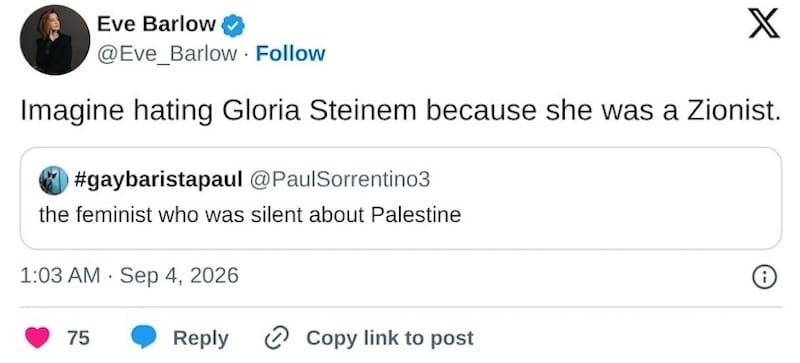
Here's an example of what I find so intolerable about online discourse. Gloria Steinem dies on September 2 and the internet is in collective mourning for a few hours. "Yaas, queen, feminist childfree icon, blah blah." Then, the backlash starts, and the vibe is more, "CIA operative scum who only cared about white women." Are those things all true to some degree? Sure, but it's possible to appreciate someone's value while also acknowledging that some of their opinions are moronic. There are of course good takes out there, but a majority of the shit floating around is meant to provoke, not provide nuance, and if you think swimming in the sludge of incendiary headlines isn't impacting you, well... how the fuck could it not be?
Browsing the internet is like a twisted, evil version of "Sesame Street's" Alphaquest where each door reveals a new topic that will give you a stomach ulcer. (Sidenote: until recently, there was a quantitative hedge fund named AlphaQuest. I hate it here.) To find whatever you're actually looking for, you must bounce through a liminal space of cat videos (always welcome), work emails full of promises to "circle back," and shoddy journalism that doesn't even belong in a properly run high school newspaper. I don't have smart solutions for anything, I'm just ranting into the void, per usual, thinking about how impossible it is to even like anything these days without 10,000 caveats because if you don't mention all of them, some asshole will jump in to "educate" you. I've said this at least once before and I'll say it again: I fully understand why people get to a certain age and feel ready for death.
And on that note...
💉 Elizabeth Meriwether's "Furious"
Elizabeth Meriwether is the person behind shows like "New Girl," "The Dropout," and "Dying for Sex," along with the Natalie Portman/Ashton Kutcher movie ("No Strings Attached"), which is exactly like the Mila Kunis/Justin Timberlake movie ("Friends with Benefits") that weirdly also came out in 2011. She's currently writing the screenplay for Jon M. Chu's Britney Spears biopic based on the singer's 2023 memoir, "The Woman in Me." I hope the project dies in pre-production because the whole thing seems like a bad idea but what the fuck do I know! Creating six shows by age 44 with a high success rate is insane, especially considering the fickle/evil/misogynistic nature of the industry, but Meriwether seems adept at navigating it and could end up winning her first Emmy for "Furious," a show with an absolutely stacked cast, strong direction, and writing that mostly holds up, although I will admit my enthusiasm slightly waned during the last two episodes.
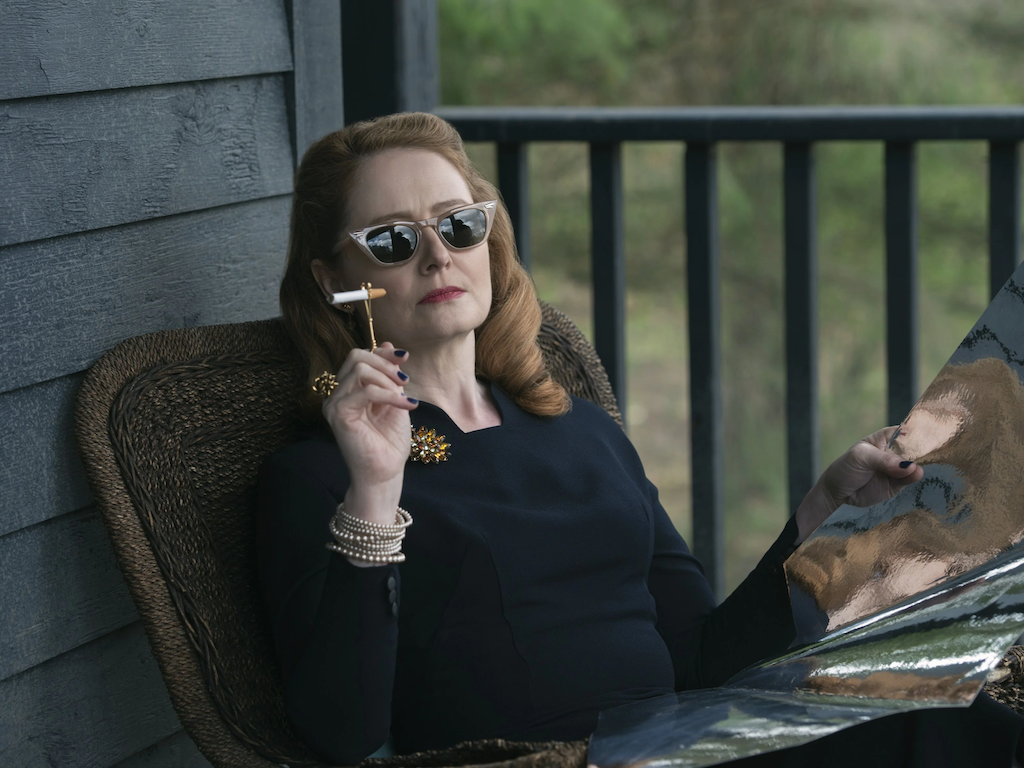
The show follows Alice (Emmy Rossum), a former homicide detective turned FBI agent, who becomes obsessed with Catherine (Lola Petticrew), a sex worker killing men she holds responsible for her best friend's death. It's one of those situations where — surprise! — the criminal justice system is totally inept at stopping wealthy white men from doing whatever the fuck they want, so women must take liberties to ensure at least some consequences exist. As we learn more about Alice, we realize that her interest in Catherine is driven at least partially by her own traumatic background, which includes an abusive relationship with fellow cop, Marshall (Jake Lacy), that led to her career change.
Alice's FBI mentor, Nora (Quincy Tyler Bernstine), is a jaded alcoholic who's dealt with her fair share of institutional discrimination, yet remains committed to doing what she believes is right, even as it destroys her own life. You don't get to be director of the FBI's sex crimes unit without developing, or being driven by, some kind of unhealthy coping mechanism. Nora is my favorite type of character because all of her idealism is gone, and she's driven by a spite/rage combo that I find quite relatable in my late 30s. There is one scene where she gets put on administrative leave and Alice finds her at the bar in a Hawaiian shirt, singing Meatloaf.
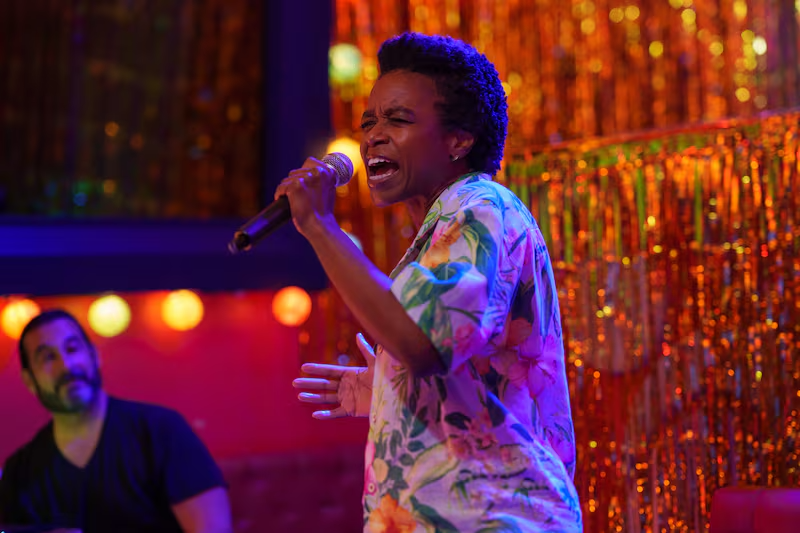
What makes the show great is the lead characters' complexity and high caliber acting. Catherine, Alice, and Nora are all imperfect victims who refuse to be defined by the scum of the earth men who wronged them. The writing walks the thin line between revenge fantasy catharsis and the bleakness of a world run by the whims of literal dicks. My biggest gripe is that the villains, and most of the men, aren't as complex as the leads. Jay Easton (Peter McRobbie), the show's Jeffrey Epstein figure, practically screams, "I want my child porn! Give it to me now," while his enabler daughter, Emma (Hope Davis), doles out his Viagra. To be fair, we're living in a politically blunt time where the US president has openly spoken about wanting to fuck his own daughter, but these characters feel tonally at odds with everyone else in the show, even the other, lesser villains like the pathetic lawyers played by Rob Delaney and Campbell Scott. They're still both obviously morally bankrupt, just less in a "twirls dirty mustache" kind of way.
Watch if you like: "Killing Eve," "Top of the Lake," "Sharp Objects," performances so good you're willing to hand-wave some missteps, men who are mostly punchable caricatures aside from one who might be considered acceptable if your bar is low.
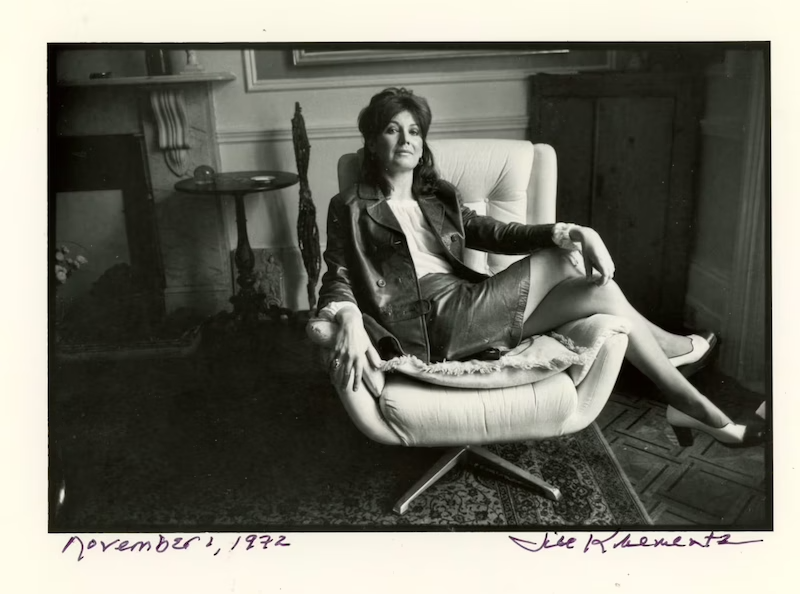
🇮🇪 Edna O'Brien's "Country Girls" trilogy
This book, which is actually three books — "The Country Girls" (1960), "The Lonely Girl" (1962), and "Girls in Their Married Bliss" (1964) — published together in 1986, was my first O'Brien foray. Before reading, all I knew is that the novels were deemed "obscene" and immediately banned by the Irish censorship board. To a modern reader, this feels crazy based on the books' mild sexual content, but Ireland at the time was unofficially run by the Catholic Church, so you can imagine the insane repression. The extremely cunty-looking Archbishop John Charles McQuaid denounced the books as a "smear on Irish womanhood" in 1962 and that's before the adultery, attempted abortion, and suicide in the final installment, so I'm not sure what he was even angry about. Girls leaving their repressive, rural hometown in search of lives with agency? The horror!
In 1966, a group of frustrated writers, including O'Brien, formed the Censorship Reform Society, which eventually led to a bill in 1967 that put limits on the length of censorship and made it easier for writers to file appeals. As you might have guessed, censorship greatly impacted the trajectory of female writers, resulting in an overwhelmingly male canon. Edna's contemporary, Kate O'Brien, was similarly silenced and, despite now being recognized as a major 20th-century queer Irish writer, died destitute with most of her books out of print. Norah Hoult is another prolific, forgotten writer who, thanks to publishers like Persephone and New Island, has seen a small posthumous resurgence. Unlike most of her female peers, O'Brien avoided ruin because of her immediate international success. She also lived in London by the time her first book was published, so having it banned in Ireland wasn't as big of a deal; it's not like she had to watch the local parish priest burning her book while her own mother shouted fire and brimstone.
When the trilogy was recommended to me (by who, I can't remember), it was described as Ireland's version of the Neapolitan novels, and I can see why. It's not necessarily similar in tone or style, but it follows two friends as they escape their rural hometown in western Ireland, adjusting to city life in Dublin (book 2) and eventually, London (book 3). The first two books are written from Caithleen "Kate" Brady's perspective, detailing her "romance" with an older man/groomer, her years at a convent boarding school with Baba, and the relationship with her alcoholic father. Her romantic choices are never good, and by book three, which is written mostly from Baba's POV, you'll want to grab her around the shoulders and shake her. Baba is a similarly poor decision maker, but she's not as sensitive as Kate, so she's able to shrug off most shitty experiences and keep it moving.
From what I've gathered, a lot of people are let down by the final book in the trilogy, "Girls in Their Married Bliss," both because of the POV change and the deeply cynical content, but I am not one of those people. I love that the book ends on an appropriately dark note, in total contrast to the saccharine title. Married bliss? More like life at the bottom of the ocean with a cinder block strapped to your ankles. Here's a taste of the prose:
Sweet Jesus, she thought, I despise him. If there was a way of making him suffer now, I would do it. If he said his wife had vanished with his babies I would swallow my last grain of pity and laugh. It was the first heartless admission she'd ever made to herself, the first time she realized that her interest in people was generated solely by her needs, and bitterly she thought of the little girl—herself—who had once cried when a workman stuck a pitchfork through his foot. It was as if her finding the pleasures in the world had made her ravenous.
Read if you like: "Brooklyn," Sally Rooney, Eimear McBride, writers who masquerade as light and fluffy before stabbing you in the jugular, men so disappointing they'll have straights contemplating celibacy.
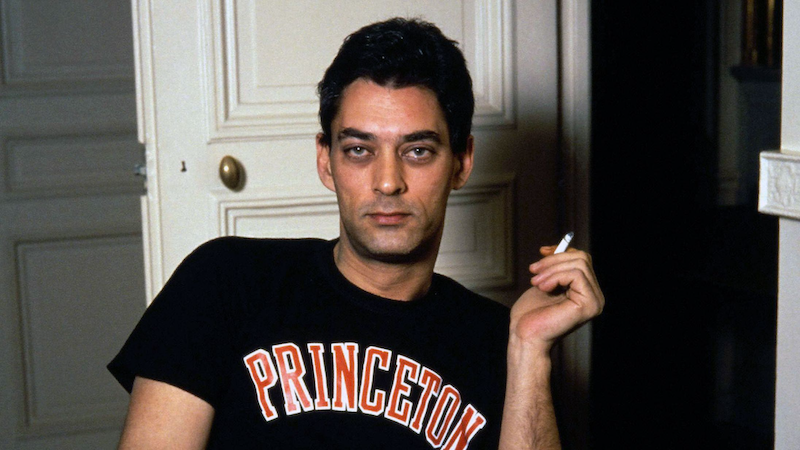
🕵🏻♂️ Paul Auster's "The New York Trilogy" (1990)
I always assumed, based on one asshole I knew who liked him, that Paul Auster was one of those writers worshipped by pretentious MFA douche bros with boners for cynical postmodernism. And he probably is, idk, but — as with David Foster Wallace, Ben Lerner, and Bret Easton Ellis — I'm now also a fan. I would have started reading him much sooner if someone had just told me how much he loves a loner protagonist flâneur with paranoid, depressive tendencies. Apparently, not all of his protagonists are men, so I'm curious to read one of his books helmed by a woman, like "In the Country of Last Things" (1987).
"The New York Trilogy" is three books: "City of Glass" (1985), "Ghosts" (1986), and "The Locked Room" (1986). The first installment is the strongest, so if you read that one and dislike it, stop while you're ahead. The first and last books are directly linked by shared characters, and all three books share similar themes that deepen through comparison. In order to enjoy them, you need to have some patience for intellectual thought experiments and non-traditional literary forms. These aren't the type of detective mysteries with straightforward resolutions a la Agatha Christie; they make even someone like Raymond Chandler look conventional. Auster does not give a fuck about plot, resolution, or character-building. Each novel begins with a premise that Auster subverts so deeply that by the end, you barely even remember it.
In "City of Glass," which is mostly written in close third person, the protagonist is a writer named Daniel Quinn who begins using a pen name after the death of his wife and child. His friends think he's retired/living off savings, but he's actually still publishing mystery novels about a detective named Max Work under the pen name William Wilson. From the jump, this character is entrenched in an identity crisis, living an isolated ghost life several layers removed from reality. Just when it seems like he's primed to toss himself off a bridge, he starts getting calls from a mystery person asking for Detective Paul Auster.
At first, he tells the caller they have the wrong number but eventually, he succumbs to their desire and becomes Paul Auster. The caller, a man named Peter Stillman, wants to hire "Auster" to follow his father, who is soon to be released from prison. When Peter was a child, his religious studies professor father became obsessed with language deprivation experiments, convinced that if he kept Peter completely isolated, he would eventually speak the language of God. If you already think this sounds too cerebral, just wait because it goes even further off the rails once "Auster" starts working the case.
In each of the novels, the protagonist, in a desperate attempt to bring meaning to his life, becomes obsessed with something that eventually reaffirms his initial suspicion that life is meaningless. In the second and third books, the protagonists are in seemingly happy relationships that they throw away in favor of unsolvable hyperfixations. In all three novels, any semblance of a life outside the mind completely melts away by the end and each character is defined solely by his psychological disintegration. It's a disturbing, dispiriting trilogy that made me feel like the time I reached ego death on mushrooms and could no longer remember any details about myself aside from my name. If this sounds fun to you, give Auster a whirl.
Read if you like: Wittgenstein, walking around the city for hours with zero agenda, overthinking yourself into a paranoid miasma, the Mets, "Pale Fire," "Sophie's World," "Eyes Wide Shut," "House of Leaves."
🇳🇴 Anja Breien's "Wives" trilogy
Somehow, three downer trilogies made it into this installment of FND; surprisingly, this is not a reflection of my current mental state. As soon as the temps start to drop and the days get shorter, I turn into this guy and no bad vibes can touch me (until midterm elections get closer, then it's nervous barf o'clock). Anyway, Anja Breien is incredible and I can't believe I hadn't seen any of her films until a few weeks ago. Metrograph recently screened a showcase of new 2k restorations of her work, including the "Wives" trilogy — "Wives" (1973), "Wives: Ten Years After" (1985), and "Wives III" (1996) — which is how she finally made it onto my radar.
When "Wives" premiered in the US in 1976 as part of the New Directors/New Films series in NYC, it got positive reviews, but the reaction to "Ten Years After" was basically "meh," and Breien never got the wider distribution needed to find her audience here. When she died this past May, I didn't even hear about it, and I'd like to think I'm pretty up on film news. Scandinavian cinephiles would probably hear this and scoff, because Breien is certainly well known amongst them as one of the female pioneers of Norway's New Wave. It pisses me off that she didn't come up in my many years spent studying Ingmar Bergman because he was a big inspiration/mentor to her and for a while, critics were dubbing her the "new Bergman" (which, yes, is reductive, but undoubtedly a compliment).
Her career took a hit in the 80s when the backlash against auteur cinema led to disdain for artistic/political films about contemporary social issues. An article from KILDEN Information and News About Gender Research in Norway states,
The auteur concept soon became a rubbish bin for everything that films were not supposed to be. According to [researcher Johanne Kielland] Servoll, the auteur films were regarded as too private, too elitist, and too amateurish. And Breien and [Vibeke] Løkkeberg’s “women’s films” were part of the outdated personal and political trend.
Shockingly (sarcasm), this backlash made it harder for women to make films. Did Bergman suffer similar setbacks? In some ways, yes. He made "Fanny and Alexander" (1982) then dipped from theatrical cinema instead of fighting the wave of change that was no longer in his favor. During this period, Breien made two films — "The Witch Hunt" (1981) and "The Paper Bird" (1984) — that were critically mixed, but came back strong domestically with "Wives: Ten Years After" (1985), winning Norway's top film prize for that year.
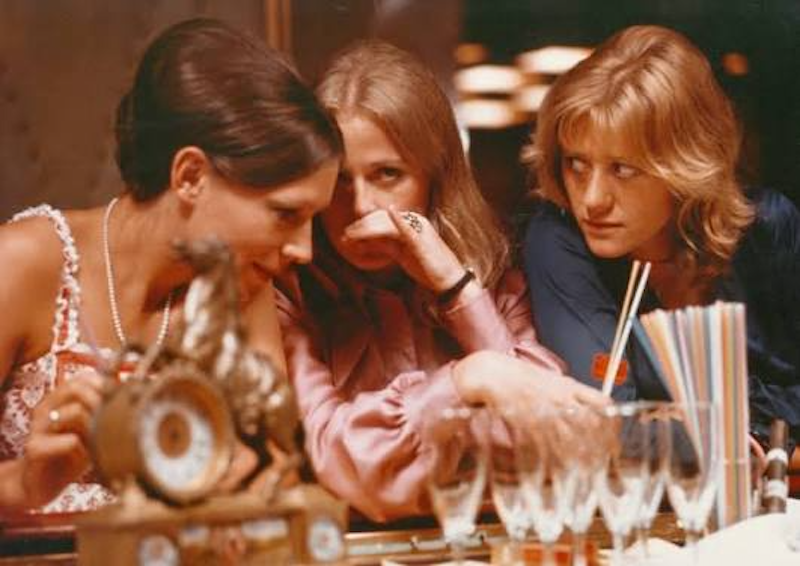
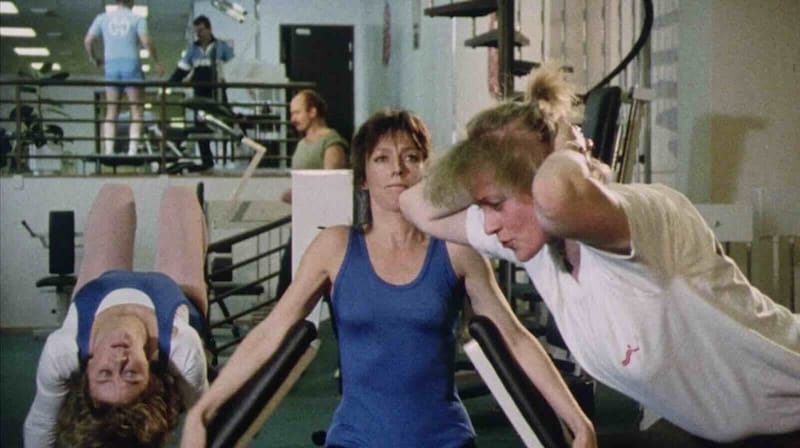
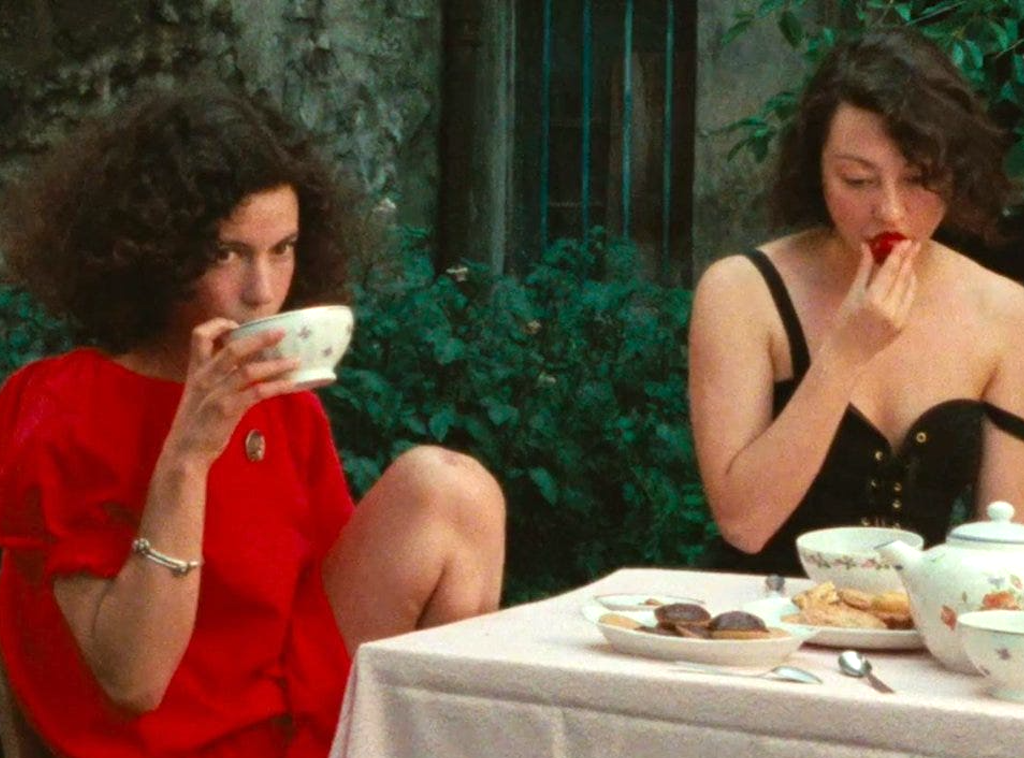
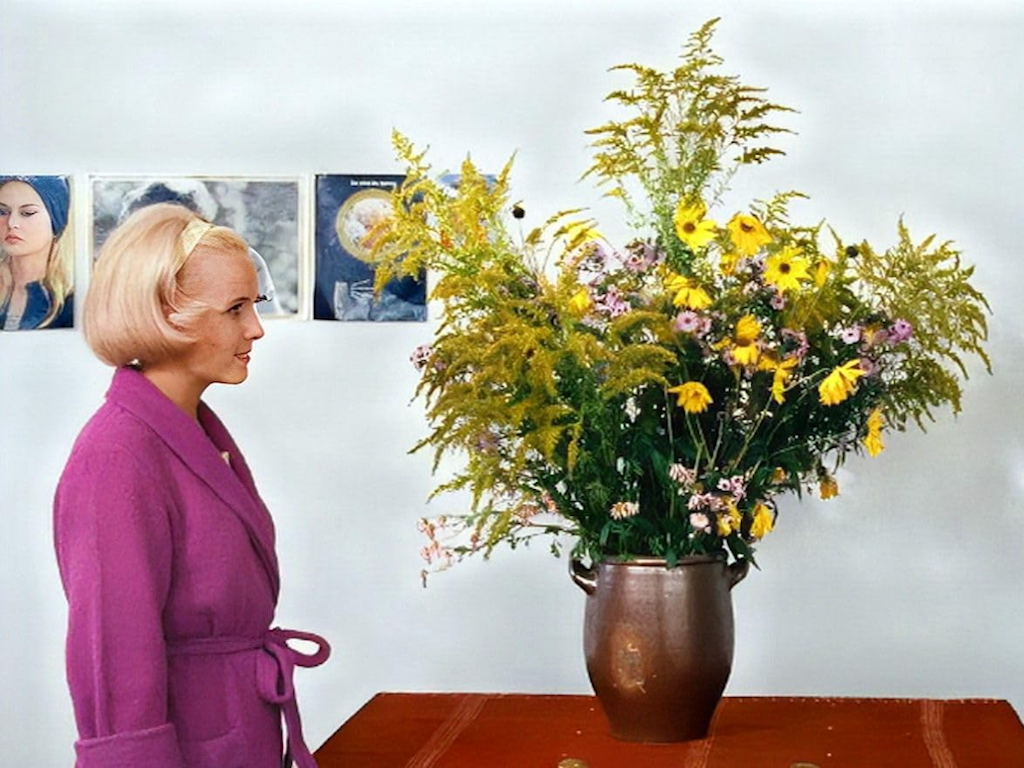
What makes the "Wives" trilogy so relevant, even today, is its focus on friendship as a salve for all the gender role nonsense women face. In each film, a group of three childhood friends reunite for a mischievous respite from their domestic responsibilities. In the first film, the women are in their late 20s. Kaja (Katja Medbøe) is married and pregnant with her second child; Mie (Anne Marie Ottersen) is a mother of three; Heidrun (Frøydis Armand) is married, but separated from her husband and, although she initially lies about it, does not have kids. By the end of the film, all pretenses have fallen away and the women are able to frankly share their feelings on topics like sex, motherhood, and marriage. Each time they reunite, we see how they've changed, growing increasingly disillusioned with their own predicaments.
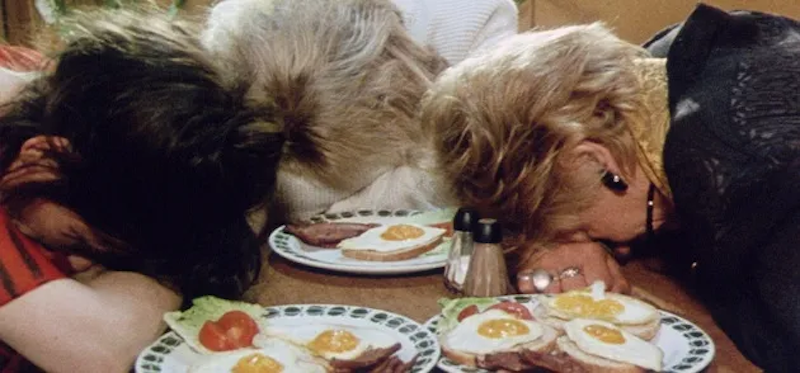
Annoyingly, there is no easy way for you to see these films, but maybe they'll eventually stream on Metrograph At Home. They've also played on Mubi in the past, so keep an eye out there, too. If they ever become available again, I'll sound the horn.
Watch if you like: John Cassavetes, Chantal Akerman, "Girls," "The Group," disillusionment with the female experience, getting day drunk and crying in the street, the passage of time, "And Just Like That" if it wasn't a disaster.
🏙️ Isabel Sandoval's "Lingua Franca" (2019)
I first saw "Lingua Franca," Sandoval's third feature, in 2020 at the Bentonville (Zoom) Film Festival, where it won the jury award for Best Narrative Feature. The film follows Olivia (Sandoval), a Filipina trans woman dealing with the anxiety of life as an undocumented immigrant under the first fascist Trump regime. She works as a live-in caregiver for Olga (Lynn Cohen), a woman with dementia, in Brighton Beach. When she's not on the clock, she spends most of her time fielding money calls from her mother back in the Philippines and trying to figure out how to acquire a green card. When Olga's grandson, Alex (Eamon Farren), comes to stay with her after getting out of rehab, he and Olivia embark on a tentative romance that you know won't end well because, while he seems like a good lover, he's also an emotional idiot.
According to my drafts, I intended to write about "Lingua Franca" years ago but never did, so I'm rectifying that now. In 2019, it became the first film directed by and starring a trans woman of color to screen in competition at the Venice Film Festival, and from there, acquired North American distribution by ARRAY, Ava DuVernay's company. Sandoval's first two films, "Señorita" (2011) and "Apparition" (2012), also did well on the festival circuit but had much smaller international reach. Both were shot in the Philippines in Tagalog and didn't have US distribution until The Criterion Channel acquired them in 2021. (The rights have since expired, so only "Lingua Franca" is available, but you can rent "Apparition" elsewhere.)
Here's what 2020 LP from the drafts had to say about the film:
"Lingua Franca" is sensual and languid, more reminiscent of a Southern Gothic than a New York City love story. Dark streets, rattling trains, and the lights of Coney Island are juxtaposed with cow carcasses hanging in a slaughterhouse.
I found myself constantly on edge, just waiting for a visit from ICE or a random act of violence. The film's protagonist, Olivia, rarely experiences the luxury of relaxation and neither do we. Every siren and microaggression had me on edge, steeling myself for what I thought was to come. As the credits rolled, I was pleased to realize that my expectations had been subverted at nearly every turn.
Sandoval wrote, directed, starred, produced and edited the film; had I known this while initially watching, I might have been less on edge. It could have very easily dipped into trauma porn like "Girl" (2018) or stereotypical nonsense like "Emilia Perez" (2024), but it avoids all of this bullshit because it's a movie about a trans woman actually made by a trans woman... how crazy that this results in a piece of art that feels authentic.
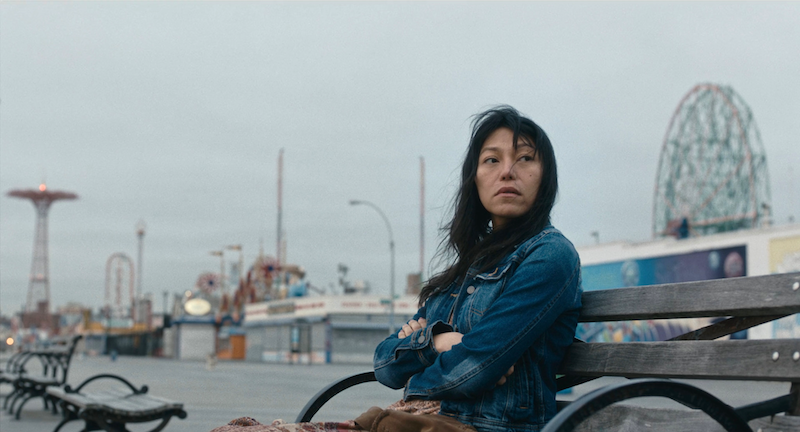
Watch if you like: Parts of NYC that haven't been ravaged by gentrification, good sex scenes, "In the Mood for Love," "News from Home," being reminded of how long Trump's reign of terror has been raging, spineless himbos, Magda from "Sex and the City."
✨ Quick hits
- I was somehow unfamiliar with Brooke Smith's game, so this was a wild watch. You may know her from "Silence of the Lambs" and "Grey's Anatomy," but she was also a fixture in NYC's '80s hardcore punk scene with the photos to prove it.
- I can't get enough of Scott Kahn's work and septuagenarian glow-up. He was living in his cousin's attic, afraid of dying in poverty, when fellow painter Matthew Wong (RIP) bought and posted Cul de Sac on Instagram in 2017. By 2022, Kahn was selling paintings for over $1 million.
- Other painters I'm into right now: JJ Manford, Ben Sledsens, Holly Farrell, and Dana Barrington.
- My friend Nadav sent me this very good poem a while back and I don't think I ever shared it.
- And ok, here's my favorite by Wendell Berry since he's dead now, along with countless other excellent people because the past month has been cruel.
- "You Must Remember This" is back and I am thoroughly enjoying "The Bisexuals."
- New York people: my friend Kyle is putting on a one-act play on Sundays and Mondays from October 18-November 9 at Casino on the LES, and you should come.
- "Slow Horses" and "Taskmaster" are back, and Sharon Horgan has a new show called "Youth." Nothing else is particularly exciting to me, so maybe it's time I finally get into "The Gilded Age."
- I did see "The Invite" and "Teenage Sex and Death at Camp Miasma," and I don't feel compelled to write anything about either of them, but I had a good time watching, as did my theaters full of octogenarians.
- Oh, fuck... it looks like this is finally happening and I am terrified.
Please send me good weekend estate sale vibes; it's been too long since I've had a significant win, and it's one of the few ways for me to get a serotonin/dopamine hit.
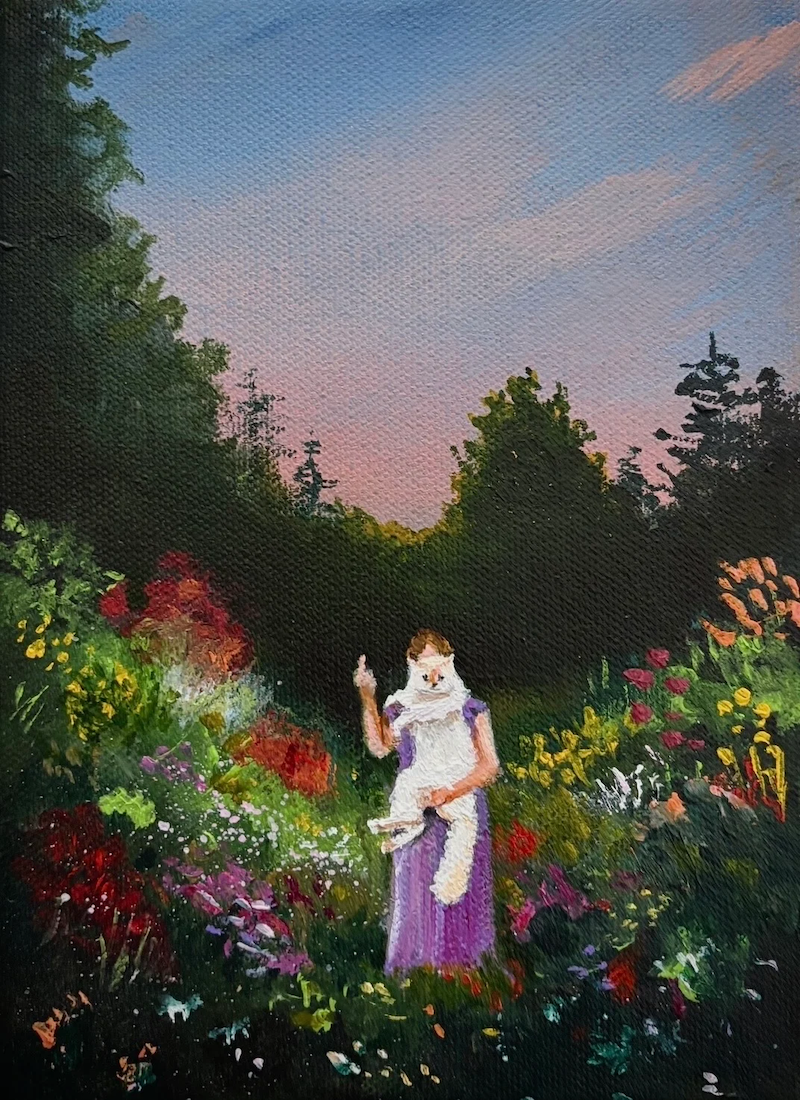

Two paintings by Mars Black: "The Cycle Ends With Me" and "Even now, I can still hear your words as they swell and crash into my mind."

Member comments