
Once October is in full swing, my brain becomes a never-ending loop of "Werewolf Bar Mitzvah / Spooky scary / Boys becoming men / Men becoming wolves." In "man or bear" fashion, I keep thinking about how much easier life would be if men turned 13 and became werewolves instead of rapists/tyrants hellbent on eradicating women, the planet, and every ounce of joy remaining in this dystopian nightmare. I don't have it in me to get into all the crazy shit that happened over the past month — Cornell, the University of Chicago, and FIT; yet another Trump rape allegation; harrowing new child marriage statistics; a mass shooting in Pennsylvania — but it also seems crazy not to at least acknowledge it.
The older I get, the more I struggle with gaslighting myself into believing everything isn't completely fucked. If I pull away from my own daily drudgery and look at the world with a macro lens, it feels impossible to imagine any legitimate improvements happening over the course of my lifetime. I don't have children, so there's really nothing driving me toward forced optimism, and I often find it difficult to pull myself out of depressive slumps that seem appropriate considering the onslaught of 21st century horrors. I still remember being stoned on election night, naively excited to ring in the first woman president (even though it was Hillary Clinton). With hatred for women at an all-time high, I don't believe it will ever happen in this country, and that's a tough pill to swallow for someone who came of age during Obama's hope-and-change campaign.
And hell, I'm at the age now where I understand that even if a woman did become president, she would still be operating within a longstanding system of patriarchal oppression, giving us the illusion of progress when really, everything is the same as it ever was. Elena Ferrante talks about this conundrum in a 2019 opinion piece for the New York Times, writing,
I’ve never been particularly swayed by the rhetorical formula “At last, a woman president!” — or prime minister, or Nobel winner, or any other position atop our current political or cultural hierarchies. The question is, rather: Within what culture, within what system of power, are women rising to the top?
Pressing changes are underway. Everything is becoming something else, unpredictably. A completely new outlook is required. The challenge for now and the foreseeable future is to extract ourselves from what men have engineered: a planet long on the edge of catastrophe.
If you're like me, you might read this, agree with it, and then immediately think, "Ok, Signora Ferrante, but how?" I still believe that storytelling has the power to shift the culture, but AI and tech addiction/algorithms have thrown a wrench in that methodology, with people now reading less and consuming more low-quality slop than ever before. How do we combat these problems without policymaker intervention, reinvestment in education, and other changes that will never happen unless we globally upend capitalist power? Do you see what I mean? It's doom and gloom all the way down, baby.
The only positivity I can muster, from this position of pre-midterms anxiety, is c/o other countries, like Brazil and Serbia, where Gen Z made the fascists kick rocks. Maybe the US youth, who I admittedly have little direct exposure to, are sick enough of this crap pile they've inherited to make rational choices. My days of meliorism are long gone, so I can't in good faith leave you with something uplifting, but let's see how it goes and reconvene here to wallow in misery if the worst people in the world continue failing upwards.
🌳 Ildikó Enyedi's "Silent Friend" (2025)
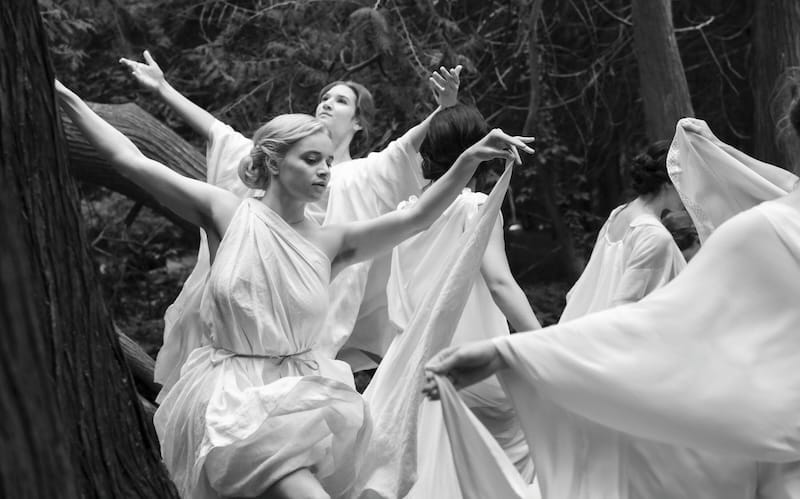
I somehow missed this when it came out last year, so I was pleased when it showed up on in-flight entertainment during a trip to Scotland. It's not exactly the ideal airplane movie, but I was sucked in for 2.5 hours, riveted by the fate of a potted geranium and a giant, lonely ginkgo tree.
The film starts in early 2020 with neurologist/professor Dr. Tony Wong (Tony Leung) conducting research on how infant brains perceive the world compared to adults. Shortly after he relocates from Hong Kong to Marburg for a university research position, the Covid lockdown begins, thus bringing his work to a standstill and forcing him to spend his days alone, wandering the empty campus in search of something to occupy his time. He becomes obsessed with a ginkgo tree in the university's botanical garden, even going so far as to reach out to another scientist, Dr. Alice Sauvage (Léa Seydoux), for advice after falling asleep to her TED Talk on Mimosa pudica. Her research is tangential to his, in the sense that she studies responses to stimuli on plants instead of people, which is certainly convenient during a global shutdown that discourages in-person human communication. With her help, he begins studying the tree as if it's one of his human subjects, strapping sensors to its trunk and collecting data in hopes of uncovering some type of sentience.
Dr. Wong's story is interwoven with two others that also take place in the vicinity of the ginkgo tree. One follows Grete (Luna Wedler), a female academic in 1908, fighting her way through insane misogyny to earn a spot studying botany at Marburg University. During her entrance exam, a panel of male professors ask her sexually charged questions in an attempt to humiliate her; when it doesn't work, she becomes the lone woman to earn admission. The tree is directly involved in her story, witnessing her triumphs and sadness before eventually becoming her subject when she gets into plant photography. In a 1972 storyline, a sexually repressed student named Hannes (Enzo Brumm) agrees to care for his crush's geranium — which she has wired with sensors much like Dr. Wong's tree — while she's on a camping trip. He becomes obsessed with the plant and by the end of his story, he and the plant share a deeper connection than we've seen him experience with any human. Hannes never directly interacts with the ginkgo tree, but it's visible at the edges of the frame throughout his scenes.
If this is all sounding a little woo-woo, don't worry: Enyedi is aware of this, and I don't think she intends for the audience to take any of the science seriously (although she did consult with scientists and draw inspiration from their research). The film is more about the ways that humans limit their understanding of life by viewing it through the narrow lens of their own constructs. A tree doesn't have consciousness like human beings; what it experiences is something totally different, outside of what we can even begin to imagine. Trying to decipher it is like imagining what it would be like to have a cat brain for a day. It's not that cat brains aren't worth researching and trying to grasp, just that it's impossible for us to even try contextualizing them outside of our own frameworks.
If you've never seen an Ildikó Enyedi film, this probably isn't a good entry point. I'd go with "On Body and Soul" (2017) first and then if that one gives you the fizz, move on to "Silent Friend" or "My 20th Century" (1989).
Watch if you like: "Evil Does Not Exist," Magda Szabó, memories of losing your mind during the Covid lockdown, Apichatpong Weerasethakul, touching grass, slow cinema, the meditative silence of the natural world, hallucinogens.
🩸 Nathan Fielder & Lance Oppenheim's "You Can See Everything" (2026)
Have I seen groundbreaking, female-directed documentaries with the same themes that didn't receive 1/100th the recognition of Nathan Fielder and Lance Oppenheim's new movie? Absolutely. Do I still believe it's worth the hype? Shockingly, yes. This is going to make me sound like a snob (which I am), but when people go crazy over a documentary, I usually assume it's because their sample size for comparison is small. I watch a lot of documentaries and went to school for documentary filmmaking, so while I'm no expert, I'm more educated than random people making brainrot shorts relitigating Elizabeth Holmes's guilt. This movie is smarter than much of the discourse surrounding it, so don't let people's idiotic chatter dissuade you from watching.
I was already familiar with/a fan of Nathan Fielder's work, so I had high hopes that "YCSE" would deliver and wasn't let down. I love that it reels people in with a massive news story from a decade ago, but doesn't require the viewer to know anything about that story in order to understand the film. There are of course some additional layers to everything if you followed the case and watched "The Dropout" or the HBO documentary, but the film isn't really about Holmes's crimes, and enough context is woven through that even someone going in completely blind will get the gist.
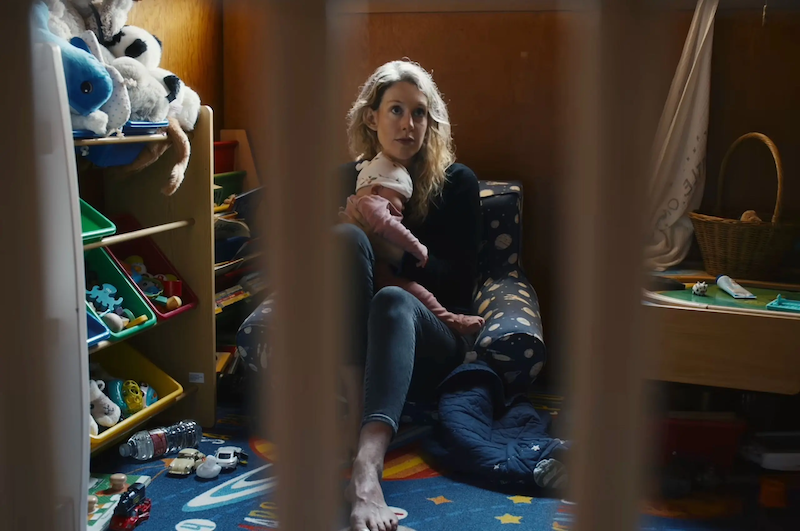
The first 90 minutes consist of Nathan Fielder and his crew documenting Holmes — the disgraced founder of Theranos, a company that claimed to have invented a (bullshit) single-drop blood-testing device — and her family in the ~month leading up to her federal prison check-in date. Holmes and her baby daddy, Billy Evans, solicited A24 to create this documentary, and when Fielder/Oppenheim heard about it, they pitched themselves as the directors. What kind of psycho invites a film crew to tag along during the final days she gets to spend with her children and partner before going to prison for a decade? That's what "YCSE" wants to know.
Depending on what we're shown, our perception of Liz changes. Listen to her describe what the Edison, Theranos's blood-testing device, is capable of and you'll immediately think, "What an absolute bullshit artist." But then, she fails to understand "Who's on First?" and you think, "Ok, either she's an amazing liar or Billy's right and 'her brain just works differently.'" Once Liz is in prison, Nathan shifts into "The Rehearsal" mode. I won't tell you what he does because I think it's best not to know, but it's a brilliant turn that elevates the film to another level. It's a fascinating look at the thin line between truth and fiction, how much people act in their own lives, and how people are largely unknowable because of our own biases. It will be studied in documentary classes for decades to come and even though it's three hours, I can't wait to see it again and take copious notes.
Watch if you like: "Portrait of Jason," Sarah Polley, Sophy Romvari, "Jane B. par Agnès V.," leaving a party and immediately dissecting everyone's behavior in your journal.
🛁 Lance Hammer's "Queen at Sea" (2026)
When I first saw "Queen at Sea," Lance Hammer's second feature after an 18-year gap, I described it to my friend as "an undoubtedly excellent film that I never want to see again." But then... Alex asked me to record a podcast with her about it, so I did rewatch and found it far less brutal the second time around. Don't get me wrong: the ending is horrific and nothing about the film makes aging look like anything other than a slog of misery, but something happens on the second watch where you're able to better appreciate how well-meaning all the characters are, even though they often unintentionally fuck things up. (I'll let everyone know when the podcast episode, which goes more in depth than this blurb, is available. Alternately, subscribe to 7R.)
The film follows Amanda (Juliette Binoche) after a temporary move with her teen daughter, Sara (Florence Hunt), from Newcastle to London to care for Amanda's mother Leslie (Anna Calder-Marshall), who is dealing with advanced dementia. Her stepfather, Martin (Tom Courtenay), disagrees with her approach to her mother's illness, which causes conflicts between the two as they try to agree on a care plan. As Leslie's condition worsens, Amanda and Martin are faced with impossible decisions where there is no clear right or wrong, simply a need to move forward in the hope that they can maintain Leslie's quality of life. While all this heaviness plays out, Sara experiences the exciting parts of new romance before anything gets complicated by outside forces.
It's a quiet, deliberate movie that's actually quite process-oriented, walking us through everything that happens after Amanda discovers Martin and Leslie having sex at the beginning of the film. Prior to this, Martin had been told by medical professionals to stop having sex with Leslie because her condition prevents her from properly giving consent. When Amanda sees them fucking in spite of this, she's at her wit's end and, in a moment of desperation, calls the cops. Martin is arrested, forensics are involved, and the situation quickly spirals into a nightmare of bureaucracy where none of the systems in place are equipped to handle cases with this level of complexity. It's one of those films where, by the end, you'll have a different opinion of each character than you did at the beginning.
It's easy to hate Amanda for involving law enforcement until you spend more time in her orbit and understand her stress load. Likewise, it's easy to see Martin as a horny old man using his wife for sex when really, that couldn't be further from reality. Tom Courtenay, one of our greatest living actors, gives his best performance since Geoff in "45 Years" (2015), so if you're a fan of him (or Binoche and Calder-Marshall, who are similarly great), this film is a must-see. I also must call out the cinematography by Adolpho Veloso, who makes the simplest sequences visually interesting, telling a full story with frame composition alone.
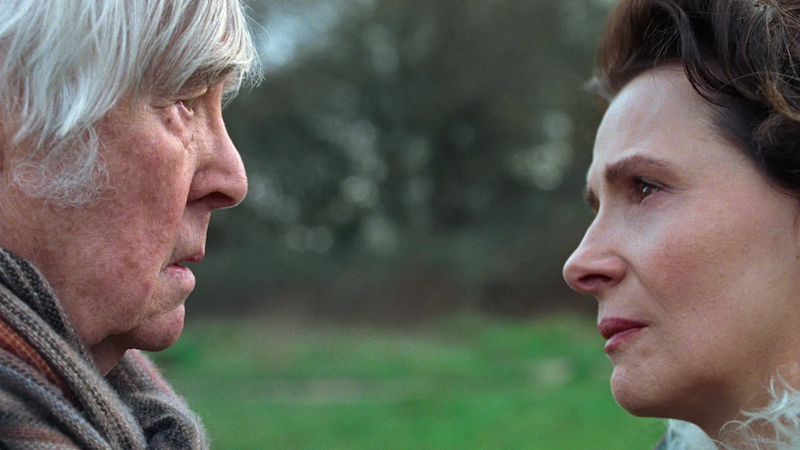
Watch if you like: men who take care of their dying spouses instead of abandoning them to look for bangmaid replacements, "Amour," "Away from Her," the Dardennes, art about the illusion of autonomy.
🍸 Paweł Pawlikowski's "Fatherland" (2026)
I need to go back and watch Pawlikowski's other films because I loved "Ida" (2013) and "Cold War" (2018), and now I think "Fatherland" (which feels like part of a loose trilogy with those two films) might be one of my favorite features from this year. My fellow Hüller-heads are going to want to see this one in theaters because truly, she has never been better, and there are several scenes that will make you want to stand up and clap. I haven't been this charmed by her since her boat breakdown in Justine Triet's "Sibyl" (2019), which is always what comes to mind when I'm teetering on the edge of sanity.
Pawlikowski did a Q&A after my screening, and what he said is that the idea for this film came to him after someone gave him a copy of Colm Tóibín's "The Magician" (2021), hoping that he would adapt it. He had no interest in doing that, but he did feel drawn to one scene in the book — which is a fictionalized biography of the writer Thomas Mann (played by Hanns Zischler in the movie) — where Mann and his wife return to Germany after a 16-year exile so he can receive the Goethe Prize. For those unfamiliar, Mann, a Nobel Prize-winning German writer, went into exile when Hitler seized power in 1933. He had been a vocal critic of the fascists since the September 1930 German federal elections when the Nazi party started gaining momentum, and he kept his foot on their necks for the rest of his life.
Pawlikowski takes this 1949 return to Germany and adds his own spin to it, replacing Mann's wife, Katia, with his daughter, Erika (Hüller), a bisexual polyglot rally driver who serves as his interpreter/assistant/chauffeur/the person who calls him (and everyone else) on his bullshit. As with the other Pawlikowski films I've seen, this one is enviably economical, telling much of the story with visuals (once again with cinematographer Łukasz Żal) and only running 82 minutes long. This Jacobin review calls it "both ancient and tragically contemporary," which is apt. In the Q&A, Pawlikowski called it a film asking, among other things, "Where is home, especially if your country has gone mad?" If that doesn't feel relatable to you right now, well... I'm jealous, and want to know where you live.
Without spoiling anything, my favorite scenes are the opening one with August Diehl; Erika's encounter with her ex-husband; and the ending, which Pawlikowski mentioned was shot in Poland's Lower Silesia. I fear sounding hyperbolic, but I think "Fatherland" is a nearly perfect film, and I can't wait to see it again.
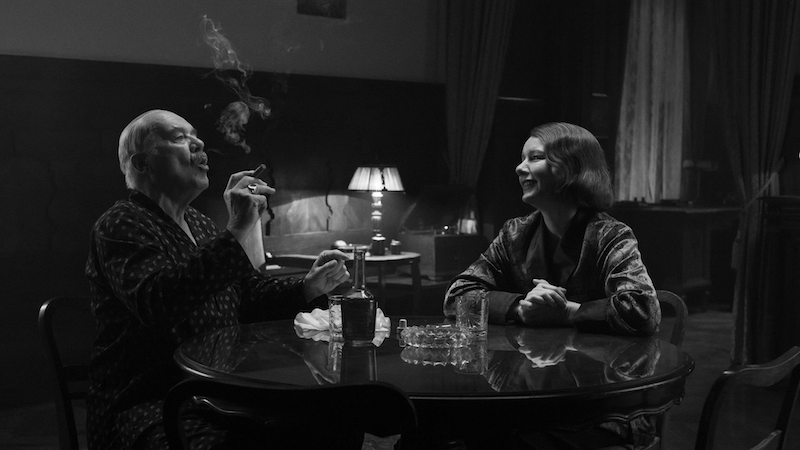
Watch if you like: "Transit," Kieślowski's "Three Colours" trilogy, "Berlin Alexanderplatz," the Neapolitan novels, Fleur Jaeggy, Marco Bellocchio, strong personalities, significant phone calls, dads who never hug you.
🐸 Patrick McHale's "Over the Garden Wall" (2014)
This one had been on my list for a long time, but my husband made me promise to wait to watch it with him, and I guess I'm not surprised it took 12 years. For me, the hardest part of marriage is temporarily depriving myself of things I know I'll enjoy because of something I agreed to under duress. I'm the type of person who unwinds by lying immobile on the couch, whereas he gets home from work and immediately starts on one of his 50 different simultaneously running garage projects involving an assortment of saws. Anyway, maybe extremely delayed gratification is good because we finally watched this together while I was recovering from the flu and it was the perfect thing to distract myself from being unable to breathe through my nose.
The story is simple: stepbrothers Wirt (Elijah Wood) and Greg (Collin Dean) are lost in a strange forest outside of space and time. We don't (initially) know how they got there, but as they're stumbling around, trying to find their way home, they encounter many delightful (and sometimes creepy) figures like Beatrice the sassy bluebird (Melanie Lynskey) and Auntie Whispers (Tim Curry, RIP), the black turtle-eater. Think: a loose interpretation of "The Divine Comedy." Patrick McHale, the creator, played a significant role on "Adventure Time," which I know people loved but I've never watched. He also co-wrote the screenplay for Guillermo del Toro's "Pinocchio" (2022), another one I still haven't seen because I worry I'll hate it if I'm not in the right type of mood.
"Over the Garden Wall" is one of those shows that's perfect for adults and children to watch together because it has just enough to keep both demographics interested, much like "Phineas and Ferb" and "SpongeBob," although nothing like either of those in tone or animation style. It features one very dumb little ditty called "Potatoes and Molasses" that will get stuck in your head and drive you insane for 24 hours, but it's offset by truly excellent songs like this. It is a folky buddy comedy where the two main characters — one whimsical (Greg), the other older and more jaded (Wirt) — make a classic odd couple while Beatrice, their little purgatory guide, rolls her eyes at both of them for different reasons. If you haven't already seen it and you're old/without cool plans like me, Halloween is the perfect time to watch.
"Let's small talk!" is what I will now think to myself every time I'm forced to participate in my least favorite societal ritual.
Watch if you like: "Summer Camp Island," "Coraline," vintage Halloween decorations, "Dark Crystal," millennial dog whistles, "Faerie Tale Theatre," that one episode of "Sabrina the Teenage Witch" where Harvey's held captive at the top of a giant beanstalk.
✨ Quick hits
- I started watching "The Gilded Age," which I would have done sooner if I had realized Morgan Spector plays the beloved Railroad Daddy. So far, he and Carrie Coon are my favorites.
- In honor of Anne Carson's Nobel Prize for Literature win, let's all read "The Glass Essay." I've been enjoying the stories people have posted about her on social media; she sounds like my kind of woman.
- Will Elif Batuman's Proust reread be enough to get me past the first 250 pages of "Swann's Way"? Only time will tell.
- I tried watching "East of Eden," but only made it two episodes. I found the writing terribly soapy (and not in a fun way), the acting wooden, and the filmmaking standard Netflix (high budget edition). Maybe it gets better, but I'll never know. I don't mind the idea of a more modern interpretation of Cathy but I don't need the character explained to me like I'm a fucking idiot. From my recollection, Steinbeck's version is actually a lot more nuanced.
- I have been watching S22 of "Taskmaster," which led me to the depressing news that Richard Ayoade still seems to hold transphobe Graham Linehan, creator of "The IT Crowd," in high regard, calling his 2023 memoir an "extraordinary and chilling portrayal of cancel culture." This is disappointing for a myriad of reasons, but like... I think we all know by now that cancel culture for men isn't real, so gtfo out of here with your "chilling" descriptor, Richard.
- In curtains for Zoosha news, this Vulture piece sent me down the Ivy Wolk rabbit hole and oh, boy, do I wish I could turn back time. If this is what the current culture is about, it's probably time for me to bite down on my fake tooth. I don't understand a single one of these perpetually online, Dimes Square Gen Z edgelords who think it's cool to engage in racist/misogynistic ragebait straight from the MAGA playbook.
- Good on my boy, Adam Brody, for calling out the genocide in Gaza, much to the dismay of his Zionist co-workers/boss from "Nobody Wants This." It's hard to even find the original interview where he made that comment because a) it's paywalled and b) it has been swiftly buried by responses from people like Tovah Feldshuh.
- For all my "Slow Horses" fans: What did you think of S6? I found the writing (led by Gaby Chiappe) pretty sloppy, but this has always been the show's weak point, so I don't really lay the blame at her feet like some corners of the internet. I watch this show for the characters, and as long as it keeps delivering there, I'll continue to forgive most missteps. Bring Lenny Rush back for S7!
- There's a new Emily Brontë biography, and my interest is piqued. Ditto Anita Brookner.
- I will watch the "Girls" revival, but "And Just Like That" and "A Year in the Life" have taught me to temper my expectations.
I leave you with the cutest thing to come from the original "Addams Family." If you go to a party this weekend, please bust out "The Droop."

Member comments