
I’m writing this on my way into the city on Metro-North, which is one of many places that makes me fantasize about the event in Marlen Haushofer’s “The Wall” (1963). If I must either live in a world devoid of people or sit next to the elderly man sprawled across both seats, reeking of cigarettes and Paco Rabanne, I’m choosing the former. Ditto the teen boys watching TikToks on full volume with no headphones, dropping Tim Horton crumbs everywhere, letting their sticky fingers linger on the seats. One woman in my vicinity is either dictating a text or recording a voice note as if she’s alone and not surrounded by people who don’t need the intricate details of her birth plan. “Get the epidural, Deborah! You don’t seem like the type of person who does well with pain,” I screamed in my head. As Paris Geller once said, ”Build an ark, 'cause it is seriously time for a flood.”
When I got off the train at Grand Central, I had some time to kill, so I went downstairs instead of up the ramp to the main concourse and ended up in the Northeast Passage. Before exiting at 48th and Park, I walked through a tunnel lined with incredible tarot/astrological mosaic tile work that I had never seen before. Stupidly, I took zero pictures because I assumed I'd be able to easily find them on the internet, but my search has come up empty. They're in the style of the piece at 4:59 in this video and might be created by the same person, whose identity Google reverse image search has failed to uncover. Next time I'm back there, I'll take photos so you, too, can revel in the majesty of insane artwork amongst the bottles full of piss. You'll have to imagine the scent of hot garbage and exhaust fumes for yourself, though.
Until next time, I leave you with the gems that kept me going throughout an unbearably hot, wildfire smoke-laden July.
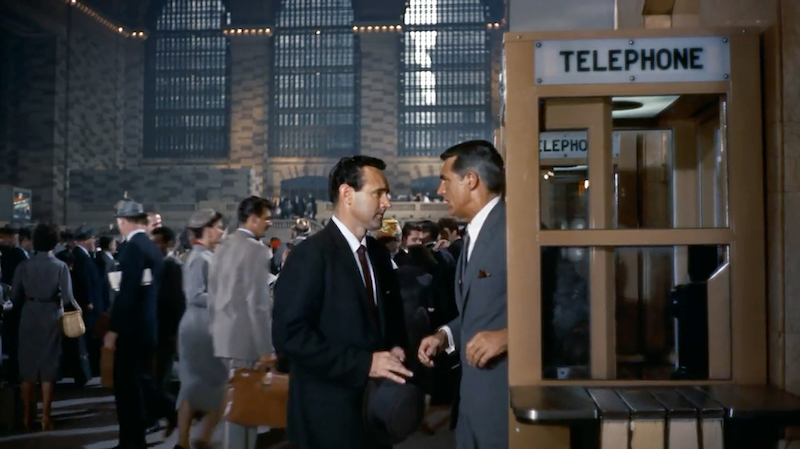
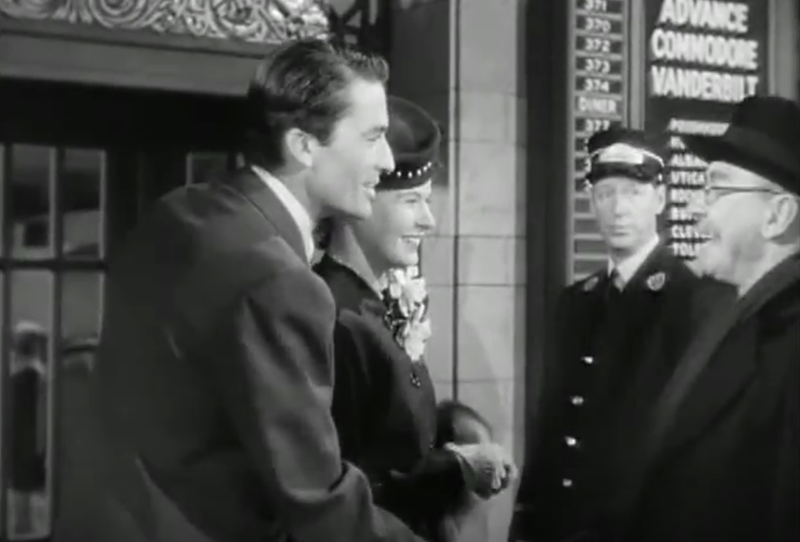
Hitchcock's Grand Central in "North by Northwest" (1959) and "Spellbound" (1945).
🪷 Kiran Desai's "The Loneliness of Sonia and Sunny" (2025)
"The Loneliness of Sonia and Sunny" is described as a love story and while I guess that's technically true, it's much more about the isolation that comes with leaving your family and country of origin to embark on a new type of life elsewhere. In order to assimilate, you change things about yourself but still feel as if you don't belong; when you return home, those changes impact how you reintegrate there, too. You exist as a perpetual misfit in a weird, purgatory-like state, and the lack of connection to other people begins to take a toll on your psyche. At least, this is what I've gathered from the art I've consumed on this subject, along with my own minor experience of moving far away from my hometown for education and opportunity. If themes of alienation resonate with you and slow plotting in a 600+ page novel isn't a dealbreaker, add "Sonia and Sunny" to your list.
When the novel begins, the titular characters, both from northern India, are abroad in the United States. Sonia is finishing her senior year at a (fictional) university in Vermont, and Sunny is working his first job out of college in NYC at the Associated Press. Despite their grandparents' proximity in Allahabad, Sonia and Sunny have never met. They become aware of each other when, in a bid to stave off Sonia's loneliness during a solo winter, her family tries to arrange a marriage for her with Sunny, which he promptly rejects because he already has a girlfriend who he's been hiding from his overbearing mother, Babita. Sonia and Sunny eventually meet back in India about 40% of the way through the novel and although they like each other immediately, the rejected proposal, family/cultural expectations, and location become major relationship impediments.
I've made the novel sound relatively straightforward, so I must warn you that it's pretty meandering and you will often have no idea where it's headed. Sonia and Sunny's extended families are all fairly developed and Desai spends almost as much time on them as she does on her protagonists. Just as you get used to a character, location, or situation, focus shifts, so there's not a ton of time to settle into the narrative. The uneven pacing is frequently detrimental to a story so sprawling and especially at the end, the passage of time starts to feel strange in a bad way. The novel takes place between 1996 and 2002, but the jump into the early aughts felt weirdly glossed over to me considering how much time Desai spent on events like the murders that drive Babita to Goa or Sunny's early days in Mexico.
It's certainly easy to nitpick this novel because it's long and ambitious, so not everything works well; however, as a whole, I was willing to go wherever it wanted to take me and would have happily read about these eccentric families for another 650 pages. Here's a snippet from my highlights after Sunny moves from Fort Greene, Brooklyn, to the South Asian section of Jackson Heights:
Sunny was not heroic. Sunny was a hypocrite. If it hadn't been for his green card sponsorship, he would still be hankering after Ulla—after fancy brownstone Brooklyn—but he could hide his hypocrisy, join the neighborhood as an all-night coolie reporter, and experience the relief of knowing that never again would he have to put in volunteer hours stocking bulk, non-GMO, unprocessed, organic heritage whole grains at the co-op, exchanging awkward one-line quips with white people, attempting a baseball metaphor.
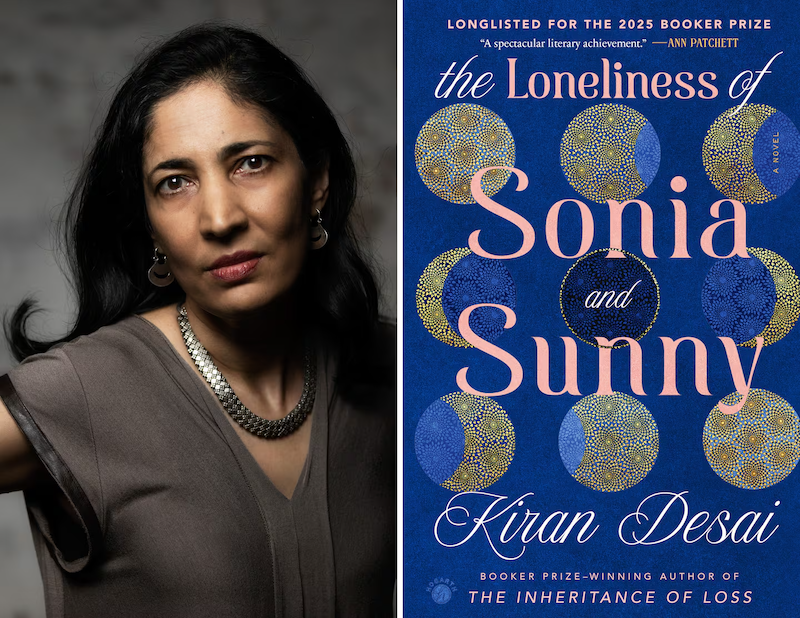
Read if you like: "Māyā Miriga," befriending the lyrical loneliness, "Lies and Sorcery," Victorian novels, multigenerational tales of flawed people, Kakori kebabs, books that aren't written for the sake of film or TV adaptation.
⚽️ David J. Rosen's "Maximum Pleasure Guaranteed"
I was excited about this show when the trailer dropped in April, then it premiered in May and immediately fell off my radar because no one was talking about it. Apple is uniquely horrible at marketing their shows, which is a bummer because they've had some good ones ("Bad Sisters," "Slow Horses," "Severance"). Anything that does well, like recent hit "Widow's Bay," is thanks to word-of-mouth, not any kind of orchestrated campaign. If not for my free subscription via credit card, I would have never signed up for the streaming service even though it actually is worth the monthly fee. It makes total sense to me that it allegedly loses Apple $1B annually, but I bet it would be profitable if they would just overhaul their useless internal marketing department and spend time improving their terrible UI. Also, while I'm on this topic, do a full rebrand because Apple TV is confusing as hell when there is already a separate, physical product with the same fucking name. Seriously, what are they smoking over there? Apple TV+ was terrible, too.
Anyway, "Maximum Pleasure Guaranteed" is a delight, especially for fans of Tatiana Maslany who long for the "Orphan Black" days. It's a comedy thriller about Paula (Maslany), a divorced mom who gets caught up in a web of murder and blackmail when the camboy she regularly sees is beaten and kidnapped during one of their sessions. When she calls the cops, Detective Sofia Gonzalez (Dolly de Leon) tells her it's probably a scam and that she should ignore any calls asking her for money. Unfortunately, Paula can't follow this advice because when she does, the camboy and his cronies start calling her ex-husband Karl (Jake Johnson), further complicating their already tense custody dispute. With no one to turn to, Paula takes matters into her own hands and shit quickly goes off the rails.
With this type of show, the ending is usually unsatisfying and the twists somewhat predictable. I wouldn't say "Maximum Pleasure Guaranteed" entirely skirts these problems, but I'm willing to forgive a few minor plot holes for top-notch acting, funny side characters, and the pleasure of seeing places I frequent onscreen (s/o City Island). Julia Louis-Dreyfus's son, Charlie Hall (Rudy), plays one of Paula's co-workers at the fictional magazine where she works as a fact checker. His dynamic with Kiarra Hamagami Goldberg (Geri) is very Jonah Ryan (Timothy Simons) and Amy Brookheimer (Anna Chlumsky), only with legitimate sexual tension. Even the characters who seem like they might be superfluous, like Detective Baxter (Jon Michael Hill), have enough charm that you want them to stick around. It's a fun summer show that goes down smooth and I will definitely watch S2 unless so much time passes that I forget about it, which is what happens all too frequently with TV these days.
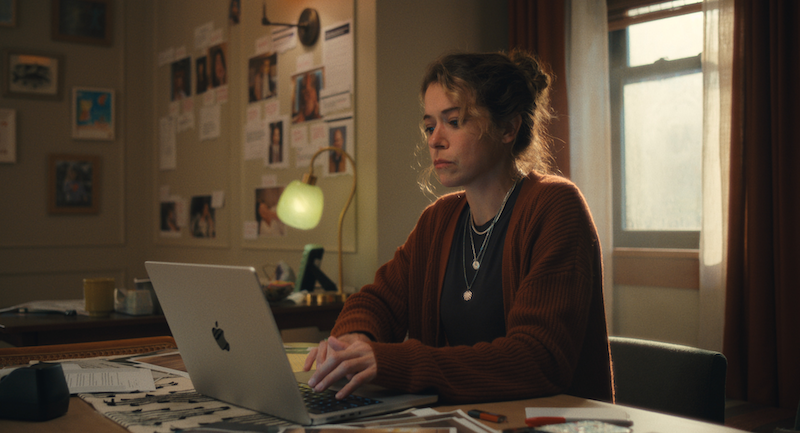
Watch if you like: Murray Bartlett playing a chaotic gay villain, "Search Party," "The Flight Attendant," "Big Little Lies," bad moms, "If I Had Legs I'd Kick You," shows filmed in NYC.
🍴 John Early's "Maddie's Secret" (2026)
Love him or hate him, one thing you can't accuse John Early of being is boring. In a 2023 profile in The Cut, he talks about his varied influences, from "SNL" and "Ab Fab" to dramatic theater about a hate-crime murder, stating that it was a revelation when he realized, "You can be Cheri Oteri, but you can put her in, like, a Criterion movie." In "Maddie's Secret," Early's approach to comedy is equal parts sincere, over-the-top commitment to the bit and an appreciation of melodrama's innate absurdity. Like Todd Haynes's "Far From Heaven" (2002), "Maddie" takes heavy issues — eating disorders, childhood emotional neglect — and embraces the media tropes that often accompany them while also subtly subverting them. It's a queer camp sleepover movie for the girls and the gays that I hope screens as a double feature with "The Muppets Take Manhattan." If someone had a "Movies Miss Piggy would like" list on Letterboxd, "Maddie" would be at the top. Maybe they'll do a remake in 25 years with Miss Piggy playing Maddie and Kermit in the Kate Berlant role.
In terms of plot, picture the Lifetime classic "Kate's Secret" (1986) set in Los Angeles at a bobo Bon Appétit Test Kitchen before everything imploded. Maddie (played by John Early) is a nice girl dishwasher who longs to be chef. Fellow dishwasher Deena (Kate Berlant in the classic "lesbian crushing on her bff" role) and supportive husband Jake (Eric Rahill) both encourage her to follow her passion, leading to a viral Instagram video that catapults her to foodie stardom. With increased exposure comes formerly vanquished food issues and Maddie's bulimia eventually lands her at her in-patient program with K-pop-obsessed Julie (Vanessa Bayer) as her roommate.
None of it sounds funny when summarized, and if you try to imagine the humor there might be an understandable worry that it skews mean. The film always takes Maddie's issues seriously, though; she is never the butt of the joke. Early is also not interested in skewering women's TV movies in a mean way, either. I'd liken his approach to my "Gilmore Girls" recaps, which piss some people off because they're snarky for the sake of humor, although I'd argue it all comes from a place of deep familiarity and affection. As far as eating disorders go, the film might be channeling an after school special, but it's not offering up any type of rationale or solution for Maddie's bulimia. In an interview with The New Yorker, Early says,
Someone asked me recently what I hoped to say about eating disorders, about bulimia. I was, like, “Nothing. Oh, my God, nothing.” I’m underqualified. And that’s what’s funny, I guess, unintentionally, is that I chose an issues-based genre. I chose the issue of the week.
If watching a man in earnest drag playing a cis-het woman struggling with psychological issues and sometimes doing jazzercise whets your whistle, go see "Maddie's Secret" before it leaves theaters.
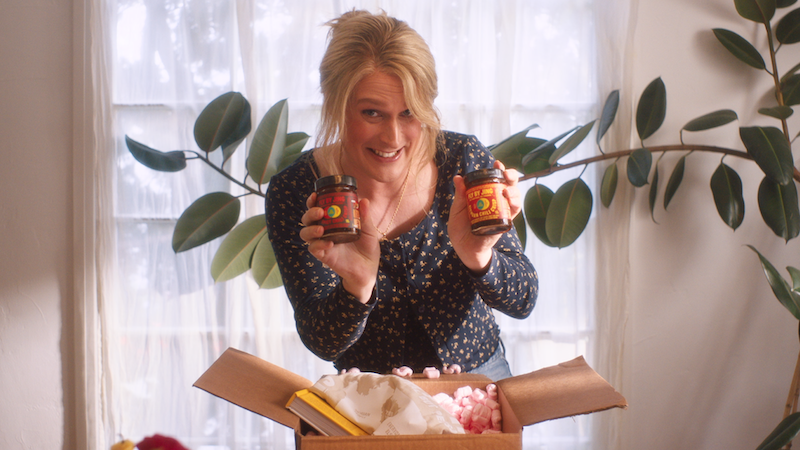
Watch if you like: Made for TV movies, weird shit on Tubi, millennial culture, Sassy's "It Happened to Me" column, "Showgirls," Cole Escola, John Waters, Amy Sedaris, "Girl, Interrupted," the episode of "Saved By the Bell" where Jessie gets addicted to caffeine pills.
💿 Madonna's "Confessions II" (2026)
I must admit that I haven't really liked a Madonna album since "Confessions on a Dance Floor" (2005), which came out when I was a high school sophomore. It's one of the first albums that made me — a surly little killjoy not since birth, but definitely since my teen years — think that it might be fun to go dancing at Jetz, the teen nightclub in Harmarville, PA that always advertised on KISS and B94 (IYKYK). It's impossible to hear "Hung Up" without cutting a rug, lack of rhythm be damned, and "Sorry" is basically my platonic ideal pop song. My other Madonna favorites are "Ray of Light," "Like a Prayer," and "Erotica." "Confessions II" is now easily in my top three, if not my top five Madonna albums. I can't stop listening to it and weirdly, it gives me a tiny amount of renewed hope in the world. If Madonna can grace us with another banger at 67 years old after two decades of dust, anything can fucking happen.
Both "Confessions" albums are co-produced by Stuart Price, who met Madonna when he was hired as part of her band for the Drowned World Tour in 2001, eventually becoming the musical director for that tour and then later, in 2004, the Re-Invention World Tour. He also co-wrote the song, "X-Static Process," for her 2003 album, "American Life." All of this led to a collaboration on "Confessions I" which Price describes like this in a 2026 interview with Music Week:
Madonna is a great enabler of creative freedom. We had developed a shorthand on tour, so in the studio we didn’t need to over communicate. The best way to explain our collaboration is how the record says ‘produced by Madonna/Price’, and that’s not because she is just putting her name there. She is as much a visionary as anyone else – I mean, she is the visionary on the record! When she sees the seed of something, she envisions it from beginning to end in a moment. It’s then a case of creating an environment to make it happen.
When they made that first album together, her marriage to Guy Ritchie was on the rocks; when they began working on the second one, her stepmother had just died and her estranged brother was very ill. It sucks that Madonna had to go through some rough shit, but I'm happy we all get to benefit from the struggle-to-growth-to introspective-career-defining-album pipeline.
Listen if you like: 90s/early aughts Madonna, NYC club scene lore, the "SATC" episode where they go dancing at Trade, "Party Monster," RuPaul's autobiographies, glitter in every orifice.
👓 Sarah Quintrell's "The Other Bennet Sister" (2026)
Fans of "Pride and Prejudice" (1813) will remember that Mary, the "plain" middle sister, remains unmarried and at home with her parents at the end of the novel. In "A Memoir of Jane Austen" (1870), published by her nephew, James Edward Austen-Leigh, he reveals that when asked about Mary's fate, his aunt said, "Mary obtained nothing higher than one of her uncle Philip’s clerks, and was content to be considered a star in the society of Meriton.” "The Other Bennet Sister," adapted from a 2020 novel of the same name by Janice Hadlow, takes what little we know about Austen's Mary and interprets her personality from a more modern lens.
The first two episodes of the show roughly follow the marriage plots of "Pride and Prejudice" before building upon Mary's story once she's the sole unwed sister. In Austen's novel, she's seen as a mediocre, pedantic snob who overcompensates for her lack of beauty with self-righteousness, but Sarah Quintrell has a kinder take. Her Mary, played by the fantastic Ella Bruccoleri, just wants to be seen and appreciated outside her family's narrow ideas of what makes a woman valuable. Between her pathologically dismissive mother and her bevy of conventionally attractive sisters, it's no wonder Mary feels invisible and often tries too hard to differentiate herself.
There are some painful scenes that are difficult to watch where the Bennet women (and that bitch, Caroline Bingley, played by Tanya Reynolds) cruelly ridicule Mary, but the show is mostly a joyful celebration of how much her life opens up once she moves to London and gets the fuck away from her family. While thoughts of marriage are always in the ether, Mary is very much on a "If you can't love yourself, how in the hell you gonna love somebody else?" mission. To find out if she succeeds, stream the show on BritBox and enjoy a visually witty, well-directed story that appropriately channels the spirit of Austen.
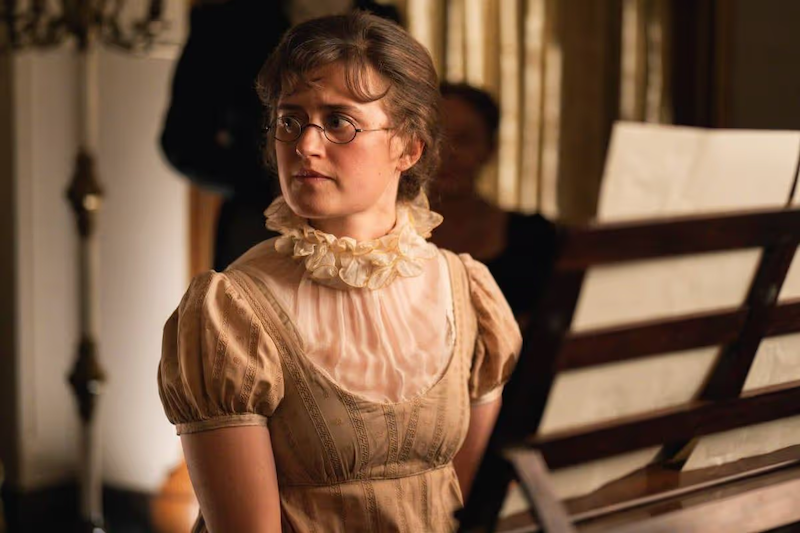
Watch if you like: "Jane Austen Wrecked My Life," 831 Stories, forearms, "Anne with an E," Fanny Price, shirking social norms, the fantasy of a kind aunt and uncle who save you from your oppressive home life.
✨ Quick hits
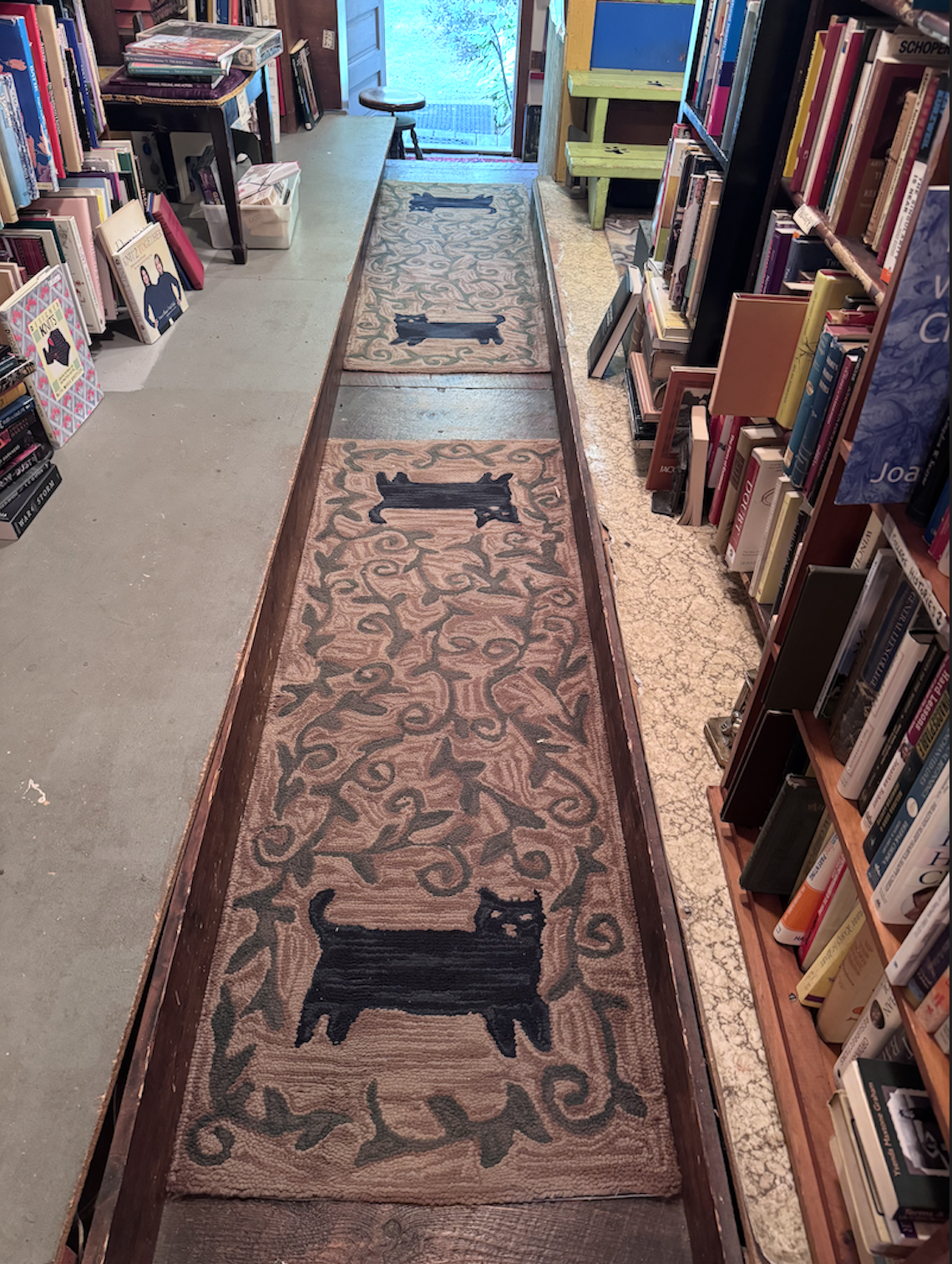
- If you find yourself in the Berkshires, you must go to Rodgers Book Barn in Hillsdale. It's been around for 54 years, the proprietor is lovely, and the prices are extremely reasonable (just make sure you have cash). It is a magical place full of gems and while I didn't see any cats during my visit, they did have these incredible cat rugs:
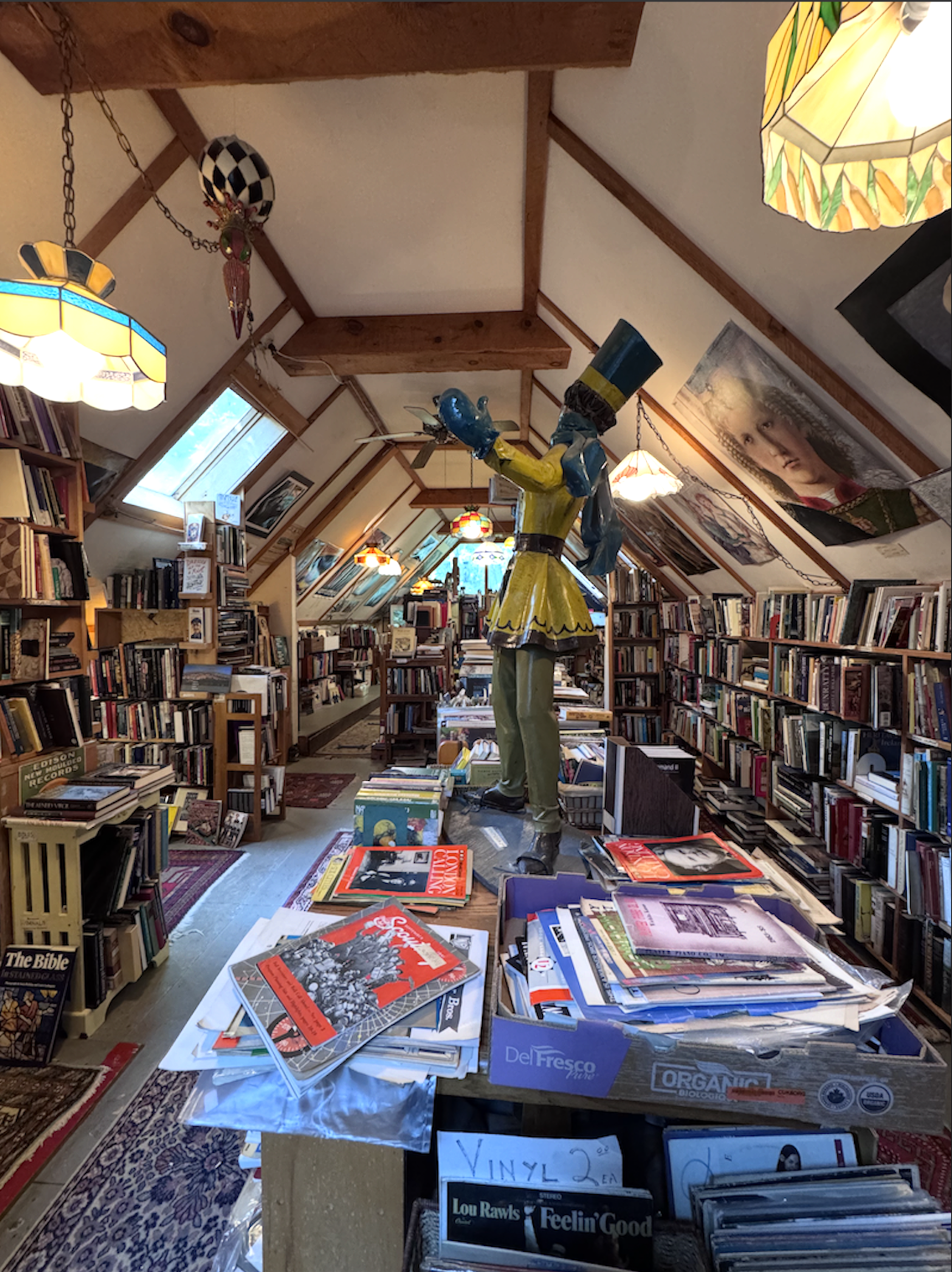
This is upstairs and yes, that door goes to the back garden where you can sit and read.
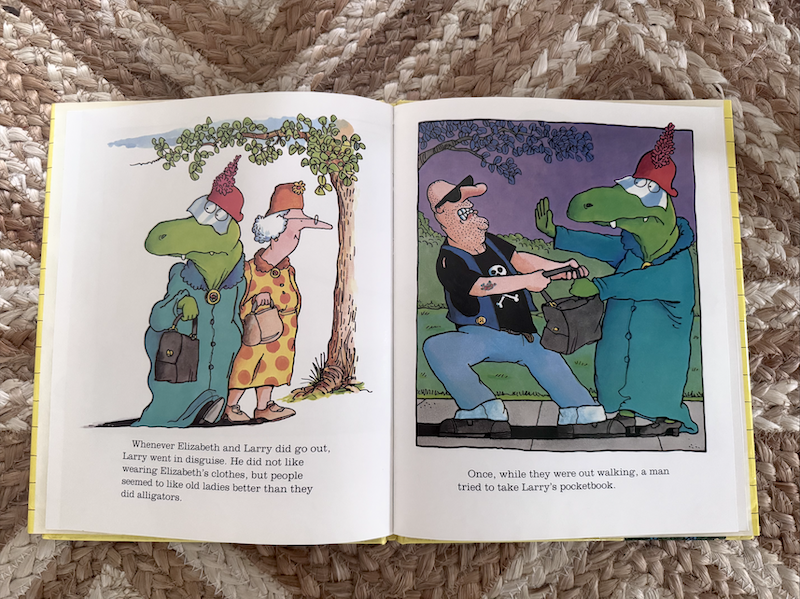
- I bought my friends' kids Marilyn Sadler's "Elizabeth and Larry" (1990) at Yellow House Books in Great Barrington, and I love everything about it aside from Elizabeth being referred to as "an old lady" at 62. If you're going to draw her like this, why not make her 82?
- The world sucks, but at least there's a new Andrew Haigh movie coming this fall. It's another adaptation, this time of Colm Tóibín's 2006 short story, "A Long Winter" (also the name of the film). I'm similarly excited for Mike Leigh's "Tender Loving Care."
- I'd like to see "The Invite," "Romería," and "Teenage Sex and Death at Camp Miasma" before they leave theaters but will it happen? Idk. I've been bad about going to see movies or even just watching movies because I can't stop reading books on my patio when the weather is nice.
- Of course I'm going to read Emma Cline's "Switzy" (longlisted for the Booker) and "Life of M," the Rachel Cusk book that allegedly pissed off Natalie Portman. Both are out in August.
- I watched the first three episodes of Elizabeth Meriwether's "Furious," the new female serial killer show with Emmy Rossum and my love Jake Lacy (playing another scumbag, natch). It's like a mash-up of "Killing Eve" and "Unbelievable" with the added benefit of Quincy Tyler Bernstine playing my favorite type of character (hardass with a heart of gold). So far, I recommend it.
- "Possession" does not need a remake; "Carrie" does not need to become a miniseries; "Little House on the Prairie" and "Clueless" both elicit what/why/no reactions. I wish the industry would learn from the success of "Obsession" and let creators make new shit instead of trying to capitalize on the success of what came before.
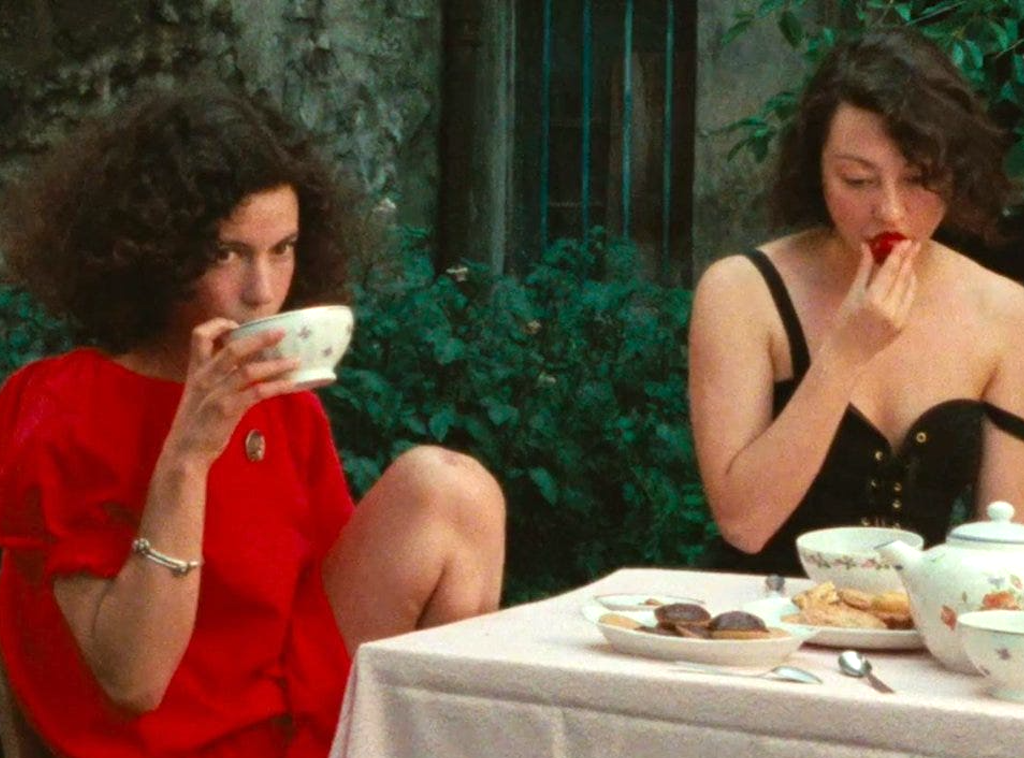
If you're dealing with a case of summertime ennui, maybe try rewatching this scene from "Bridget Jones's Diary" (2001) on repeat?
"Ah, fuck me, I love Keats."
Member comments