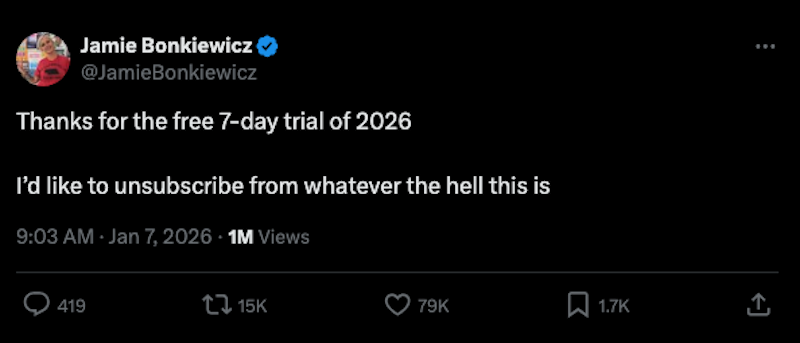
Happy New Year! Wasn't it fun to wake up to the news of Trump's Venezuelan coup on the third day of 2026? I'm not going to dwell on that, though. I'm writing this on January 5th, coincidentally my wedding anniversary, so who knows what other hell is in store for us during the five days before I hit "publish." It feels weird not to mention world events that will alter the course of our lives, but I'm also not trying to turn a weekly little treat into yet another reminder of the neverending horrors. Moving on!
It's a gloomy, forty-degree day in White Plains. As I write this, I'm looking out the window at my neighbor's Christmas tree lying on the curb next to their trash can. This snapshot image is the perfect representation of January: the holidays are dead and we're left with the discarded corpse. As someone who hates December, this is more freeing than it is depressing. With all the forced cheer and travel out of the way, I can focus on my favorite winter activities: reading the most tedious books from my TBR pile, getting into bed at 7pm, organizing my new Hobonichi Cousin, and going on long hikes sans other people because the shitty weather keeps them at bay. Honestly, Q1 rules.
I haven't done a whole lot in the two weeks since my last missive. I took a road trip during the week of Christmas to visit family/friends in Pittsburgh and Louisville, with a brief stop in Columbus for a coffee break at indie publisher, Two Dollar Radio. As I browsed their selection with my cappuccino, I noticed a little plaque that said, "Ask about the time Shia LaBeouf sued us," so I did, but the employee was hazy on details. (I'm guessing it was over this.) I must begrudgingly admit that, while I hate the state's politics and wouldn't enjoy living there, I kind of fuck with Ohio. Cleveland, Cincinnati, and Columbus all punch above their weight in a few crucial categories: coffee (Duck Rabbit), vintage (Casablanca), and old houses in cute neighborhoods. However, if I died there and learned about it in the afterlife, this would definitely still be my reaction:
"Oh, no. I died in Cleveland?"
I've been a bit up and down on the first season of "Pluribus." I'm a Vince Gilligan fan and will watch whatever he creates, I'm just not convinced this show is building toward a satisfying conclusion. S2 of "Severance" made me feel the same way, even though there were excellent standalone episodes like "Chikhai Bardo." With both shows, it rarely seems like the writers know where they're taking the main plot threads, which is not how I want to feel about science fiction built around a central mystery. Granted, "Pluribus" and "Severance" are slower, heavily character-driven shows that use the central premise as more of a jumping off point for exploring philosophical concepts, but I don't want those things to come at the expense of good narrative storytelling. When the end is near, I want to feel as gobsmacked as I did with "Dark" or "The Good Place."
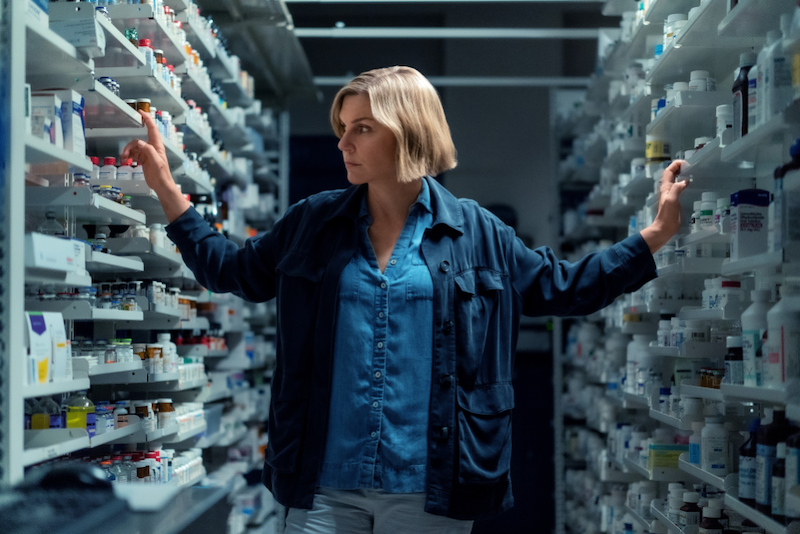
If you've gotten this far and have no idea what I'm talking about, "Pluribus" is the new Apple TV show from the guy who created "Breaking Bad" and "Better Call Saul." It follows romantasy writer Carol Sturka (Rhea Seehorn), one of thirteen people immune to an extraterrestrial virus that's infected Earth, turning its inhabitants from individuals into an allegedly peaceful hive mind who operates for the collective good. These members of the hive, the Joined, are polite, accommodating, and assure Carol that they would love nothing more than to make her happy. Does she want that pepper bacon she fell in love with on vacation in 1998? No problem. Unadulterated heroin? They’ll deliver it quicker than Domino’s. Initially, Carol approaches the Joined with a mix of anger and hostility; over time, this dissipates into acceptance bordering on delusional embracement; by the end of S1, she's ready to burn it all down again. They wouldn't put it into these words, but the Joined want to control her. No matter how congenial they seem, their primary goal is to turn her into one of them and Carol — along with one other member of the thirteen immune, a guy in Paraguay named Manousos (Carlos Manuel Vesga) — will not stand for it.
For those who have seen the season, my main issue, aside from the shaky plotting/logic, is Carol's character development. Seehorn is fantastic, per usual, and brings a subtle complexity to Carol's orneriness, but the writing, especially in the last two episodes of the season, forces her to go through unearned attitudinal shifts that make the character feel unknowable. I can buy that Carol's loneliness gets the better of her and that she pleads for the Joined to return. I'm even willing to concede that it's not unrealistic for her to fuck Zosia (Karolina Wydra) as she comes to terms with the grief over losing her wife, Helen (Miriam Shor), and the world as she once knew it. What I can't believe is that Carol would fall in love with Zosia, a "person" she knows is just an amalgamation of every member of the Joined, including John Cena and her gynecologist. Carol is deeply flawed: lonely, desperate, insecure, struggling with addiction and rage. She's also a writer who, while not exactly highbrow, is capable of critical thought. If the show wants me to believe she's delusional enough to fall in love with a sentient chatbot, it's going to take more convincing.
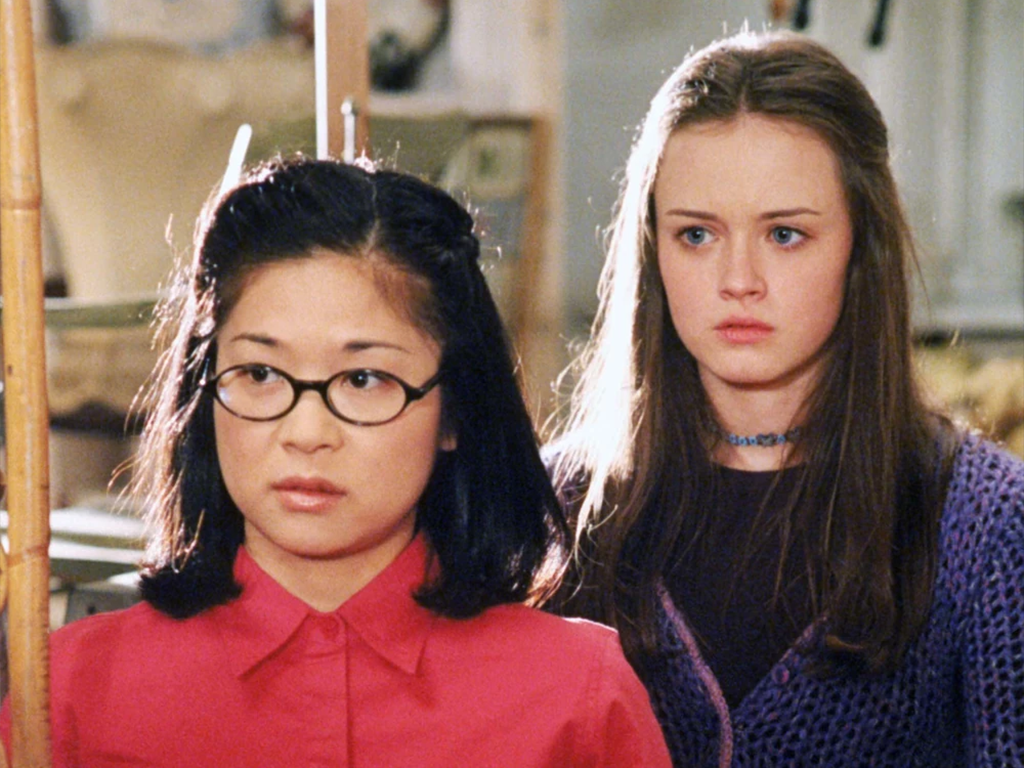
Watch if you like: "Severance," any of the movies on this list, "The Twilight Zone" (or, per Luke Danes, "The Outer Limits"), Ursula K. Le Guin, grouchy/flawed protagonists, 2am rabbit holes about how AI's going to end humanity.
Somehow, this is the first movie I've seen by the Dardenne brothers, and I loved it as much as everyone who has been trying to get me to watch their films for years said I would. "Rosetta" is about a young girl (Émilie Dequenne) who lives with her alcoholic mother (Anne Yernaux) in a trailer park in Seraing, Belgium, the depressed steel town where the Dardennes grew up. What Rosetta wants more than anything is a job. When we first meet her, she's being forcibly removed from the factory where she had been working on a probationary basis. She runs through the building in her white coat and hairnet, barricading herself behind doors as the manager and security officers chase her. "I did my job well. Everyone says so," she declares. If they want her to leave, they'll have to drag her out of the building kicking and screaming as she clings to every available surface, determined to stay.
No one can say that Rosetta didn't try her damndest to change her situation. Throughout the film, she hustles, fights, betrays her only friend, and still can't find a way out. "Rosetta" reminds me so much of Barbara Loden's "Wanda" (1970), but with a younger, scrappier, not yet completely downtrodden protagonist at the helm. I can't wait to send myself into a depressive slump by watching the Dardennes' oeuvre, including "Young Mothers," currently playing at IFC Center.
Working-class cinema made by working-class filmmakers is a dying art thanks to rising costs, lack of social safety nets, impossible to secure funding, etc. In America, it's hard to even think of contemporary filmmakers who fit into this category. Of course, there's Kelly Reichardt, who currently teaches at Bard College and makes independent, (primarily) micro-budget films (ditto Todd Solondz at NYU). Others, like Barry Jenkins and Eliza Hittman, take on bigger studio/tv work to fund smaller passion projects. Some, like Kathryn Bigelow and Sara Driver, have/had successful partners who probably gave them the stability (and health insurance) to make projects on their own. It's tough out there for people who want to make indie cinema in the states.
Sadly, the situation isn't much better elsewhere. In 2024, Equity, the UK's creative trade union, reported that "less than 10% of film and TV creatives are from working class backgrounds." What the fuck is social realist cinema going to look like when I'm a septuagenarian like the Dardennes? I guess it will be made by AI and people like Sean Baker (shudder).
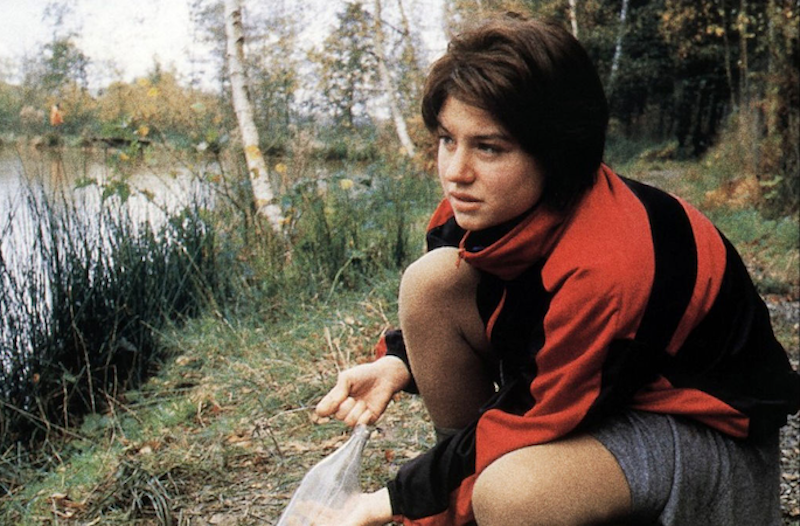
Watch if you like: "Vagabond," Robert Bresson, Andrea Arnold, Ken Loach, Kelly Reichardt, Mike Leigh, Italian Neorealism, "What You Need From The Night," early Lynne Ramsay.
If you grew up in the 90s, there's probably at least one random VHS tape you watched ad nauseam primarily because your family owned it. For me, there were three: "Little Giants" (1994), "Problem Child" (1990), and "Look Who's Talking" (1989). I have no idea where they came from and can't imagine either of my parents purchasing them, but they're what we watched out of desperation between video rentals. The movies I wish we owned, like "The Muppets Take Manhattan" (1984) and "The NeverEnding Story" (1984), were elusive. If someone in your elementary school class had one of those tapes, you might befriend them solely for the chance to watch it at sleepovers, even if they were a finky little ratface who tattled on you for swearing.
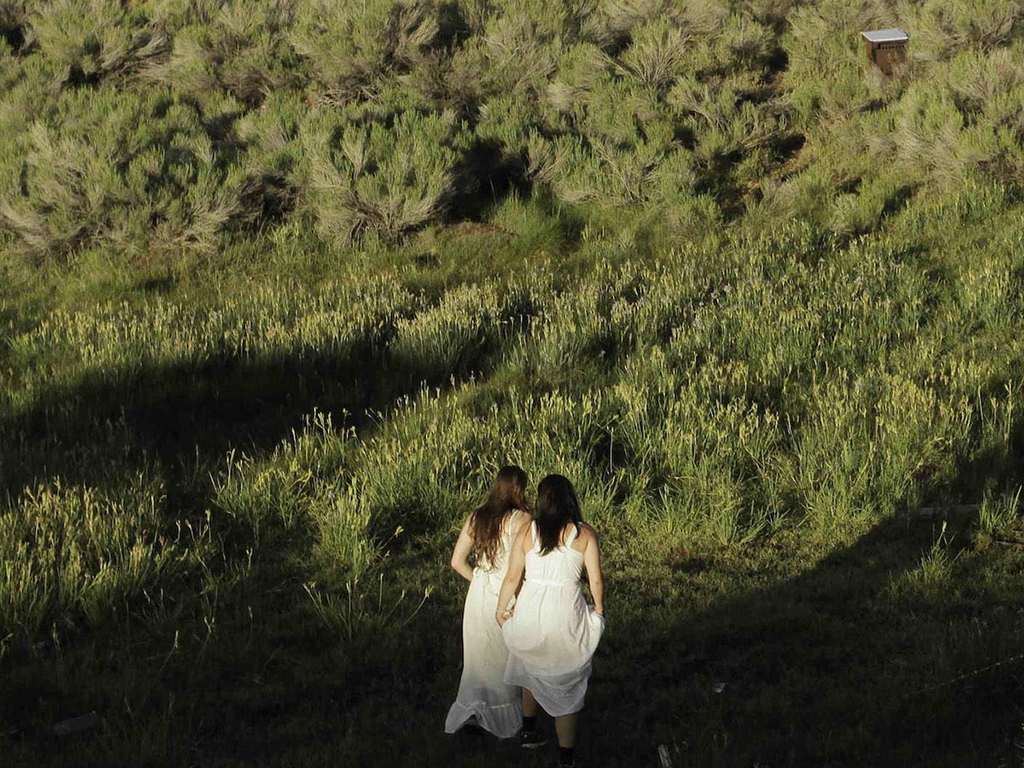
Had "Riddle of Fire" existed in the 90s, I would have done anything, even going so far as to steal it from the library, in order to have it in my collection. It takes place in the present day (the kids have iPhones), yet feels very much like all the greats from my youth. Shot on 16mm in Utah masquerading as Wyoming, the film follows three little scamps — Hazel (Charlie Stover), Jodie (Skyler Peters), and Alice (Phoebe Ferro) — during one long day of their summer vacation. The film starts with them breaking into a warehouse and stealing a gaming console, only to arrive back at Hazel and Jodie's house, assemble an epic snack spread, and learn that a TV password stands in the way of their slug life marathon. Their mom is sick in bed and offers two hours of video games if they bring her a blueberry pie from Celia’s Bakery. Of course, Celia is out of pie, and thus, their quest continues down an ever windy path, encountering villains like the goddamn woodsy, egg-hoarding bastard who drives this truck:
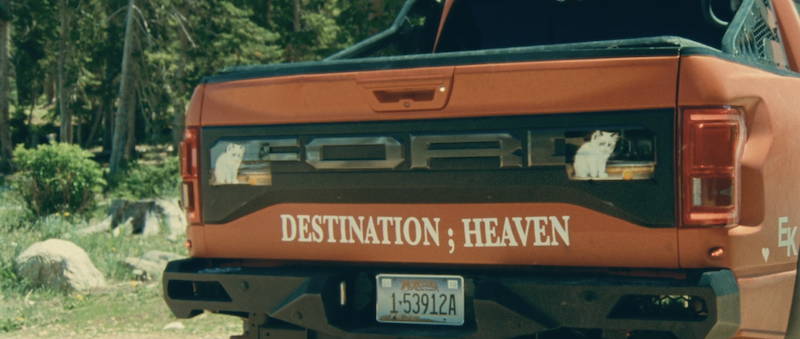
Whether or not you like this movie hinges on your propensity for whimsy, nostalgia, and some sloppiness c/o shooting on film. The plot meanders and the acting is objectively (and I would argue intentionally) terrible, but who cares? This is the type of movie you can watch with a child and both really enjoy.
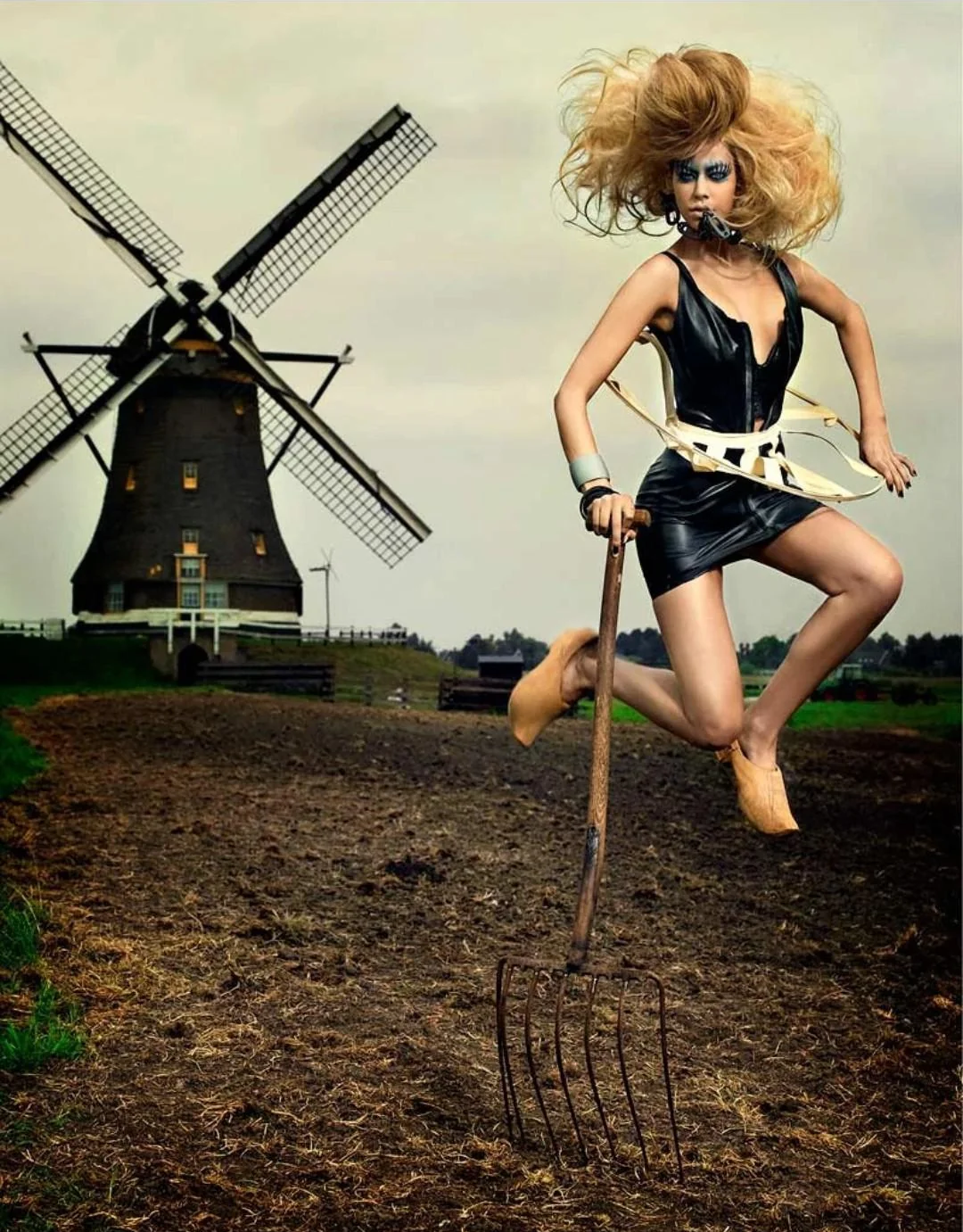
Fun fact: Lio Tipton, of "ANTM" Cycle 11, plays Anna-Freya Hollyhock. I can't see her without thinking of this photo. (She had some legitimately good ones, too, I'm just being a dick.)
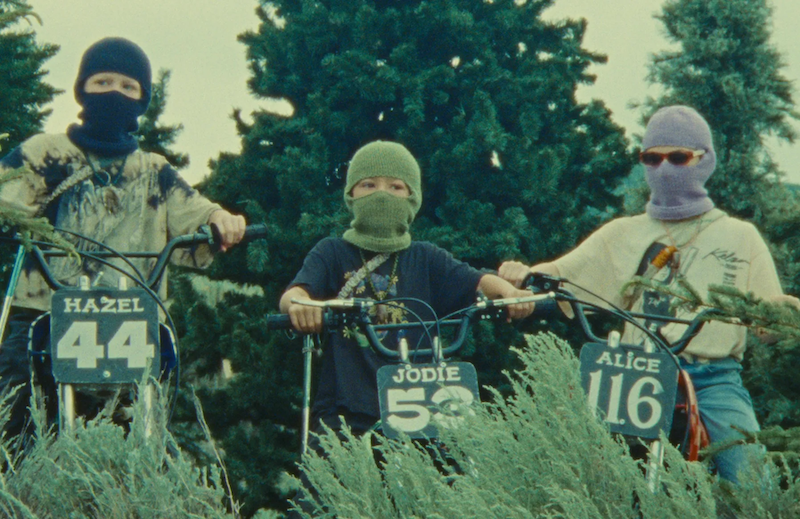
Watch if you like: The most idyllic parts of childhood, The Legend of Zelda, Hayao Miyazaki, impeccable production design (s/o Meg Cabell), "Escape to Witch Mountain," long summer days outside, 80s Terry Gilliam, Dungeons and Dragons.
This is the scariest movie I've seen in years. Linda (Rose Byrne) is a therapist in Montauk with a sick daughter, a useless/absent husband (Christian Slater), a roster of challenging patients, and a giant hole in the ceiling of her apartment that's forced an extended motel stay. From the moment we first meet her, it's clear her sanity is hanging by a thread. Her daughter's illness, although never specified, most resembles ARFID (Avoidant/Restrictive Food Intake Disorder), and has led to feeding tube treatment, which Linda desperately wishes to cease. At night, while her daughter unconsciously consumes nutrients via machine, Linda drinks wine, smokes weed, and occasionally finds herself back at her apartment, staring at the gaping hole in her bedroom ceiling. This is one of those movies where the line between reality and hallucination occasionally blurs and events are heightened for effect, so how well it works depends on whether or not you're along for that ride.
What I like most about "Legs" is its unapologetic "this fucking sucks" attitude and its willingness to show a woman at her breaking point without adding trite disclaimers so we know she's not a monster. There's no, "I love my child BUT" bullshit that often accompanies harsh comments like "Maybe I should have aborted her" (not a direct quote). It's obvious Linda loves her kid and wants to do right by her, she's just reached the point of total burnout thanks to a lack of support. She resents her naval officer husband, who travels for long stretches and spends most of their phone conversations criticizing her, and struggles with Dr. Spring (played by writer/director Mary Bronstein), the woman in charge of her daughter's treatment. Linda's therapist and colleague (Conan O'Brien) is openly exasperated with her, partially for good reason because she makes some wildly unprofessional choices. My friend Alex astutely said, "He tells her she needs boundaries but maybe she doesn't have them because nobody lets her."
Several times in the film, we're reminded that "perception is reality," and what we're witnessing is Linda's reality, whether objectively accurate or not. She feels isolated with nowhere to turn for help, something the film's characters and visual/aural language reinforce. Her face is often shot in close-up with the sounds in her environment — crackly monitor static, feeding pump beeps, mysterious creaking — anxiously amplified. Her daughter's face is completely obscured until the final scene of the film and her husband primarily exists as a disembodied voice. Linda has no village; she is a rapidly crumbling island with dwindling resources.
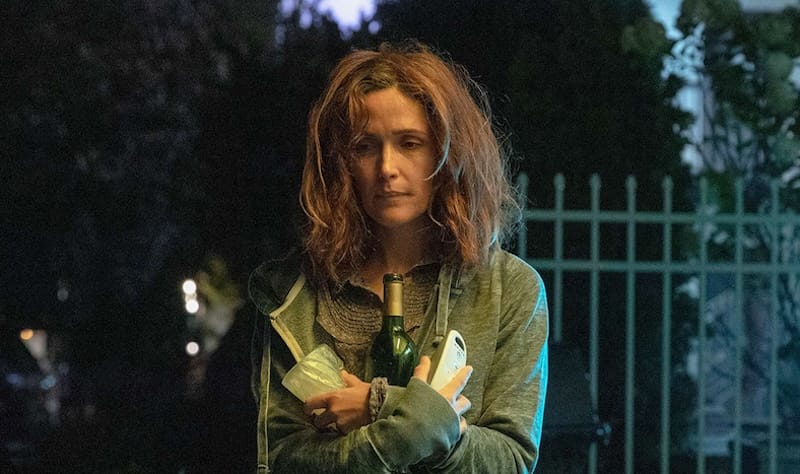
People have called this "Uncut Gems" for moms, maybe because of the Safdie connections: Mary Bronstein's husband is their frequent collaborator, Ronald Bronstein, and Josh Safdie is also a producer on the film. Josh, Benny, and Ronald all worked on Mary's first film, "Yeast" (2008), which came out seventeen years before "Legs," her sophomore feature. In that gap, she had a kid (who dealt with a lengthy illness) and went back to school to become a therapist while Ronald continued working with the Safdies. It's pretty metal of Mary to invite comparisons to her personal life with this film, especially considering Linda's abysmal husband. I obviously have no idea what the Bronsteins' marriage is like, but I will say that I found this interview with both of them interesting.
Watch if you like: Lynne Ramsay, free birth control, "Momma May Be Mad," Sylvia Plath, "Caliban and the Witch," Gena Rowlands characters, "The Babadook," Elena Ferrante's "bad" mothers.
Last time I was in Scranton, I went to this delightful little store called Pigeon Post in the old Hotel Jermyn building downtown. One of the owners, Kelsey Mitchell, told me that her fiancé, Alex Tomlinson (the other owner), creates most of the bird-centric art they sell, including prints and stationery (I bought these stickers). Right when you walk in, they have a few shelves of excellently curated used and new books. For whatever dumbass reason, I didn't buy André François's "Crocodile Tears" despite immediately falling in love with it and doing a (rude) deep-dive on him during dinner later that evening at my sister-in-law's.
What I found is that François was born in Timisoara — then part of Hungary, now Romania — and moved to Paris in his late teens/early 20s. He became a citizen, changed his last name (from Farkas to François, he was Jewish), and started taking on freelance cartoon work. During WWII, he and his family (by then, a wife and two kids) obtained false papers and moved to the Alps in eastern France. Did he and Alois Carigiet know each other? I'm not 100% sure, but probably! Eventually, he moved to Grisy-les-Plâtres outside of Paris. During this time, he began illustrating children's books and doing work for prominent magazines like Punch, Lilliput, and The New Yorker. Between 1963 and 1991, he illustrated 56 New Yorker covers. These two are my favorites:

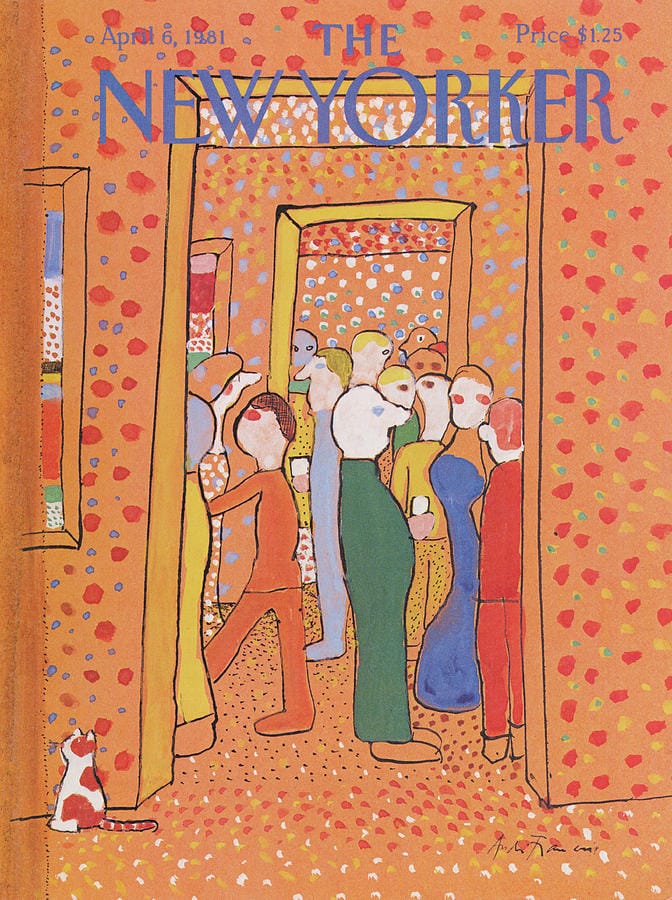
You can see most of them here.
While he often worked with other writers, he also wrote many books himself, including "Crocodile Tears." It wasn't originally presented like this, but the version I saw, reprinted by Enchanted Lion Books, is a long, thin volume, perfectly slotted into an airmail box.


The story inside is simple: a kid accused of crying crocodile tears asks what they are and his dad (grandpa?) spins up some fantastical nonsense involving a trip to Egypt, rousing cocktail hours, and a crocodile-drawn carriage.
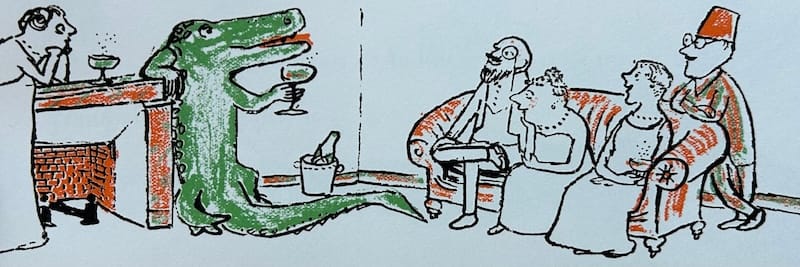
Warm as Toast, yet another fun children's book Substack, has a post about François and some of his other work that you should absolutely read for more information. Along with "Crocodile Tears," Enchanted Lion reprinted two of his other books: "Little Boy Brown" (1949, with words by Isobel Harris) and "Roland" (1958, words by Nelly Stephane).
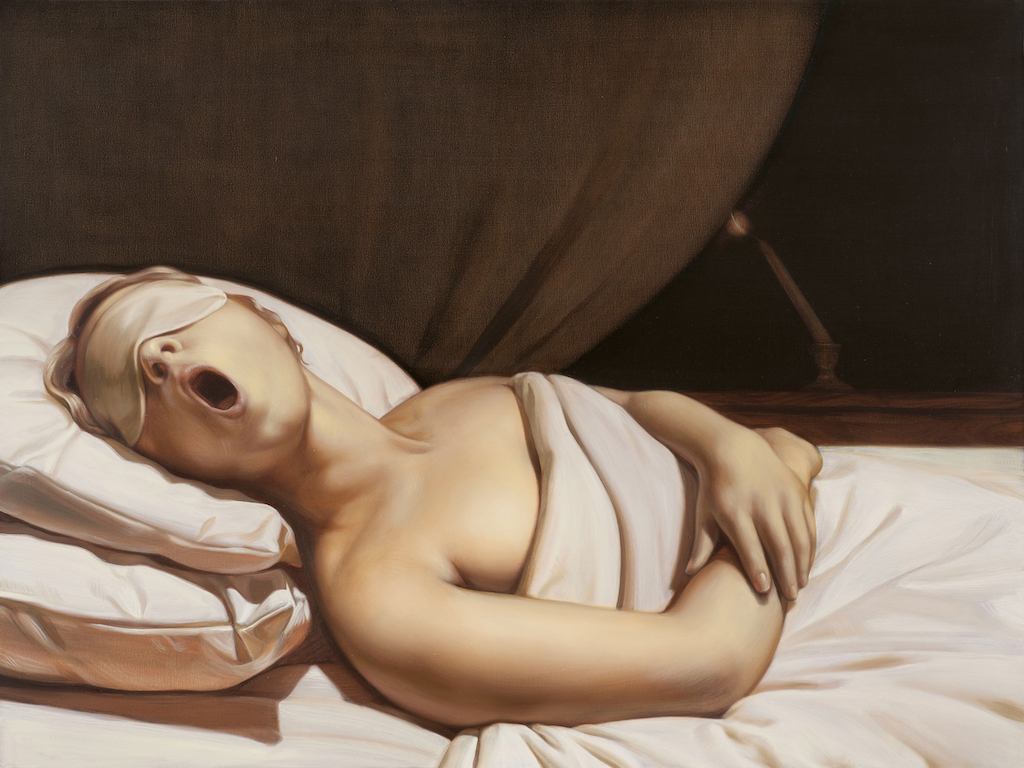
The header image of this post is a painting ("Slumber") by Anna Weyant, whom you might know from her work on the cover of "Big Swiss" or the Art Daddy substack if you're a sick fuck like me who dips in occasionally out of sheer curiosity. Tl;dr people say she's not that talented, resent that she comes from money, and claim she fucked her way into a successful career (she used to date Larry Gagosian). I've never seen her work in person, so I can't say, but I like her POV and resent the misogynistic dialogue about her.
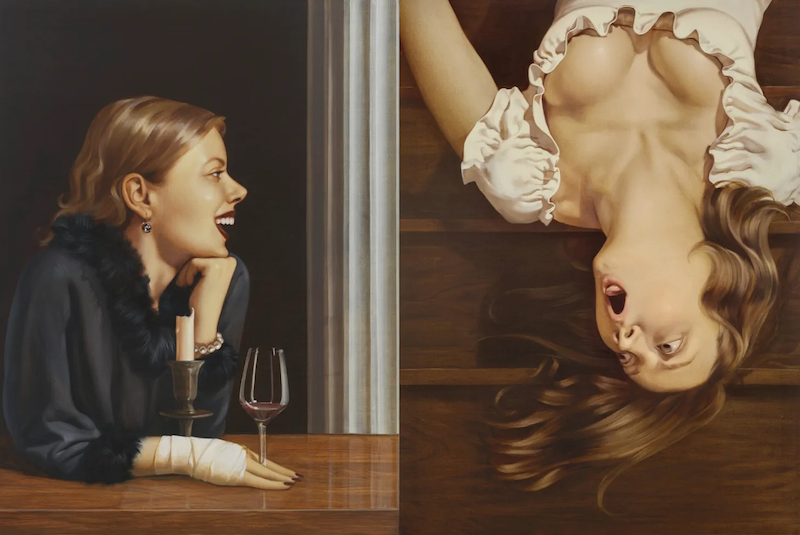
Her work has been compared to John Currin, another controversial figure and someone she's cited as an influence. I love niche gossip/drama from industries I will never inhabit.
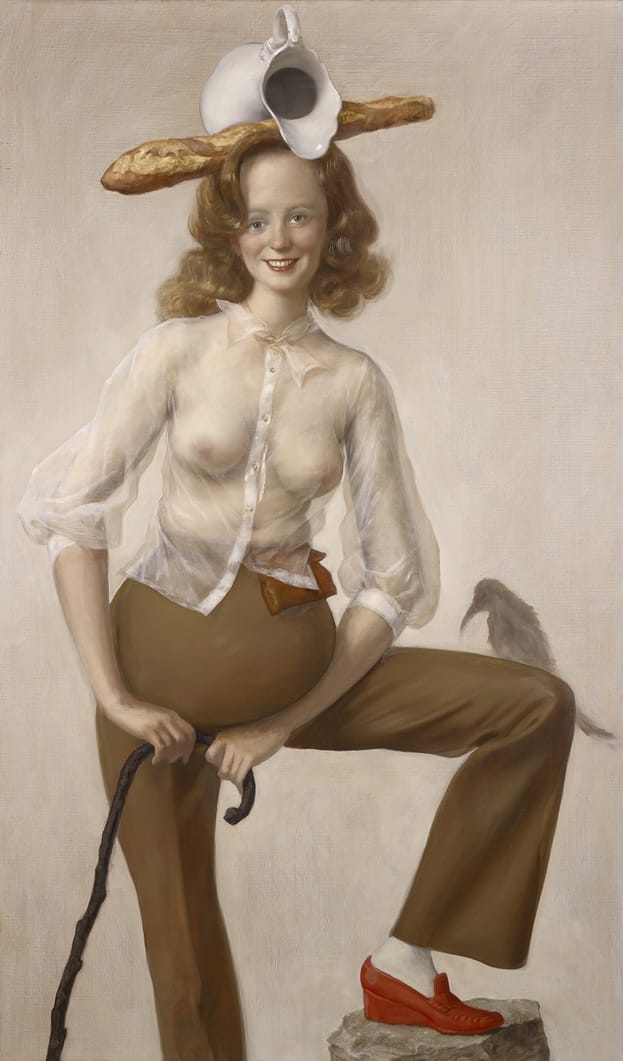
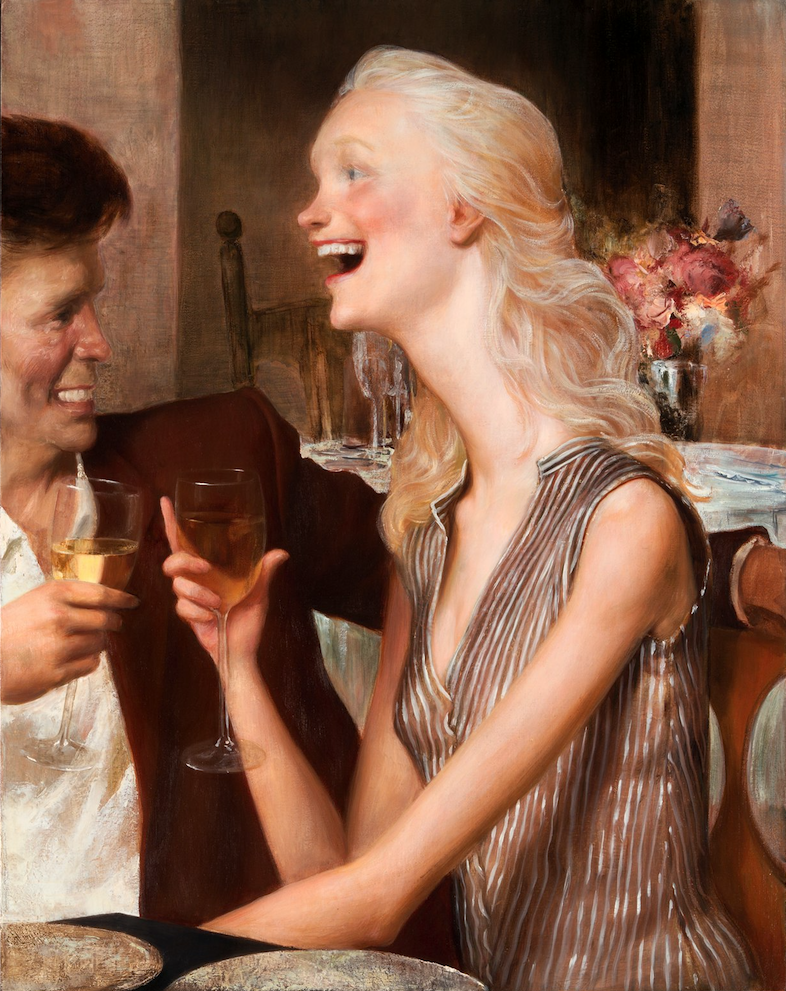
Left: "Red Shoe" (2016). Right: "Park City Grill" (2000).