
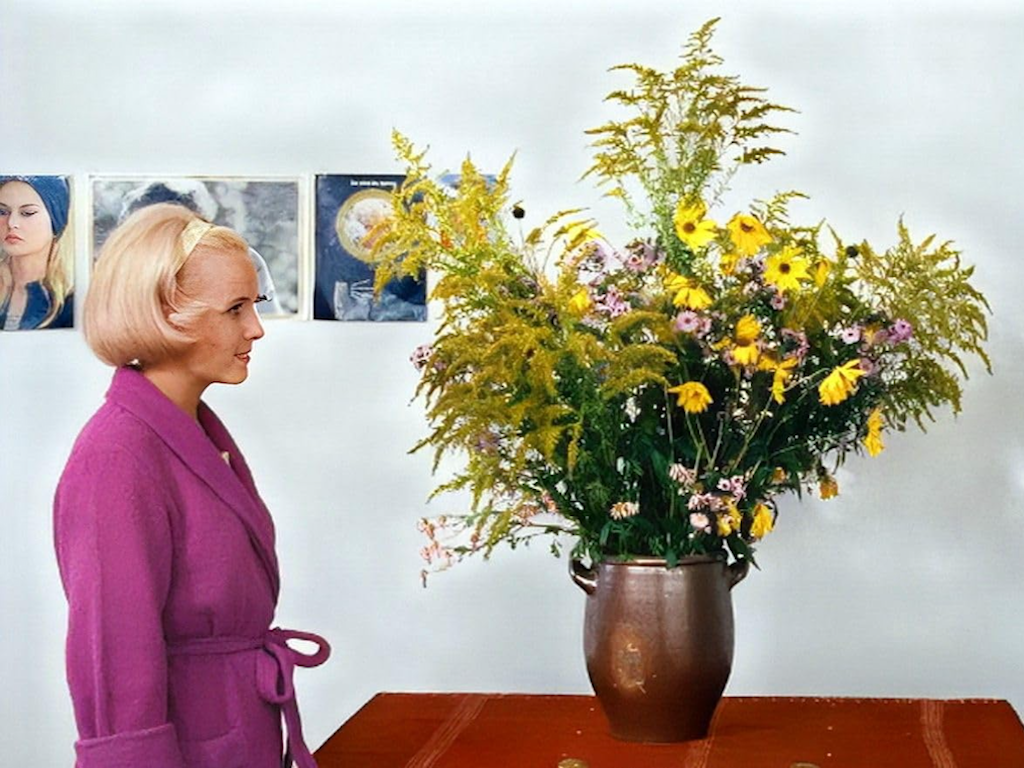
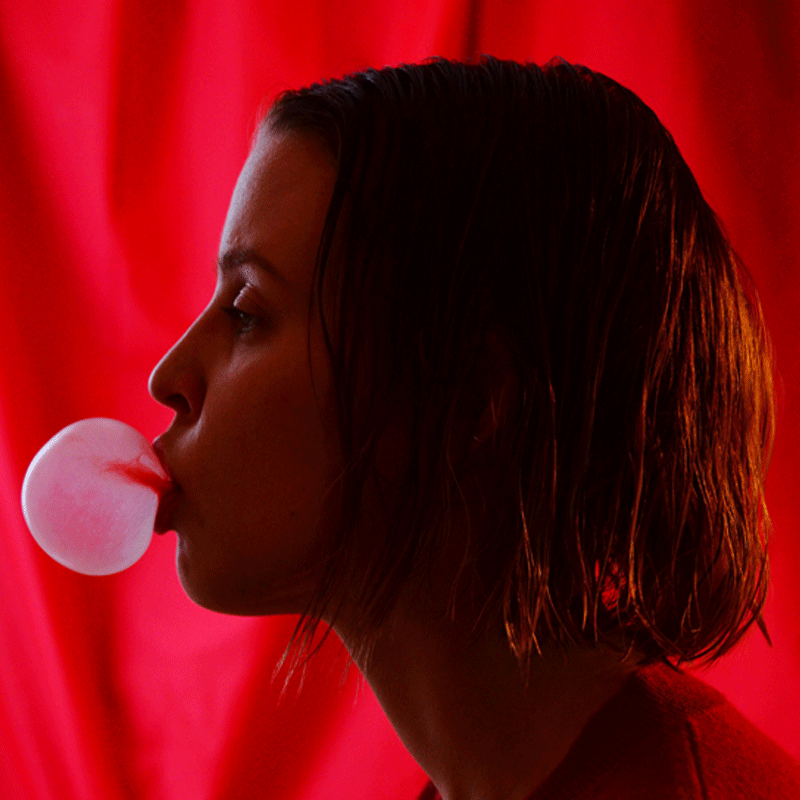
Once spring is in full swing and summer is on the horizon, all I want to do is reread Elena Ferrante's Neapolitan novels. How many times have I done this? That's between me and Cat Jesus, but I will say that if I divulged this information, you would (correctly) assume I have no life. Before I die, I hope to spend at least one summer sprawled across a striped towel on Maronti Beach, cursing the Sarratore men while slathered in SPF 50, an ice cold Pellegrino by my side.
Last year, I wrote about "My Brilliant Friend," the first book in Ferrante's series, alongside S1 of Saverio Costanzo's deft adaptation for HBO. For those unfamiliar, the story charts the friendship between two girls, Elena and Lila, from childhood into their 60s between the years of 1951-2010. Like any good novelist, Ferrante uses this core relationship to explore a myriad of themes: political corruption in Naples (and Italy in general), the way that class differences alter life's trajectory, loss of self to motherhood, mental health struggles, and the crushing weight of patriarchal oppression.
If you've been reading here for a while, you probably know I'm particularly interested in book-to-screen adaptations, especially when they work well. Until the tragedy of S4, I would have called "MBF" one of the all-time greats; even considering its second-half missteps, I still hold the show as a whole in high regard. When Costanzo stopped directing in S3 and Daniele Luchetti took over, quality took a noticeable dip. S4, directed by Laura Bispuri, feels almost soap opera-adjacent. When I undertook this project, I wanted to figure out where the show went wrong and what made Costanzo a particularly adept writer/director of Ferrante's source material, so that's what I'm attempting to do as I work my way through the narrative.
I just started S2, the series' pinnacle, so if any of this has sparked your interest, please join me as I rewatch/reread/fantasize about Nino Sarratore choking to death on a branzino. Otherwise, I'll catch you at Friday Night Dinner at least once each month. I must once again reduce the cadence for my sanity, so just imagine it's S4 of "Gilmore Girls" when Lorelai is no longer required to attend but usually does because what fun is life if it's not full of painful, self-imposed obligations?

🌴 Gwendoline Riley's "The Palm House" (2026)
Apparently, SJP also loved this April release from NYRB. "The Palm House" was my second Gwendoline Riley after 2021's "My Phantoms," and you bet your ass I'm working my way through her previous six novels because I can't get enough of her childfree protagonists with fucked up familial relationships. Riley is one of those writers, similar to Rachel Cusk (who has a new novel coming in August), with a gift for crafting rich, complex characters in limited first person, mainly through brilliant dialogue. The writing is so restrained that it sometimes takes a while to understand what she's doing. I tend to believe the people who dislike her just aren't reading closely enough or maybe have elevated plot expectations c/o popular novels written with Netflix in mind. "The Palm House" is a book that's actually written to be read... a 2026 rarity in the face of garbage like [use your imagination to fill in the blank].
On its face, the book is about two longtime friends, Laura and Putnam, dealing with the soul-sucking challenges of middle age: death, job loss/change, the exuberance of youthful idiots, the mundanity of existence. When we first meet them, we're dropped into their conversation at a south London pub over a split bag of salt and vinegar crisps. It's unclear how they know each other and Laura, the viewpoint character, provides no insight. Her role, at least in this first section, is to set the scene and respond to Putnam's reminiscences about a former roommate named Barry, a faux-suave little shitbag with a rotating slate of interests and identities. Laura refers to him as, "bit of a Mr Toad," which is the perfect description for someone who jumps from poetry to communism to fascism within the span of one month.
As the five-part novel progresses, we dip into Laura's past, observing other friendships, romantic relationships, and the dynamic with her parents (emotionally immature mother, estranged father). When Putnam's father dies and he quits his once beloved magazine job, his perception of the world — and in turn, Laura's perception of him — shifts. By the end of the novel, everything more or less returns to how it had been at the beginning. What was the point of it all? Well, I suppose that's the question.
To whet your whistle, here's a favorite description from my highlights:
There was a man smoking out of the window: leaning across the counter, one leg stretched out balletically behind him. There was a young woman sitting up by the sink: heavily made-up, wearing a sparkly pink minidress, mauve tights, no shoes. Her hair was greenish-yellow; the colour of a Midori cocktail.
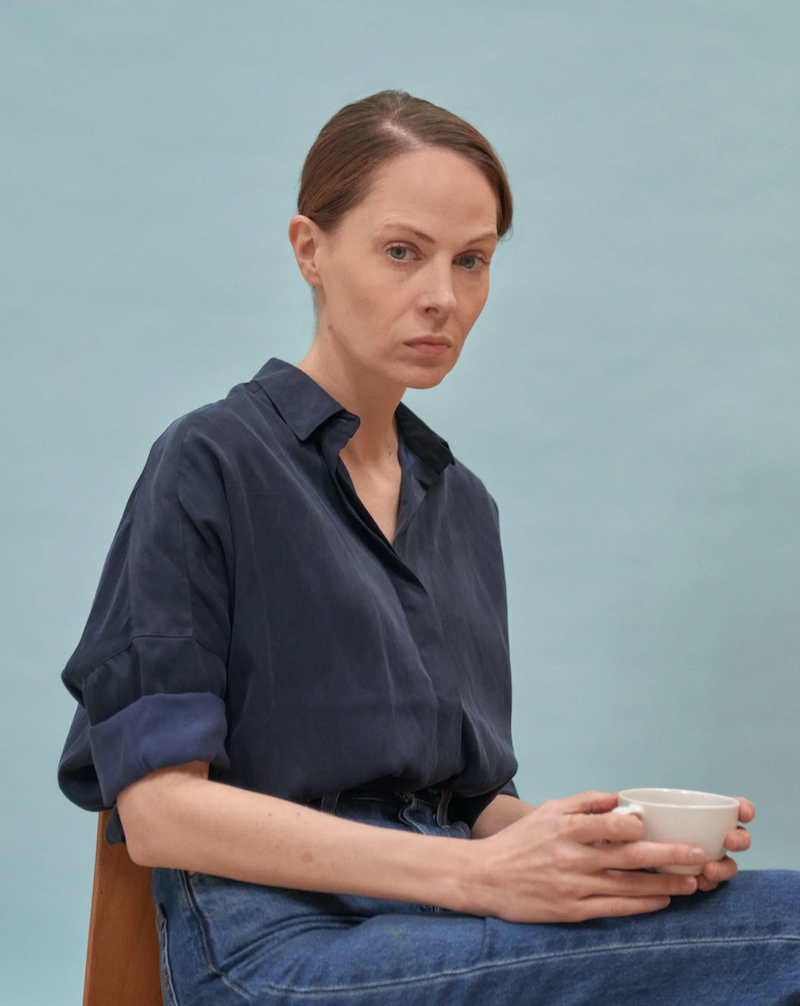

I only found one image of Riley smiling; I assume someone just out of frame was pointing a gun at her.
Read if you like: dark humor, ennui, saying you're going to do something while knowing you'll never follow through, Magda Szabo, Kelly Reichardt, working-class characters.
✉️ Christian Petzold's "Transit" (2018)
Christian Petzold is one of those filmmakers I will always follow even though his writing style (with or without Harun Farocki) requires more suspension of disbelief than I typically possess. At times, I can feel the strings being pulled for all the puzzle pieces to fall into place, which triggers the part of my brain that screams, "This is fake! You're watching a movie." Most of the time, this doesn't matter to me, but when characters are motivated by plot necessity more than earned feeling, my enjoyment is diminished.
Granted, this is also true of Hitchcock, a major Petzold influence, but he's a genre filmmaker so expectations are different. Petzold is a realist who works within certain genre conventions, so my expectations for character motivation are different. He might toe the line of the experimental, thriller, and melodrama genres, but he never fully embraces any of them, so I tend to find the overall pick-and-choose approach somewhat frustrating, especially when it comes to character development. His narratives are so precisely plotted that if he makes one misstep, the artifice becomes obvious and impossible to ignore. If, like me, you've had a difficult time connecting with his work or need a good starting point, you can't go wrong with "Transit." I revisited it after a disappointing experience with his newest film, "Miroirs No. 3" (2026), and was instantly reminded of how satisfying it is when his characters operate within constructs I understand.
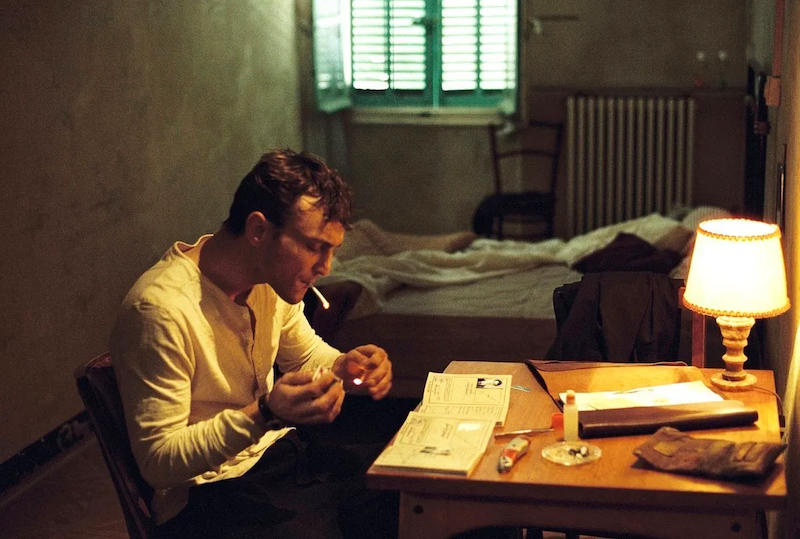
"Transit" is an adaptation of Anna Seghers's 1944 novel by the same name, about Georg (Franz Rogowski), a German refugee in France during WWII who assumes a dead writer's identity to escape persecution. Most of the film takes place in Marseille, where Georg goes through the bureaucratic nightmare of securing his transit visa to Mexico. Most of his days are spent loitering in cafes, waiting on line at the embassy, and befriending people who will either die or disappear. While in Marseille, he keeps running into a mysterious woman whom he eventually realizes is the dead writer's wife, Marie (Paula Beer). They go through this rigamarole where she shows up to the embassy and is told she just missed her husband. She concludes he is avoiding her since they were previously estranged, not realizing that Georg is impersonating him. The end features a classic, gut-punch twist that, unlike some of Petzold's other films, is set into motion by decisions that feel true to the characters.
The film makes many interesting choices, including the use of a setting that is both the early 1940s and present day. The clothing, cars, and interiors are modern, and there is a high definition screen in the Mexican embassy, but those things feel anachronistic rather than indicative of period. We don't know if Georg is Jewish and I'm not even sure the Nazis are mentioned, although we know he's fleeing a fascist force that is swiftly infiltrating France. These choices give the film a timeless quality, a feeling that history keeps repeating itself, leaving people to rot in purgatory while forces beyond their control chip away at their wills to live.
Watch if you like: Kafka, "Vertigo," liminal spaces, the illusion of connection, dying alone, films that improve with repeat viewings, Jenny Erpenbeck.
💔 Ira Sachs's "Passages" (2023)
After "Transit," I was desperate to see Franz Rogowski in a slutty little crop top, which naturally led to a "Passages" rewatch. I know way too many self-proclaimed chaotic bisexuals who haven't seen this film so if you fall into that category (or any other), please get your house in order. I wouldn't call it a pleasant viewing experience because you will spend most of your time actively wishing for Tomas's (Rogowski) death, but at least the incredible production design provides an aesthetic backdrop for his chicanery.
Tomas is a narcissist director who treats the people in his personal life much like the actors in his films (i.e., terribly). When we first meet him, he's on set, losing his mind over the way an actor walks down the stairs, making him do take after take of totally inconsequential bullshit. At one point, he tells the actor,
I just want you to come down the staircase, see the space. It's a place that you've known for a while, and you like it, and you're going in the space, and you're going to order a drink and have a cigarette and you like it because it's your favorite brand, OK?
When I first heard the "favorite brand" comment, I assumed he was working on a cigarette commercial, which makes his persnickety direction seem even more ridiculous, but no... it's a period film called "Passages." At the celebratory wrap party, Tomas tries forcing his husband, Martin (Ben Whishaw) to dance with him and when he's not into it, Agathe (Adèle Exarchopoulos), a woman who just broke up with her boyfriend, joins him. Tomas goes back to her place, they fuck, and then the next morning, he's shocked when Martin isn't jazzed to hear about his exciting tryst with a woman.
What I love about the script, co-written by Sachs and Mauricio Zacharias, is the lack of tedious conversations about sexual identity and relationship structures. It's not that the film thinks these conversations are stupid, they just don't really matter in the grand scheme of things. Whether or not Tomas and Martin are in an open marriage doesn't change the fact that Tomas is a manipulative dick who treats everyone around him like garbage. He takes whatever people are willing to give him and because he's charming, he usually manages to suck them dry. Martin doesn't even need to speak for you to understand his exhaustion. Agathe, a more opaque character who initially seems underwritten but isn't, doesn't immediately grasp what she's gotten herself into, though she thankfully learns before it's too late.
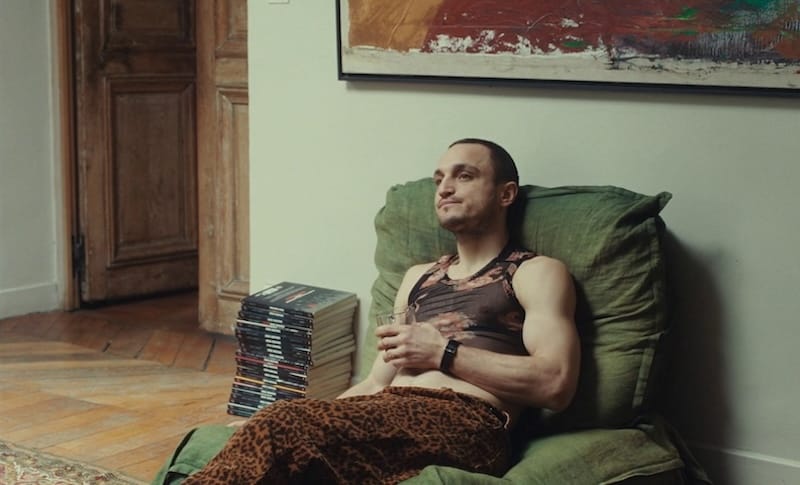
Watch if you like: Sad Ben Whishaw, ridiculous costume design, living vicariously through two creatives successful enough to buy a weekend house, "Rotting in the Sun."
🧗🏻 Peter Mortimer and Nick Rosen's "The Dark Wizard" (2026)
This four-part docuseries about Dean Potter makes Alex Honnold look like a calm, calculated risk-taker with nary a skosh of mental illness in comparison. I bring up Honnold because not only was he locked in a rivalry with Potter during the late 2000s/early 2010s, he's also a key part of "The Dark Wizard," the HBO series created by the filmmakers responsible for classics like "The Dawn Wall" (Mortimer & Josh Lowell, 2017) and "The Alpinist" (Mortimer & Rosen, 2021). Anyone even marginally interested in climbing is aware of Honnold, who appears in the aforementioned films and is the featured subject of "Free Solo," Elizabeth Chai Vasarhelyi and Jimmy Chin's 2018 Oscar-winning documentary. Potter, Honnold's predecessor, is less well known in the mainstream.
Pre-Honnold, Potter was a legendary figure in the Yosemite Valley, a countercultural dirtbag adventurer who not only became the first to free-solo Heaven in 2006, but was also known for other extreme sports like highlining (walking an elevated slackline, often without safety gear), BASE jumping, and wingsuiting. In an oral profile for Outside Magazine, friend/peer Cedar Wright (who is likewise interviewed in the documentary) describes him like this:
Dean can be one of the most hilarious, fun-to-be-around people, and then the next minute can be a very dark, intense individual. He’s had some nicknames. He used to be Mean Dean because he had a reputation for being a little aggro. And then he was Scheme Plotter because he always had some crazy, wild exploit he was planning. Now they call him the Dark Wizard.
The interesting thing about Potter, and what makes him tolerable even though he was an asshole with untreated mental illness, is that he was aware of his flaws and openly hated himself for them. He knew it was ridiculous to compete with Honnold, who was far and away the better climber, but he couldn't stop himself from doing it. Honnold pushed him to do riskier things in desperate one-up attempts that often led to emotional crash-outs and lost friendships (see: his freeBASE of Deep Blue Sea on the Eiger). This competitive nature and fragile ego are what ultimately led to his death in 2015 right after it seemed like he was maybe starting to get his life together.
"The Dark Wizard" does an admirable job of balancing these disparate pieces to create a portrait of an imperfect person who made a deep impact on those in his orbit as well as the world of adventure sports. From a filmmaking perspective, it features an enviable amount of archival footage, interviews, and content from Potter's journals. I wasn't totally sold on it after the first episode and while the primary thought running through my head was, "This dude needs to see a psychiatrist," I found myself crying at the end. The narrative is structured for maximum emotional impact without ever feeling manipulative, which is no small feat. Like several of Mortimer and Rosen's other projects, I think it will go down as one of the great sports documentaries of the past 25 years.
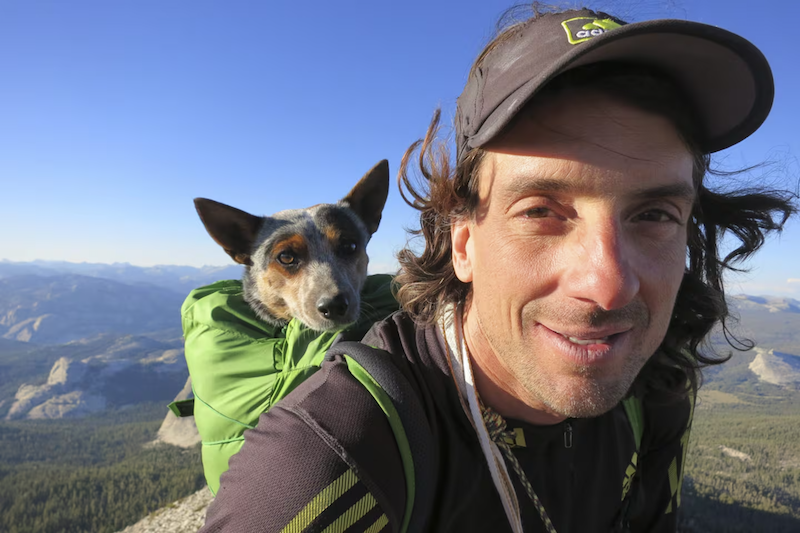
Watch if you like: men who would rather jump to their deaths instead of taking medication, documentaries about difficult people that manage to both celebrate and honestly critique them, ravens, the fantasy of a life spent outdoors.
✨ Quick hits
- My mom and I have loathed Jimmy Fallon for decades, so it's nice to see someone rip him to shreds. I don't think this piece says anything particularly interesting, but it's a masterclass in articulate loathing.
- Just when I thought I was out, Instagram pulled me back in.
- My cats would look great sprawled across the giant pink couch from Cy Twombly's Rome apartment.
- Has anyone watched "Rivals"? Should I start?
- Only five films directed by women are in competition at Cannes this year (down two from 2025). Boo hiss.
Here are some 1970s illustrations I enjoy by Janina Ede for "Jackanory," a children's BBC series that sounds similar to "Reading Rainbow." They're from the "Mary Plain Goes to America" episode (read by Richard Briers!) about a first-class bear (think: a proto-Paddington Bear with an affinity for eclairs instead of orange marmalade) who travels to America with her human friend, the Owl Man. The 14-book series was written by Gwynedd Rae from 1930-1965 with 2017 reprint illustrations by Clara Vulliamy. No shade to Vuilliamy, whose illustrations are in black and white, but Ede's are better.
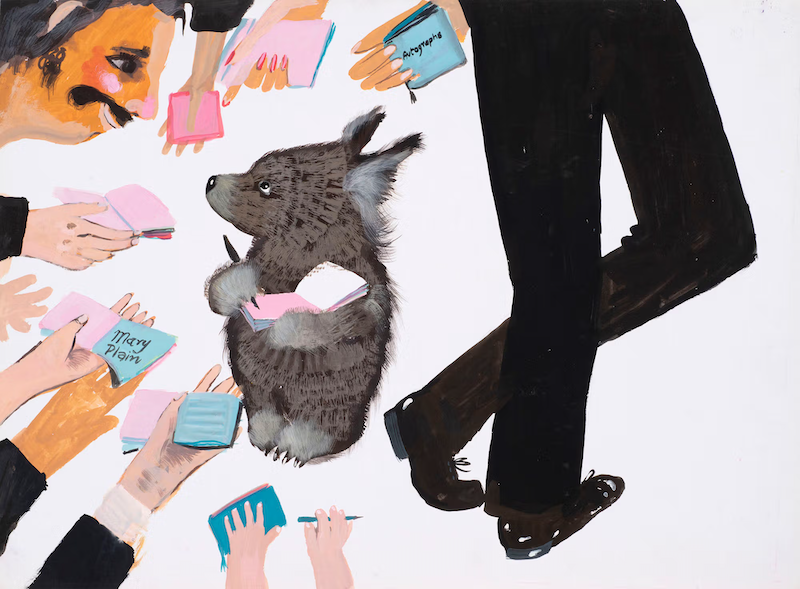
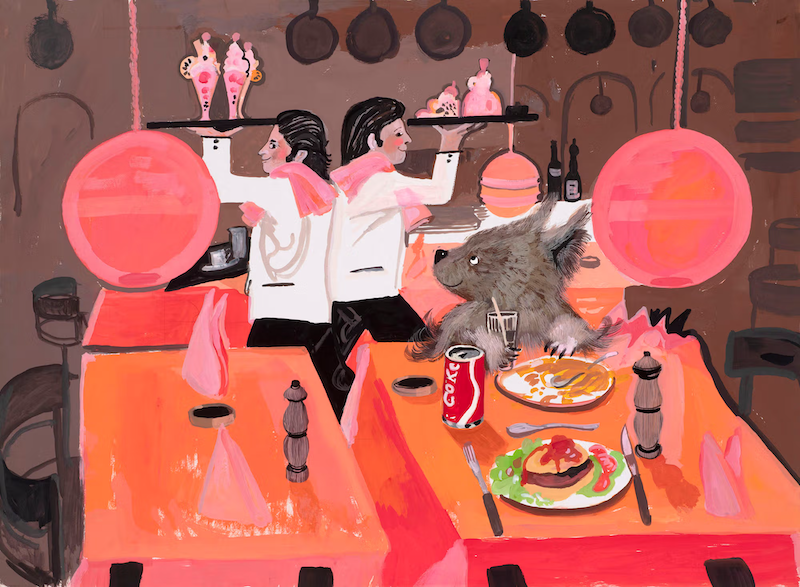
Look at those ears! I want to take Mary Plain out for a hot fudge sundae.

Member comments