
I'm still not done with my rewatch of "The Sopranos," but I'm now in the homestretch with only seven episodes left. I just watched the one where Johnny Sack (Vincent Curatola) dies and Paulie (Tony Sirico), who can't resist making the whole thing about his own successful battle with prostate cancer, gives a Blood, Sweat & Tears toast:
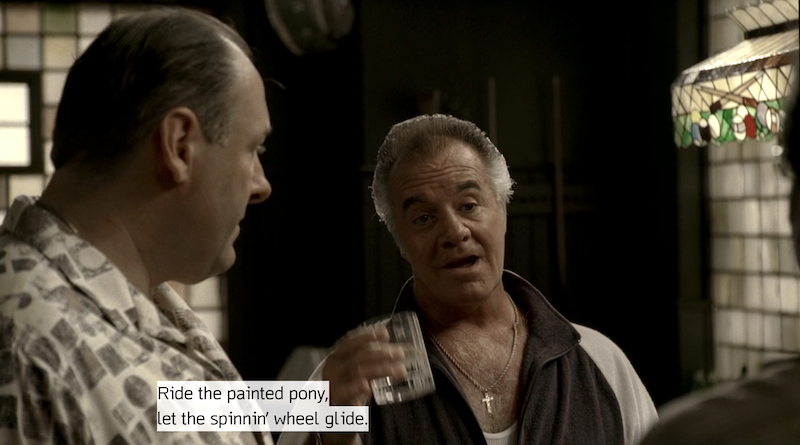
This got me thinking... "Sex and the City's" Mr. Big (Chris Noth) is a well-established BS&T fan and now Paulie Walnuts. What other fictional characters are part of the fandom and what kind of person in general likes the band? I never got into them, so my only real frame of reference for their music is popular songs included in tv/movies, along with Carole King's "Hi De Ho," which BS&T popularized. Michael H. Little answered a version of this question on The Vinyl District as part of his "graded on a curve" review of the 1970 album, "Blood Sweat & Tears 3":
Blood, Sweat & Tears were the epitome of unhip. Which isn’t necessarily a bad thing—the Carpenters were so unhip that the renowned music critic Richard M. Nixon labelled them “Young America at its best.” But BS&T thought they were hip, when in fact they made the exploding dicks in Three Dog Night sound downright groovy by comparison.
And they didn’t help their own case by being the first rock band to wow the squares at Las Vegas, which automatically made them square by association. You are who you play for. Nor did they up their street cred any by agreeing to do a US State Department-sponsored tour of the Eastern bloc [note: there is a documentary about this]. Doing the bidding of the Nixon Administration didn’t win them any friends in the counterculture, and the counterculture let them know it—Abbie Hoffman and his Yippie pals showed up at a BS&T gig at Madison Square Garden after the band’s return to throw shit at them, and by shit I mean the kind you make with your butt.
Based on this, it makes sense to me that Paulie and John James Preston were fans. Both of these men would have been around for BS&T's heyday and ignorant (or indifferent) to the politics of the time. Big would have been too young for the draft and I think Paulie had already served in/been discharged from the Army, so they wouldn't have been personally impacted by Vietnam. Other characters I think would be BS&T fans include: Harry Crane (Rich Sommer), Bart Bass (Robert John Burke), Caleb Nichol (Alan Dale), Michael Scott (Steve Carell), and Ross Geller (David Schwimmer).
If there's one thing that brings me joy as the world crumbles, it's wasting time on inconsequential bullshit. Happy last Friday in April! I hope it's treating you well. My absence last week was for a good reason: I was traveling Monday-Thursday, then when I returned, I had to pick up a couch I impulse bought from an auction house in Queens. Going forward, we should be back to the every fortnight schedule until the next time I temporarily quell my sadness by throwing money at it, thus condemning myself to hours spent cursing in traffic behind the wheel of a panel van.
P.S. Jeffrey, I suspect you'll have some BS&T thoughts, so please share.
⌛️ Nicole Taylor's "One Day" limited series (2024)
My mom had been trying to get me to watch "One Day" on Netflix since it premiered in February 2024. I put it off for more than two years not because I thought it would suck, but because I wasn't prepared for emotional devastation. I saw Lone Scherfig's 2011 film adaptation at the Angelika shortly after I moved to NYC and had my first subway cry on the way back to my sweaty, windowless "bedroom" in Park Slope. After the fall semester began, I read the book the film was based on by David Nicholls, who also wrote the screenplay, during my school commute and did even more subway crying. One of the things I love most about NYC is that you can reliably cry anywhere and no one will bother you. At most, someone might offer you a cigarette but I've never once had anyone ask me what's wrong and that's how I like it. The takeaway here is that this is a sad story and you will cry no matter which iteration you engage with because they're all good. The series might actually be my favorite, even though it should have been 10 episodes instead of 14.
The premise is simple: Emma Morley (Ambika Mod) and Dexter Mayhew (Leo Woodall) meet at a party on their last day of university. They go home together but end up talking instead of fucking and become best friends, albeit with undeniable sexual chemistry. The show follows them from 1988-2007, dipping in each year on St. Swithin's Day to see how their lives are developing. One of my favorite things about this version of the story is the way Dexter's parents are written. Alex pointed out that they're less complex in the film (played by Patricia Clarkson and Ken Stott), so the way Dexter treats them just makes him look like a rich, entitled asshole. The parents in the series (played by Essie Davis and Tim McInnerny) are closer to what I remember from the book, spending much of their time criticizing Dexter and failing to offer emotional support. As a result, I had significantly more empathy for Dex and his drunken floundering in the series.
Emma is also a rounder character in this adaptation, with parallels to Dexter's mother. She can be similarly critical of him, offering up judgment when what he needs most is support. Her feelings and actions make sense based on her own, far less privileged background, and it's satisfying to watch them evolve as her relationship with Dexter deepens. I'm not sure I'll ever revisit the series as a whole because there's far too much filler, but there are standalone masterpiece episodes (4, 10, and 12, all written by Taylor) that I've already watched multiple times.
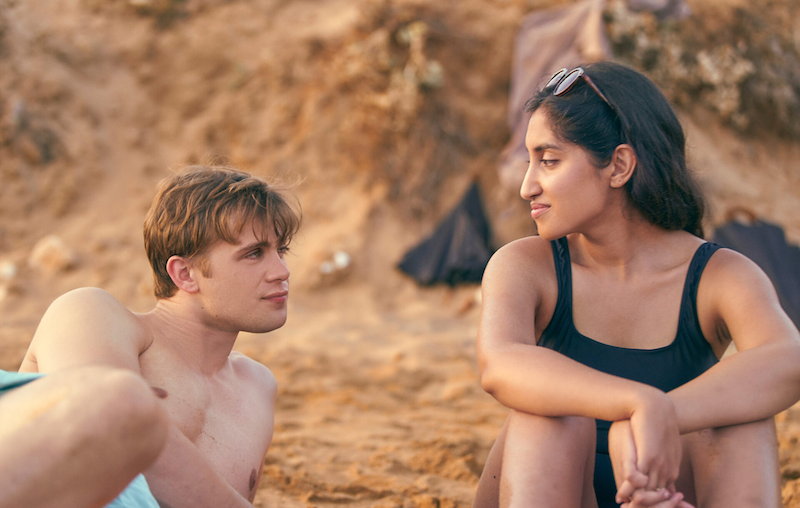
Watch if you like: excellent needle drops, Sally Rooney, the "Before" trilogy, a charming supporting cast, "Dash & Lily," life-affirming art that's simultaneously bleak.
🌴 Brett Haley's "People We Meet on Vacation" (2026)
I watched "People We Meet on Vacation" last Saturday after cats woke me up at 5am and I couldn't fall back asleep. I haven't read the 2021 book it's based on, written by Emily Henry, so I wasn't expecting an homage to "One Day" and "When Harry Met Sally," although that's exactly what it is. It sometimes feels derivative, but the 2020s are so lacking in romantic comedies that fans have no choice but to choke down whatever slop the industry's willing to feed us.
In Harry (Billy Crystal) and Sally (Meg Ryan) fashion, Poppy (Emily Bader) and Alex (Tom Blyth) meet at college when he's tasked with giving her a ride back to their hometown of Linfield, Ohio. He immediately finds her annoying because she is annoying and does enough stupid shit to make even the most patient person have a rage stroke; however, she's also attractive, so spend enough time with her and it's easy to rebrand her irritating personality traits as "quirky." Alex is her introvert opposite, a surly killjoy who likes predictability, rules, and other boring adult nonsense. Like Poppy, he is also attractive, so his rigidity morphs into stereotypically masculine dependability. It's a story we've seen many times: the manic pixie dream girl forces her male counterpart to let loose and have fun, while he in turn makes her understand the appeal of a 401k. If Bader and Blyth weren't so charming, I would have lasted 10 minutes, but they elevate this mediocre script into something I couldn't stop watching.
The "One Day" comparison comes in because the film spans twelve years of will they/won't they friendship, charting Poppy and Alex's annual trips to places like Squamish, New Orleans, and Rome. She's a wanderlusty NYC travel writer and he's a PhD student living in Ohio, a place he loves for some inexplicable reason. They want different things! His mom is dead! Will his gay brother's wedding finally bring them together? Find out the next time you're stony macaroni and need mindless entertainment.
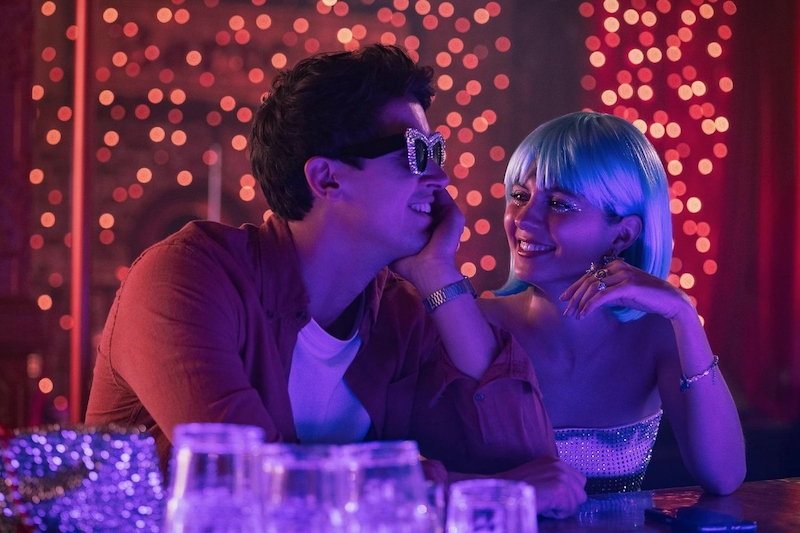
Watch if you like: everything mentioned under "One Day," romantic comedies, moving to Ohio for love (jk), a dress that rivals Andie Anderson's in "How to Lose a Guy in 10 Days," the fantasy of a modern-day travel writer without a college degree making enough money to live in a true one-bedroom in Manhattan.
💡Inès Cagnati's "Crazy Genie" (1976)
Inès Cagnati was the daughter of Italian farmworkers who migrated to southwestern France between the World Wars. The small town they lived in, Monclar, was full of poor Italian immigrants who often never became literate in French or Italian. Cagnati, born in 1937, didn't learn French until she went to school and while she ended up becoming a teacher and novelist in the French language, she spoke of feeling isolated from both of her countries throughout her life. In a 1989 tv appearance to promote her third and final novel, she described her experience like this (as summarized by LitHub):
When my parents had me naturalized, that was a tragedy,” she said, chain-smoking all the while, “because I was not French. I wasn’t Italian anymore either. So I was nothing.”
This sense of nothingness seeps from each page of her second novel, "Crazy Genie," translated for the first time to English by Liesl Schillinger and published by NYRB Classics this month. The story is about a young girl named Marie and her mother, referred to by the inhabitants of their rural village as "Crazy Genie." When Genie falls pregnant with Marie at age 17, she's ostracized by her "respectable" family and left to make her own way in the world. To survive, she travels to different farms, doing an assortment of manual labor in exchange for food. No one knows what to make of her because she doesn't talk, nor does she demand a specific wage for her work; she mutely takes what she's given and moves along, therefore she must be "crazy."
Marie, desperate for her mother's love, is forever left wanting. At best, Genie might toss her a crumb of physical affection in private, but her standard refrain is "Get out of my hair." It's a bleak tale of emotional abuse that involves rape, incest, child death, animal death, and suicide. Even if you're not in the mood for it (I wasn't), it's impossible to stop reading once you begin. Cagnati's prose is hypnotically, deceptively simple, lulling the reader into a poetic trance with the repetition of personal pronouns. "And me, I was Marie." "Me, I would go to her." Marie must continuously remind herself of her own existence in the face of constant, unrelenting rejection, most upsettingly from the person who brought her into the world.
Here's a snippet of dialogue from Genie's mother, who comes to her house for the sole purpose of berating her:
A Gypsy, that's what you've become. You have dishonored the finest family in the region. And now, not content with having produced a bastard, you are going to install yourself in the most sordid family in the village. But watch out. You know what everyone calls you, Crazy Genie. Crazy Genie, that's well chosen. I can have you shut up in the asylum. A madwoman at liberty, everyone looks at her. But a madwoman who's locked away, they forget her.
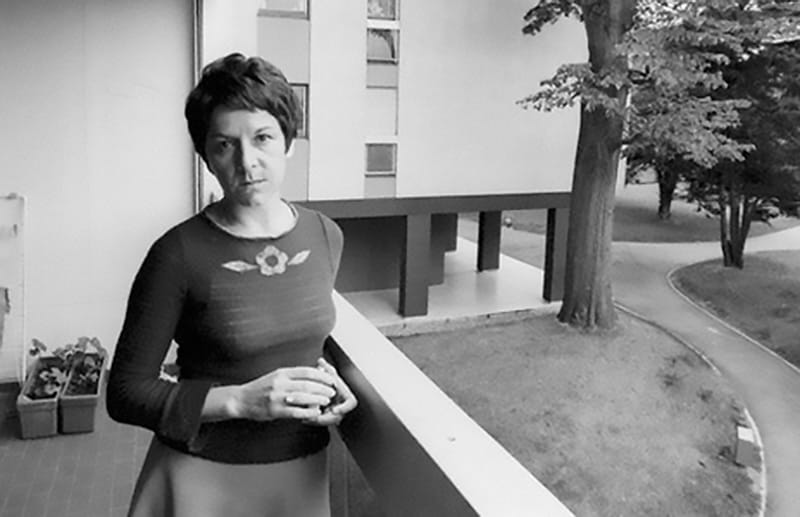
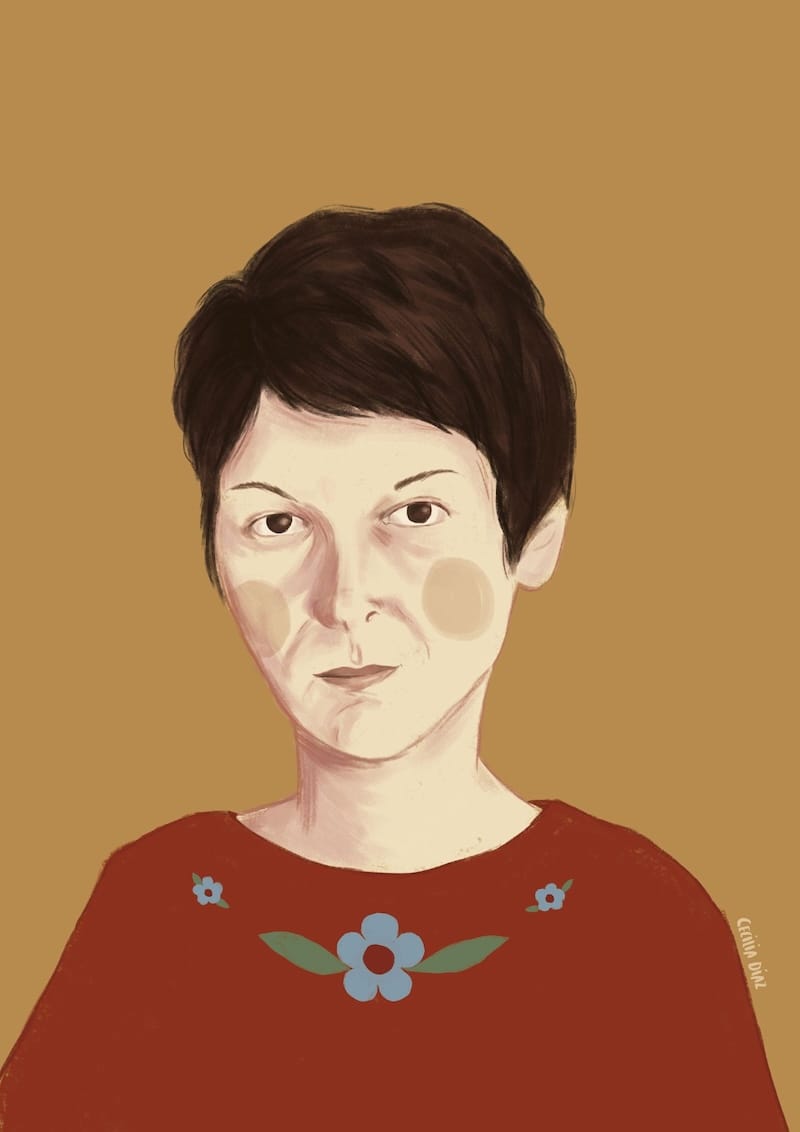
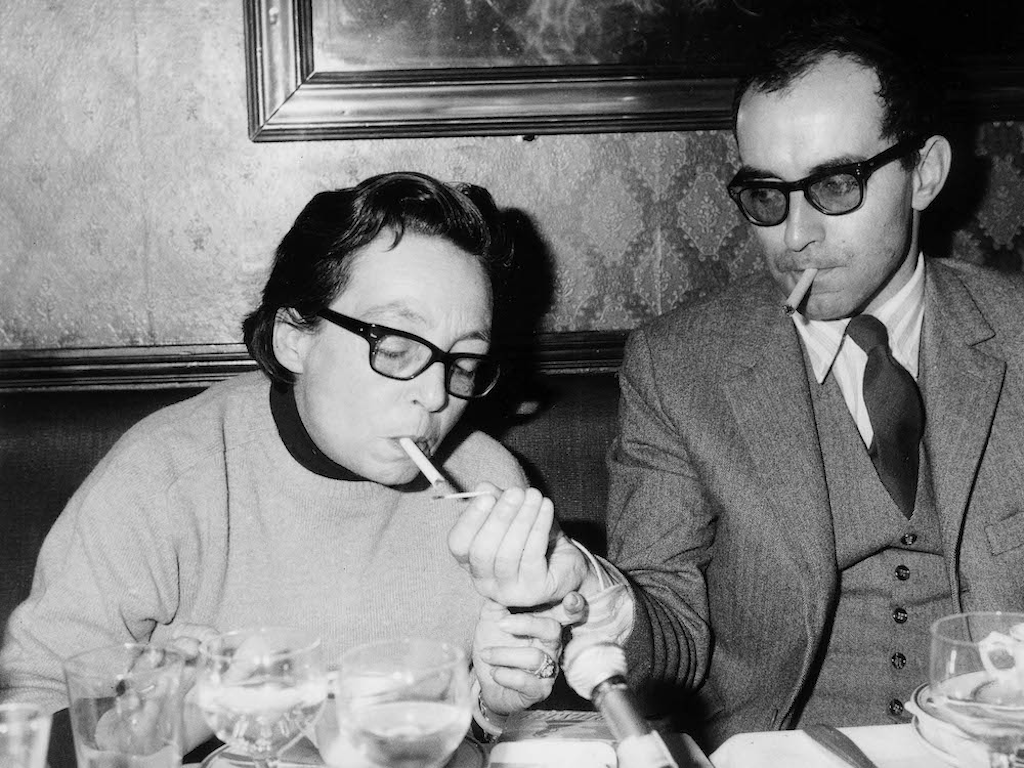
Cagnati looks unhappy in every photo I've seen of her (there aren't many). Right = Cecilia Diaz's rendition.
Read if you like: imagining a depressing French version of "Gilmore Girls," Thomas Hardy, Breece D’J Pancake, Agnes Varda's "Vagabond," fucked up loners, Jean-Luc Godard's "Vivre sa vie," Chantel Akerman.
🐈⬛ Leonor Fini's art (and love of cats)
Leonor Fini was one of those artists with insane personal style, impeccable taste in interiors, and an incomparable love of cats (at one point she had 20+ in her apartment). Born in 1907, she was an Argentinian-Italian artist who lived and worked in Paris for most of her seven-decade career. She was primarily seen as a painter but, like friend and contemporary Leonora Carrington, did a bit of everything tremendously well. She's often identified as a Surrealist, although she never used that label herself and thought André Breton was a misogynistic jackass. In fellow artist Dorothea Tanning's 2001 memoir, "Between Lives," she writes this:
Most colorful of these markets was the Marché de Buci, where if you were lucky you might see artist Leonor Fini, already a legend for amateurs of sensational Paris, sweep into the bustling crowd of comparatively drab shoppers. Picture her striding across the rue de Seine, an imperious flash of taffetas and perfume and feathers, seeming to illumine even the cobbles under her very high heels. A firebird among the crones and frost-bitten vendors of sausages and cheese and sorrel, all of whom would turn briefly to stare after her as at some sudden, mythical apparition. In her studio it was a different matter. She painted tirelessly, canvases inhabited by elongated, unearthly females and an occasional girlish male. But, like a canoe in a tidal wave, she fought hard against incarceration in the ghetto of Women Painters.
It took all of my self-control to stop that quote at a reasonable place because Tanning goes on to say many flattering, beautifully-written things about Fini with the only outwardly critical (hilarious) piece being, "Her self-absorption was authentic, unwavering." Fini was an eccentric who did whatever the fuck she wanted and if people didn't approve, they could pound sand. The only opinions she seemed to care about were her cats'. She was a bisexual, polyamorous bohemian who rejected the roles of wife and mother and found great commercial success by diversifying her income streams instead of relying solely on the sale of her paintings. She illustrated books; designed costumes for theater, ballet, opera, and film (including Fellini's "8½"); and even created the bottle for Elsa Schiaparelli’s "Shocking" perfume.
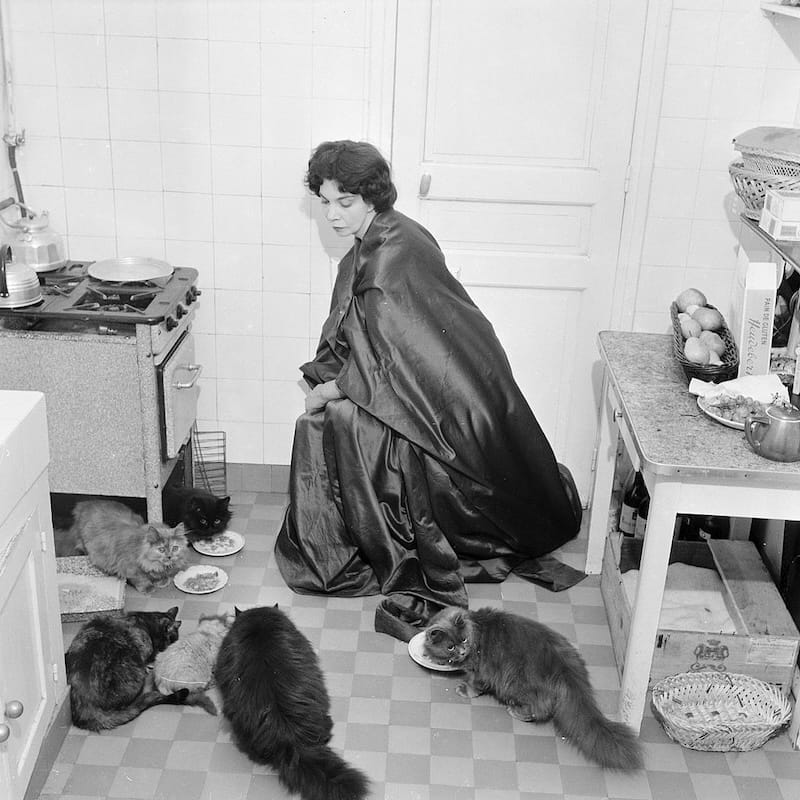
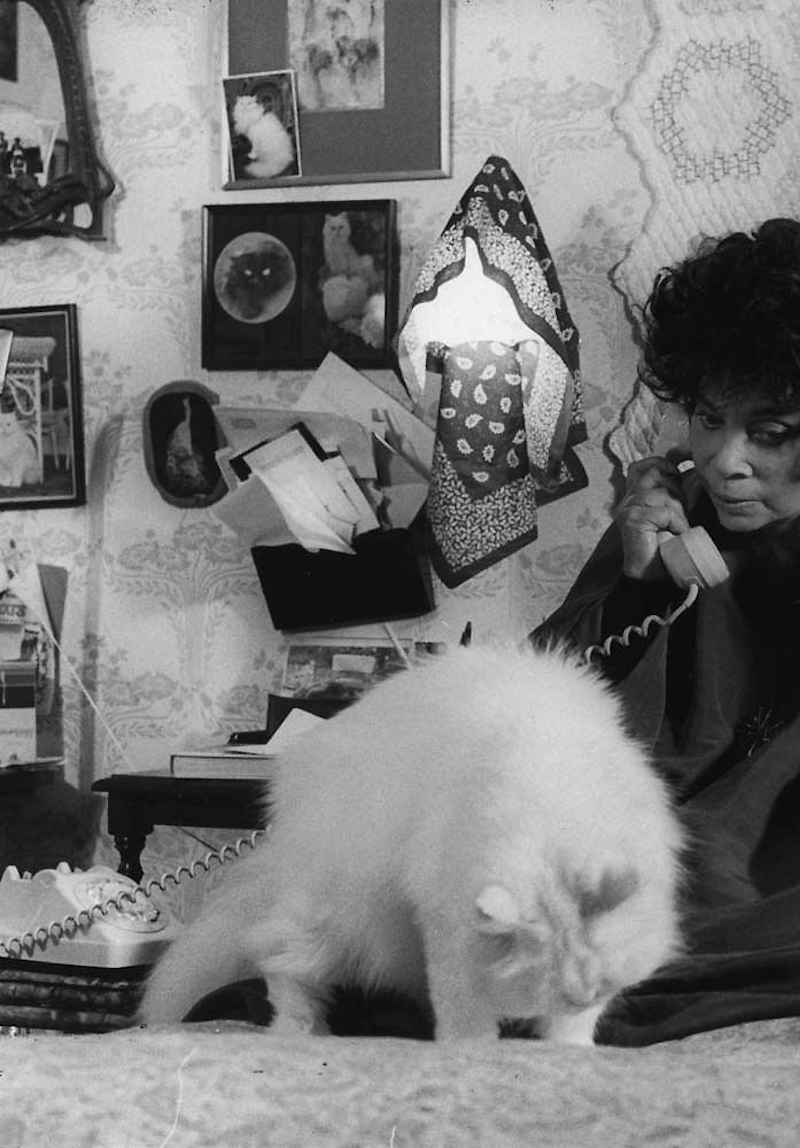
Fun fact: her cats had their own chauffeur and assistant. She was particularly fond of Persians.
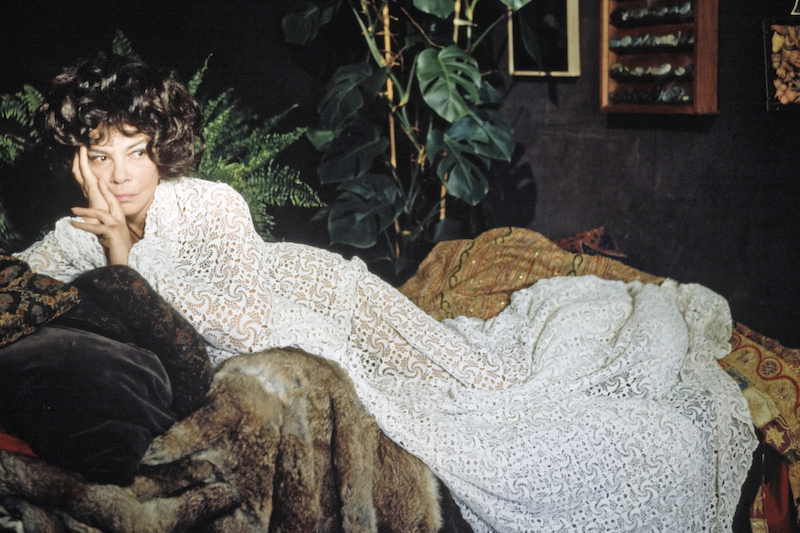
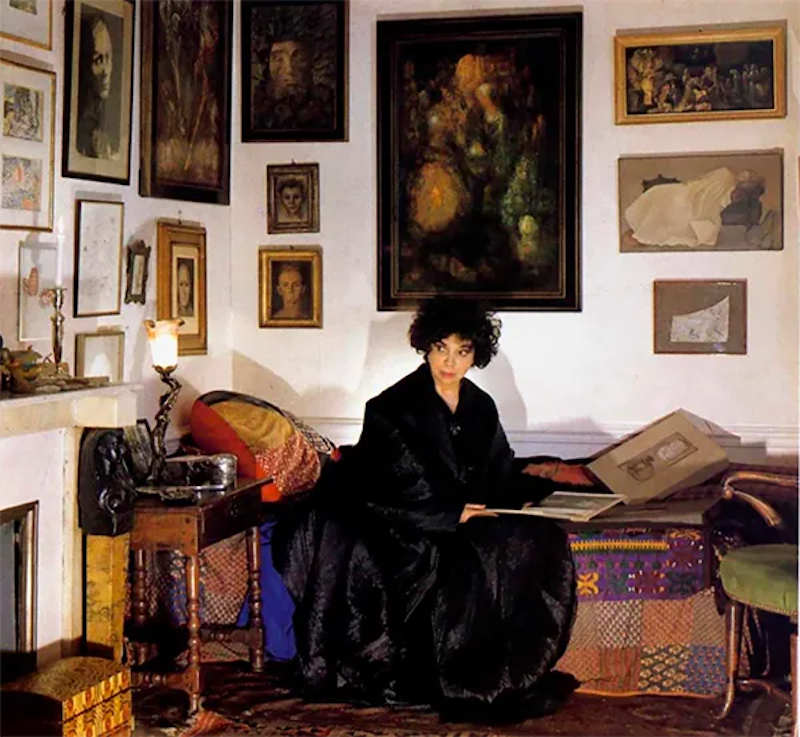
Oh, to be a glamorous, hot, cool, bisexual poly mystic with money to burn and cats to acquire.
There's much to say about her art, which also features cats, women as cats, and an exploration of gender dynamics, but why don't you watch Chris Vermorcken's 1988 documentary, available in full here, instead? If I had to choose a favorite Fini painting, it's probably "Two Women" (1939), although I'm quite fond of her portraits, too.
🐄 "Thick Skinned" ("Peaux De Vaches," Mazuy, 1989)
I wish it was easier to see Patricia Mazuy's films in the US. Aside from a 2019 retrospective at Lincoln Center, there haven't been many opportunities to view her earlier work. I had to watch "Thick Skinned" on a Russian website riddled with videos of men grating cheese to techno music because it was the only viable option. (It's easy to find if you're interested.) The English subtitles were unfortunately not great and I suspect some nuance was lost, but such is life; this film had been on my list for years and I was sick of waiting.
"Thick Skinned" is about two brothers, Gérard (Jacques Spiesser) and Roland (Jean-François Stévenin), in rural France who drunkenly set fire to their barn full of sick cows and inadvertently kill a man who's asleep in the hay. Roland takes responsibility for the crime, serving a 10-year jail sentence, while Gérard moves on with his life, marrying and having a child with a nurse named Annie (Sandrine Bonnaire). When Roland is released early and arrives back at the now reconstructed farm, the vibe quickly becomes weird and tense with a menacing, sexual-tinged violence hanging in the air at all times.
Roland's homecoming scene was enough to convince me of the film's merit even though I found the rest of it, especially the second half, uneven. After he gets out of jail, he's riding on a bus, sloshing through the countryside in a downpour, when it comes to a sudden stop in town, right in front of a church littered with people holding umbrellas. As the bus idles, a giant forage harvester decorated in streamers and twinkle lights pulls up beside it. A wedding has just taken place and we watch through the rain-soaked bus windows as Gérard steps out onto the platform, welcoming the bride and groom up the stairs. A cut to Roland's face reveals a swirl of inscrutable emotions as he recognizes his smiling brother. Maybe he's thinking about how much he's missed over the past decade, how different things are now, how angry he is to be the one on the periphery of it all... unclear, and it remains that way for a while.
It's a film about the mysterious nature of relationships and people's motivations within them. You might think you understand the dynamic but a person, event, or history you're not exactly privy to comes into play and shifts the dynamic. The highlights for me were undoubtedly the performances, editing (Sophie Schmit), and cinematography (Godard regular Raoul Coutard). This is Mazuy's directorial debut (she also wrote the screenplay) after dropping out of business school and moving to Los Angeles to pursue filmmaking. While there, she met Agnes Varda and Sabine Mamou, trained under them, and eventually co-edited "Vagabond," which is where she met Bonnaire.
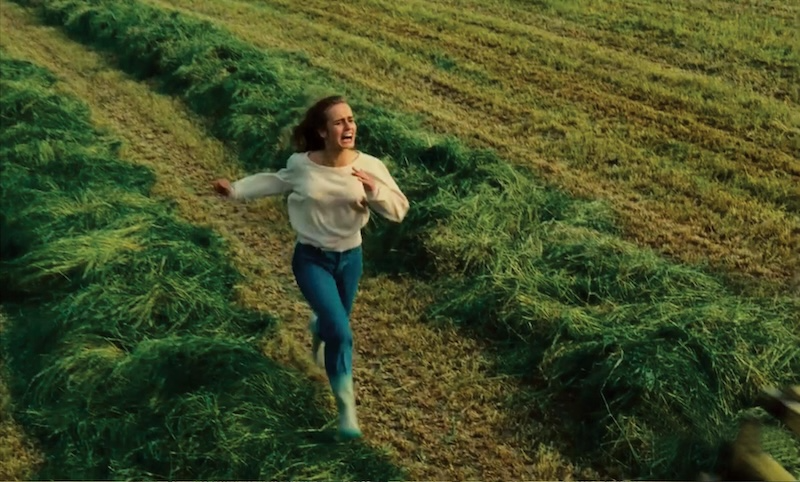
Watch if you like: John Cassavetes, Maurice Pialat, Flannery O'Connor, unpredictable behavior, familial resentment, westerns, small town economic decline, Sandrine Bonnaire, Nuri Bilge Ceylan's "Distant" ("Uzak"), David Lynch.
My cat does this every morning and it makes me tremendously happy. Also, how much cooler would it be if I wrote FND from this mushroom?



Member comments