Public figures who died since I last wrote to you: Robert DuVall, Jesse Jackson, Bud Cort, James Van Der Beek, Andrew Ranken, and Frederick Wiseman. Public figures who should have died yet are somehow still torturing us with their idiocy: the list is long and full of pedophiles/rapists. Per usual, there are a whole host of real atrocities to bitch about but in the interest of keeping the mood light, I'm going to instead hit you with some of my inconsequential entertainment industry gripes:
- The "Lizzie McGuire" reboot was announced in June 2019, then swiftly canceled in December 2020 due to "creative differences" AKA the Disney channel wouldn't let Lizzie fuck. They filmed two full episodes before this shit went down and we deserve to see them. Let millennials have a nostalgic Lizzie eye roll with their rotisserie chicken as a treat.
- Ezra Edelman's nine-hour Prince documentary, "The Book of Prince," was canceled by Netflix last year after Prince's estate demanded unfair cuts for image preservation reasons. Sasha Weiss wrote a great piece in The New York Times Magazine about the whole debacle that I highly recommend reading. If someone doesn't release a bootleg by 2030, we riot.
- Why isn't Amy Sherman Palladino's bad attempt at a sitcom, "The Return of Jezebel James," available anywhere? Parker Posey, Lauren Ambrose, Dianne Wiest, Renée Elise Goldsberry, Wallace Shawn?! I didn't watch this when it aired in 2008, so maybe I'm partially responsible for its early cancellation after three episodes; however, I would absolutely watch it now no matter how low quality. It occasionally pops up on the Internet Archive, but I've never found an uncorrupted version.
- Intense internet fandoms make me extremely disinterested in things I might otherwise enjoy ("Heated Rivalry," "Rick and Morty," movies with Timothée Chalamet). It's always a vocal, stupid minority who immediately comes for your wig if you dare say anything even slightly negative about their new passion, so I've taken to avoiding them entirely.
- I hate when pet actors aren't listed in the credits. I just saw (and disliked) "The Love That Remains," which features an excellent performance by a dog named Panda who rightfully received the Palm Dog Award at Cannes. Previous distinguished winners include Tilda Swinton's spaniels — Rose, Dora, and Snowbear — in "The Souvenir Part II" (2021).
Now that I've gotten that spate of nothingness off my chest, here are your fortnightly (the Brits win with this one) distractions.
It feels hypocritical for me to talk about how much I hate intense internet fandoms and then admit that I watch "Drag Race," but what can I say? I contain multitudes. Also, I've written about it before and no one skewered me in the comments, so I think this is a safe space. A big criticism of the show as it's developed is how unattainably expensive it has become for most contestants. Trixie and Katya are arguably two of the biggest names to come out of the franchise and if you go back to their seasons (original or all-stars) there are some ROUGH looks on the runway that you would never see in the 2020s. By S9, an off-the-rack mall dress just wasn't cutting it anymore, no matter how sissy the walk. By S13, looks like this weren't uncommon:
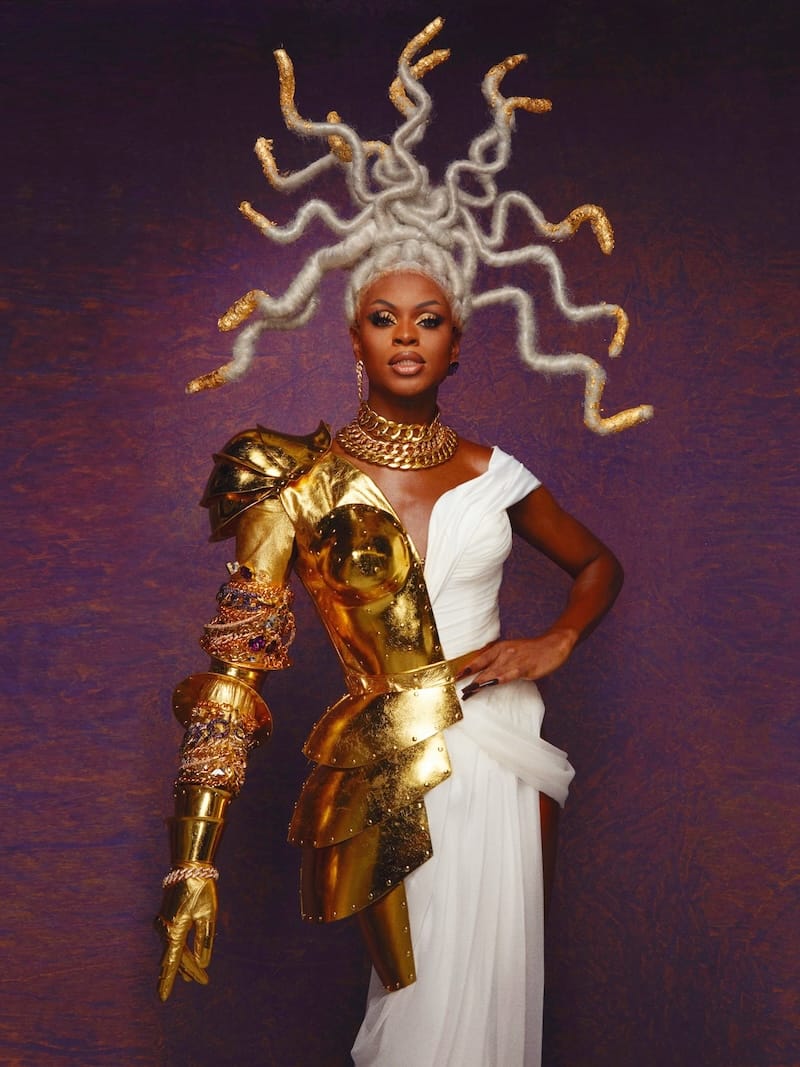
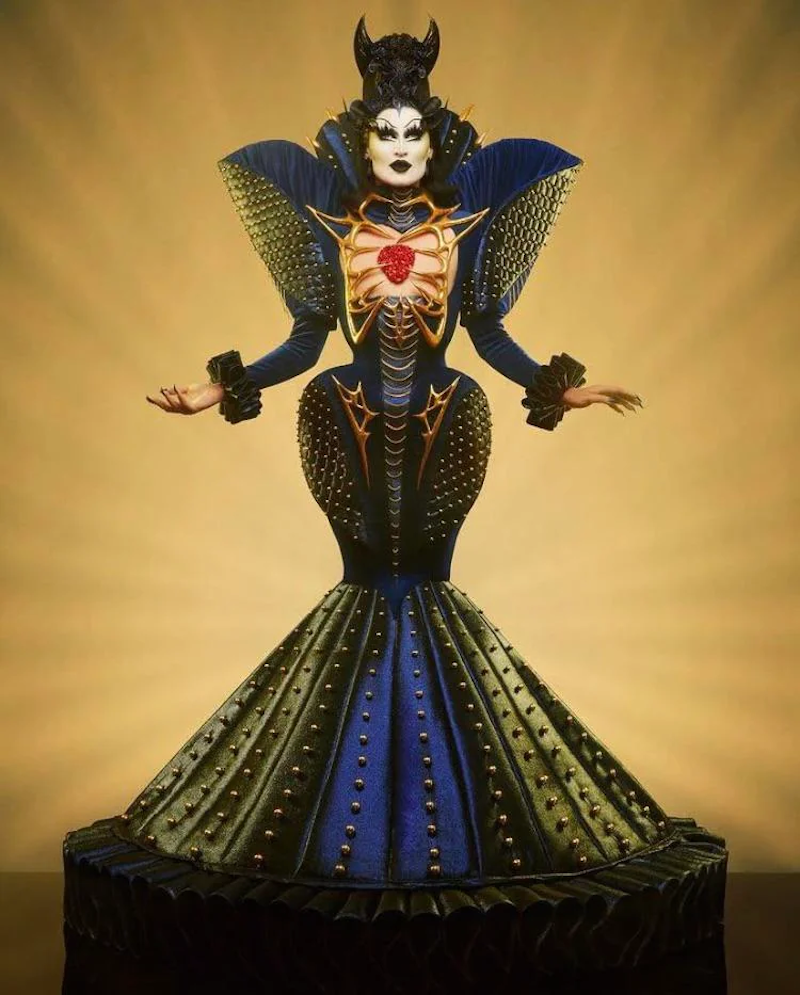
Symone (l) and Gottmik (r) crushed the finale and Utica made every fashion challenge her bitch.
It's been simultaneously fun to enjoy the high fashion spectacle the show has become, and depressing to think about girls like Lexi Love taking out a second mortgage on her home to afford a competitive runway package. In an alternate equitable reality, the show gives each contestant a set budget, forcing them to rely mostly on their own creativity instead of expensive custom designs; however, in this consumerist, social media-fueled brand marketing nightmare, anything goes.
This is all a long preamble to say that I don't think the show will ever feel like the messy early seasons again now that it's part of the capitalist machine, but S18 feels a bit different to me. Many of the queens are older, multi-hyphenate talents who manage to make the scripted challenges legitimately funny instead of punishing. The runways are great, the personalities are chill, and I really don't care that the drama is minimal. Everyone is too aware of their brand/the fandom reception to let loose with spontaneous nastiness. Unless we somehow get an all-stars season with people like NPBFAG, Tatianna, Jujubee, and Kennedy Davenport, those days are dead. Maybe the show becomes less about the drama and more about the craft of high drag.
S21 of "Project Runway" tried to adapt the "Drag Race" playbook with petty, manufactured conflict and meme-able moments, and everyone hated it. In the past, it had been a show focused more on talent. We got to watch the entire design process from sketching, to shopping for fabric, to Tim Gunn's thoughtful critiques, model fittings, accessorizing, hair and makeup — the entire rigamarole that went into creating a runway-ready look. S18 of "Drag Race" is more akin to an early season of "PR" where the preparation is a bigger part of the story. Don't get me wrong: there are still blatant producer shenanigans and attempts to typecast, but actual performance feels like a bigger, more important part of the story.
I hope some media studies student is currently writing a thesis about the mainstreaming/depoliticizing of drag because I've been thinking about it with each new season I watch. How much did Nini Coco pay for that sickening candy wrapper costume? Why can't a good publicist teach Ru how to deal with the fracking questions? Will they have Nicki Minaj on as a guest judge again? I can't wait to see what the future holds.
Sophie texted me the other day to recommend "Heart the Lover," which she finished in one sitting. Here's her description that sold me: "The first half reads a lot like "The Idiot" but then the second half destroyed me." I was up until 4am last night finishing it, likewise in one sitting, and can confirm her assessment is correct. I had read and enjoyed King's previous novel, "Writers & Lovers" in 2020 (see Goodreads review here), so I had high hopes for this one that were mostly fulfilled. The book is written in first person from the perspective of a character who remains unnamed until the end (and actually, shares a name/other similarities with the protagonist of "Writers & Lovers"). Up until that point, she's referred to by a nickname, Jordan (Baker, from "The Great Gatsby"), by two guys she meets in an English class during senior year of college: Sam, a religious guy she briefly dates, and Yash, his roommate/bff who ultimately becomes one of the great loves of her life.
As Sophie said, the first half is a late 1980s campus novel "where roughly nothing happens and you’re just thinking about college in a fond, weird way." Jordan/Casey lives in a cheap, shitty, unheated house with eleven roommates that reminds me of 570 Park Ave, where I lived during my junior year at Allegheny College. The rent is forty-four dollars per month and they make due in the winter with a propane gas heater called Mavis. Jordan has taken out student loans which, along with part-time waitress jobs, allow her to pay for school. Sam and Yash live in the Breach House, a beautiful place that belongs to Dr. Gastrell, a professor on sabbatical who lets them stay rent-and-utilities-free. It's not a huge focus of the novel, but I appreciate how King uses finances to support her character motivations. From the jump, Jordan is someone who comes from nothing, has little family support, and takes big chances anyway. Yash is more of a pragmatist, with some privileges like a wealthy enough father who he doesn't wish to rely on because their relationship isn't good. He's also a man and therefore taken more seriously in academia. Here's a snippet where Jordan considers the differences in how they're treated:
I’m a good student in English. I get A’s and A-’s and nice words at the bottom of my essays. But I’ve never made friends with any of my professors, all men except for Iyengar. No one has ever given me a perk or suggested a seminar. I waited on Professor Wyler at High Five once, I’d had him for Modern Poetry sophomore spring. He was alone and drank three bourbons and asked me what time I clocked out. I don’t think he was planning to tell me about the honors program. If I’d had Dr. Gastrell, maybe I’d have gotten to see his green bedroom, but I doubt he’d have given me this house for the year for nothing.
Part I of the novel spans senior year of college, one additional semester for Jordan and Yash, and some post-grad time spent in Paris. In Part II, twenty-one years have passed and Jordan, now a professional writer, is living in Portland, Maine. Part III takes place five years later and while I won't tell you what happens, I will say that it is devastatingly sad. If you've been in a reading rut and need something to grease the wheels, place a library hold on "Heart the Lover."
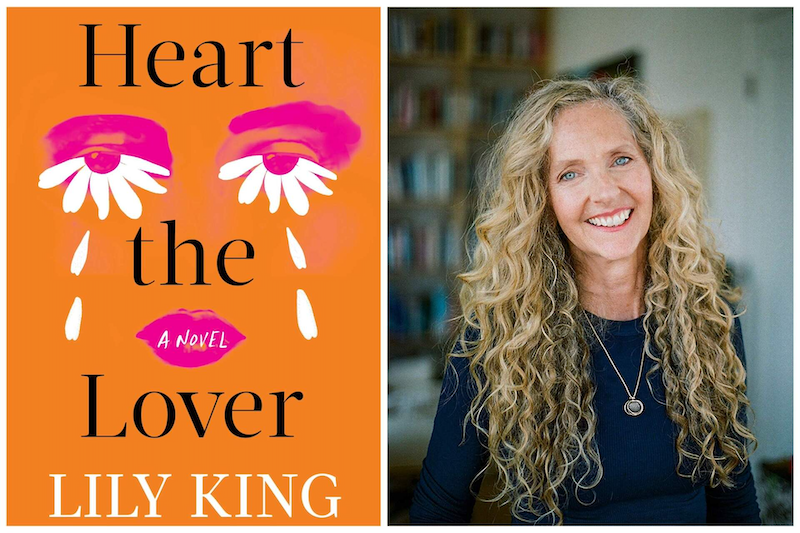
Read if you like: "Tomorrow, and Tomorrow, and Tomorrow," Elif Batuman, Ann Patchett, novels about reading and writing, "Normal People," "One Day," reminiscing about your Top Ramen days, crying.
If I used Letterboxd, this film would go straight onto a list called, "Are Men OK?" In "Distant," Turkish filmmaker Nuri Bilge Ceylan's third feature, Yusuf (Mehmet Emin Toprak) travels to Istanbul to stay with his cousin Mahmut (Muzaffer Özdemir) while he looks for a job. In the wordless, opening scene of the film, Yusuf trudges across a snowy white expanse toward the camera. For a brief moment, he dips out of the frame as he climbs uphill to the side of the road. Breathing hard, he stops, looks back from whence he came, and exits the frame. The camera pans over to the empty road, stopping, waiting, and eventually, a car's headlights appear. As it grows closer, Yusuf steps back into view and sticks out a hand. From the jump, Ceylan lets the viewer know what kind of filmmaker he is: quiet, meditative, someone who lets blocking and camera movements (or lack thereof) communicate emotions. This opening scene perfectly sets the tone of the film, which is about two disparate figures who briefly come together physically but remain emotionally distant.
Yusuf is a recently fired factory worker who has come to Istanbul to find a job on a ship. He doesn't really know how he's going to do this and nothing we observe suggests he has the skills to figure it out. He spends most of his time watching women he's too scared to approach and sprinkling cigarette ash all over Mahmut's apartment. He's the more sympathetic character by far because he's not a bad person, just unsophisticated and dim-witted. It's easier to hate Mahmut, a grouch with a nice apartment, a good (albeit boring) photography job, and a porn addiction. He's divorced, has no real friends, and would probably rather die than admit to his own unhappiness even though it's blatantly obvious to anyone paying attention. To be expected, Mahmut doesn't love having Yusuf in his space, and his irritation escalates over the course of the film. If only these two had the ability to talk about their problems, perhaps they'd find some common ground; instead, they remain isolated in their unhappiness.
This was my first Ceylan film and it won't be my last. If you don't trust me, maybe this comment from Andrew Haigh will convince you to watch:
I was so blown away by ["Distant"] – the way that you can get quite deep into the psychology of a character, their aloneness or their isolation from the world. It tells the story in essentially a very gentle way that allows you to watch rather than necessarily always feel and experience. For a long time, that was my go-to film that I wanted to emulate.”
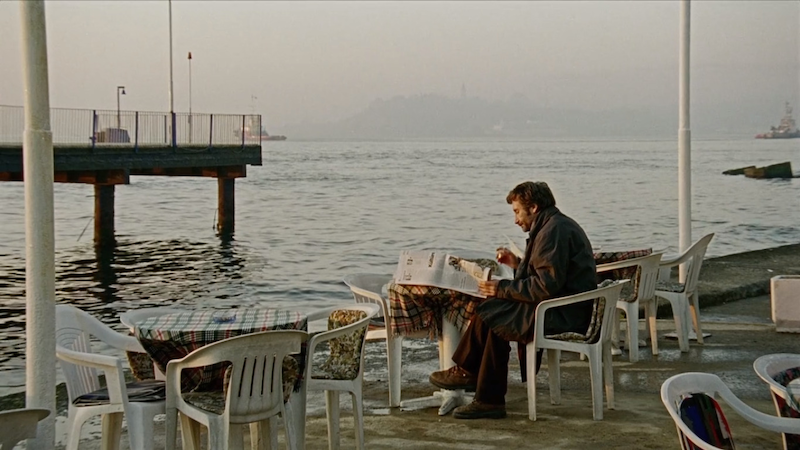
Watch if you like: Tarkovsky, Chekhov, coldness (emotional, physical), excellent knitwear, wasted potential, feelings of inadequacy, the constant hiss of radiators, men who need therapy, nihilism, unmedicated depression.
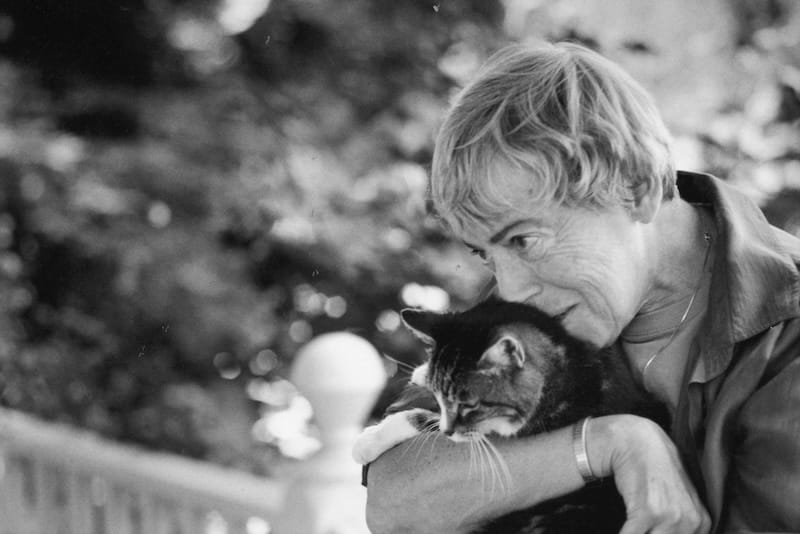
I've only recently gotten into Ursula K. Le Guin, who I always thought of as a science fiction/fantasy writer. It turns out, she was an excellent poet, too. Here's how Robert Hass describes his relationship with her work in his NYT By the Book feature:
When I read Ursula Le Guin, who grew up in Berkeley, I thought that I had discovered that I loved science fiction, and read a lot of it and discovered that I just loved Ursula Le Guin, unless Calvino and Borges count as science fiction.
I've never been very into science fiction, so I avoided Le Guin until her death in 2018 when a posthumous book of poems, "So Far So Good" was released. I was shocked to learn that this wasn't her first, but her twelfth volume of poetry. Through reading it, I formulated a very different idea of her creative proclivities, especially compared to the novels I had read like "The Left Hand of Darkness" (1969). Poet Le Guin is way more like Terry Tempest Williams than Octavia Butler (coincidentally another sci-fi poet). I probably should have toe-dipped with a different novel, like “Always Coming Home” (1985), which incorporates verse into the prose, so that’s what I advise for any other noobs coming to her fiction from her poetry.
Anyway, here’s the poem that got me hooked. Once I read more of her work, maybe I’ll also have a Hass-like appreciation for her sci-fi.
Looking Back
Remember me before I was a heap of salt,
the laughing child who seldom did
as she was told or came when she was called,
the merry girl who became Lot’s bride,
the happy woman who loved her wicked city.
Do not remember me with pity.
I saw you plodding on ahead
into the desert of your pitiless faith.
Those springs are dry, that earth is dead.
I looked back, not forward, into death.
Forgiving rains dissolve me, and I come
still disobedient, still happy, home.
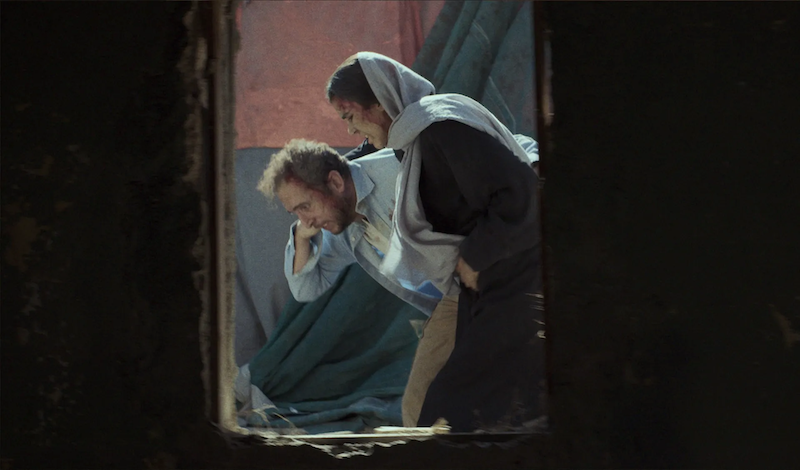
I got a text from Alex the other day asking, "Have you been following all the celebrities with lobotomies at Berlin?" Aside from this clip of Ethan Hawke responding to a question about artists' responsibility in the fight against fascism, I hadn't really been paying attention, but now that I am... woof. For those similarly out of the loop, journalists at the Berlin Film Festival have been asking questions about the Palestinian genocide, generating embarrassing soundbites like:
- Jury chairman Wim Wenders kicking off the festival by saying, "We have to stay out of politics because if we make movies that are dedicatedly political, we enter the field of politics. But we are the counterweight of politics, we are the opposite of politics. We have to do the work of people, not the work of politicians." We need to get this man some Walter Benjamin STAT.
- Neil Patrick Harris, of Amy Winehouse cake infamy, said, "I think we live in a strangely algorithmic and divided world right now, and so as artists, I’m always interested in doing things that are apolitical." Strong words for a gay man in Trump's America, but sure.
- I can't find a direct quote for this one, but jury member Ewa Puszczyńska pushed back by saying that terrible shit happens all around the world that we don't discuss, like "the genocide in Senegal." [Insert deep sigh here.]
In light of these comments, 100+ celebrities signed an open letter denouncing the festival's silence on Gaza and treatment of those who have spoken out against Israeli atrocities in the past. From there, festival director Tricia Tuttle made everything worse by giving this interview where she essentially calls those signatories stupid:
We are in the process of reaching out to some of the people we know who have signed the letter, to make sure they really understand what they’ve signed – and that what they’ve signed is not fair or accurate.
Now all the headlines are centered around celebrity opinions instead of anything relevant, like the claims of "institutional repression and anti-Palestinian racism" mentioned in the letter. Good journalists should be digging into "Berlinale’s involvement in censoring artists," not publishing clickbait nonsense about Ethan Hawke shirking questions he really doesn't need to be asked in the first place. The whole debacle makes me feel deeply cynical about everything, from the journalists asking about the conflict, seemingly to boost their own notoriety/clicks, to the festival leadership who let a celebration of filmmaking turn into a beacon of outrage.
There's also a question of why things have gotten so out of control at Berlin when the entire film industry has no shortage of ties to controversy and dirty money. "The Road Between Us: The Ultimate Rescue" won TIFF's 2025 Documentary People's Choice Award, for fuck's sake; Mubi gets money from the Israeli military; Cannes has platformed abusers and sex offenders. They're all gross, but asking celebrities to comment on the grossness and publishing nothingburger articles about it isn't going to accomplish anything.
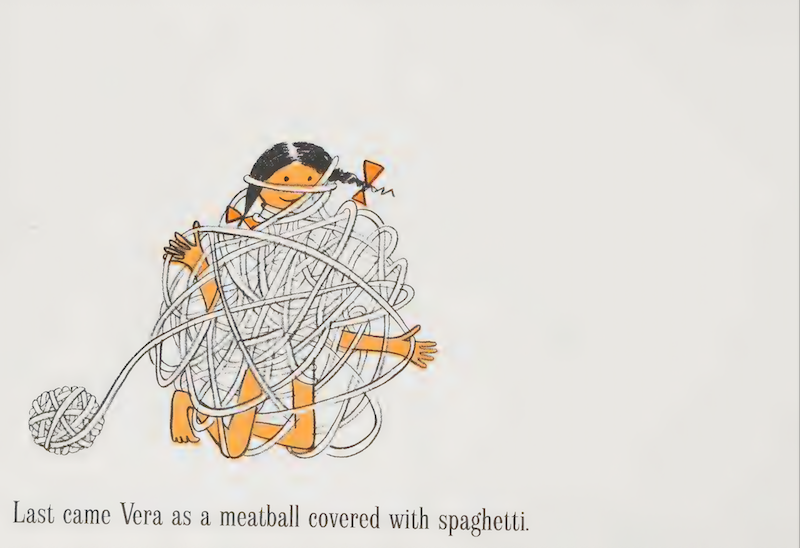
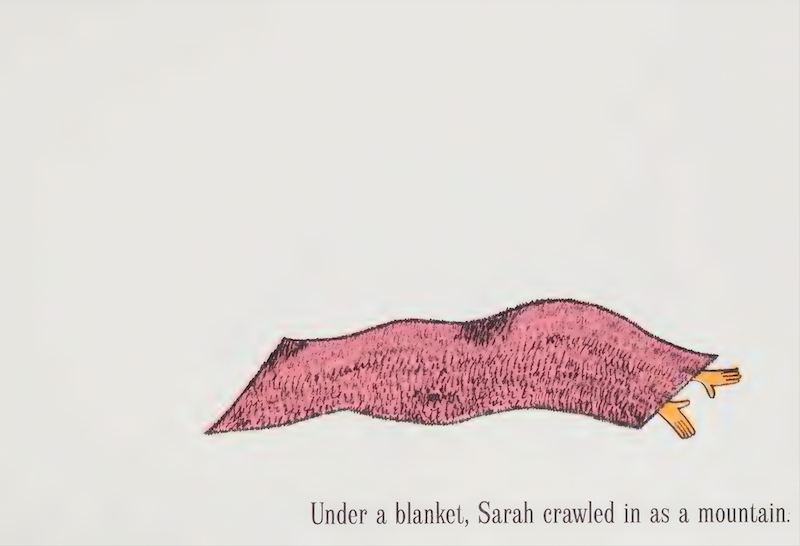
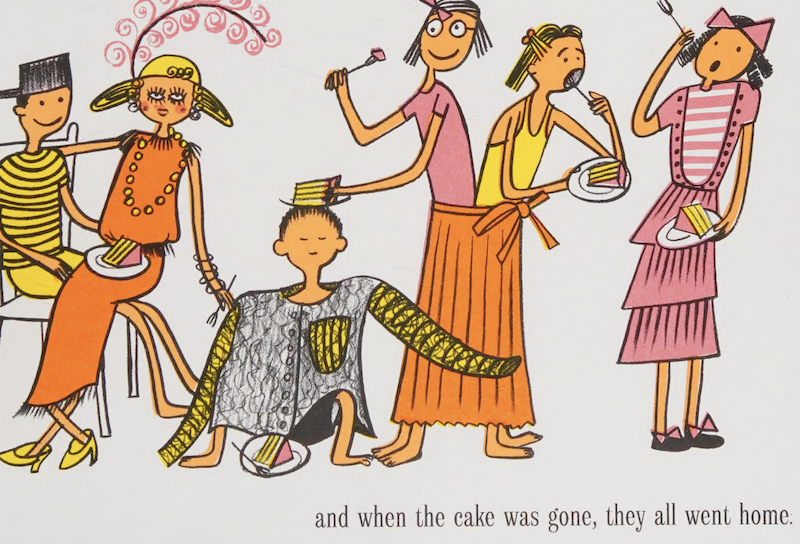
As a palate cleanser, here are some illustrations from Remy Charlip's "Let's Have a Party" (1956), a book about a bunch of kids who come over to John's house in fanciful outfits, eat cake, take a picture together, and GTFO. This is one party I could comfortably attend, especially if I'm allowed to slither in beneath a blanket.