Background on Elena Ferrante's Early Career
The pseudonymous writer, Elena Ferrante, had a meteoric rise to international literary fame, but it happened after she had already been writing for a while and, depending on what you believe about her real identity, not until she was nearly 60. In 1992, she published her first novel in Italian, "Troubling Love," about a woman trying to piece together the mystery of her mother's sudden death. It sold well and, in 1995, was adapted into a film by Mario Martone that premiered at Cannes, although it didn't get a US distributor until 2018. This pre-publication letter that Ferrante wrote her Italian publisher, Edizioni E/O, explains a lot about her:
I believe that books, once they are written, have no need of their authors. If they have something to say, they will sooner or later find readers; if not, they won’t. . . . I very much love those mysterious volumes, both ancient and modern, that have no definite author but have had and continue to have an intense life of their own. They seem to me a sort of nighttime miracle, like the gifts of the Befana, which I waited for as a child. . . . True miracles are the ones whose makers will never be known. . . . Besides, isn’t it true that promotion is expensive? I will be the least expensive author of the publishing house. I’ll spare you even my presence.
Ferrante didn't want literary fame, attention, or credit; she simply wished to write, which is exactly what she did for the next few decades. "The Days of Abandonment" came in 2002 and was even more successful, becoming a national bestseller for almost an entire year and also receiving a (less revered) film adaptation by Roberto Faenza. Around the same time as the film's premiere at Venice in 2005, the owners of Edizioni E/O founded Europa Editions to publish Ferrante (and other international authors) in English. They had been trying and failing to sell the translation rights for her work when they wisely said, "Fuck it, we'll do it ourselves" (not a direct quote).
Their first book was the English translation of "The Days of Abandonment" on September 1 of that same year. The book wasn't a bestseller like it was in Italy, but it did very well for a new press translation and received enough glowing reviews to kickstart a coterie of fans that would continue to grow with each subsequent novel. Europa's release of "Troubling Love" (2006) performed similarly, along with Ferrante's third novel, "The Lost Daughter" (2006 in Italy, 2008 in the US). After the smash hit of the Neapolitan novels, all of these books would eventually become bestsellers in the US, with a 2021 Oscar-nominated adaptation of "The Lost Daughter" by Maggie Gyllenhaal.
Neapolitan novel-induced "Ferrante fever"
When "My Brilliant Friend," the first book in the tetralogy came out in 2011 (IT)/2012 (US), it was well-received but not an instant smash hit. In 2013, James Wood, a book critic at The New Yorker, exposed Ferrante to more readers with his lengthy review of her work thus far titled, "Women on the Verge: The Fiction of Elena Ferrante." From this point on, readership would grow as the next books, "The Story of a New Name" (2012/2013) and "Those Who Leave and Those Who Stay" (2013/2014) were released. This rapid publication schedule was doable because "The story was conceived and written as a single narrative. Its division into four hefty volumes was decided when I realized that the story of Lila and Lenù couldn’t easily be contained in one book."
When the final volume, "The Story of the Lost Child" (2014/2015), debuted, it was at number three on the New York Times bestseller list. As "Ferrante fever" took hold, each of the books, all translated to English by Ann Goldstein (along with Ferrante's other work), would become bestsellers. The TV series, adapted by Saverio Costanzo, came three years after the final book's publication. For an HBO series, the viewing numbers were low, but it was a mainstream hit in Italy and critically acclaimed in both countries. At the time of writing this, the TV show is available in 150 countries and the Neapolitan novels have been translated into 45 languages. As new fans discover the magic (assuming they're not all infected with brain rot), I hope the TV show experiences a similar late renaissance and if it does, my thoughts will be here waiting for anyone who wants to wade through them.
Quick Summary of "My Brilliant Friend"
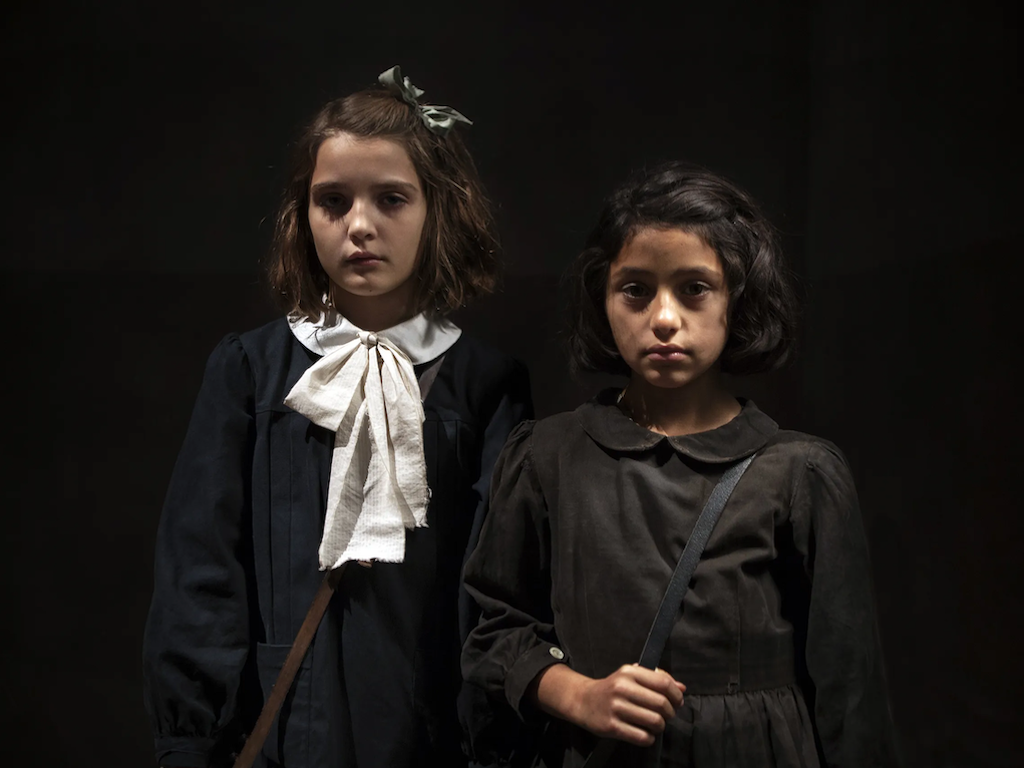
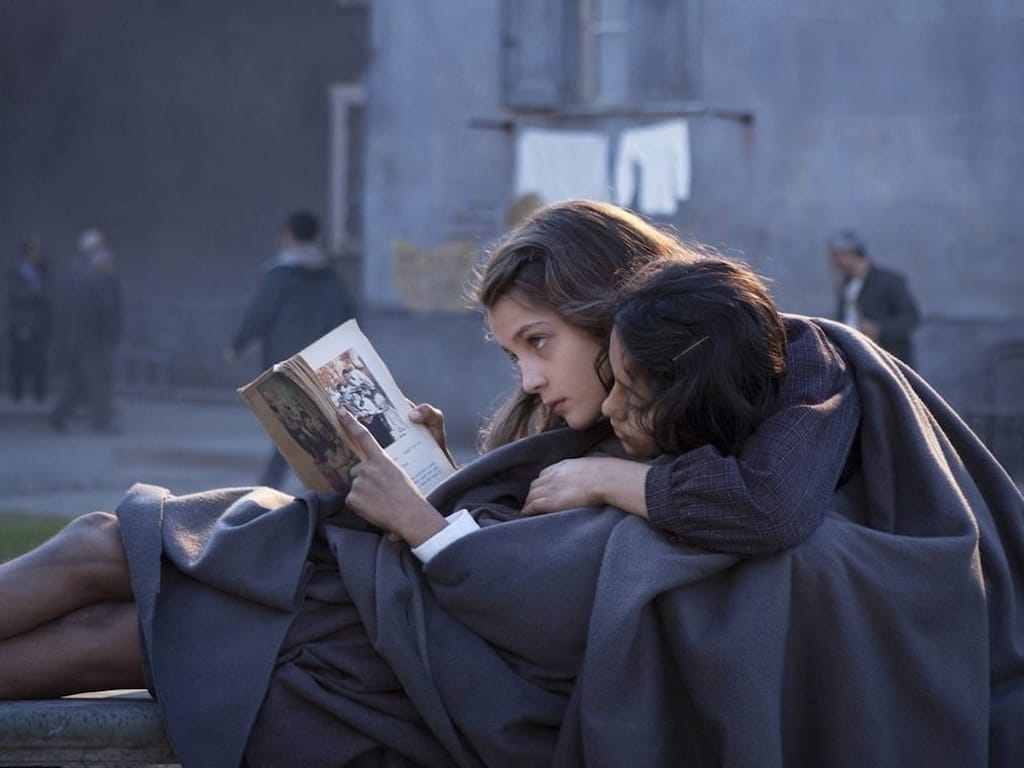
At the start of the series, we meet Elena "Lenù" Greco (Elisabetta De Palo) at 66 years old. A late night phone call reveals that her estranged friend, Lila "Lina" Cerullo, has gone missing. Her initial reaction to the news is deadpan, but emotion pours out when she sits down at her computer and begins writing. Everything that follows is their story, starting in a Neapolitan elementary school where violence and a quest for dominance are both commonplace. In these early years, the girls — played by Elisa Del Genio (Elena) and Ludovica Nasti (Lila) — become close friends, bonding over their shared love of "Little Women" and standing up to neighborhood bullies. The world they inhabit is one full of poverty and violence, but their friendship provides a safe space for them to dream of a better life.
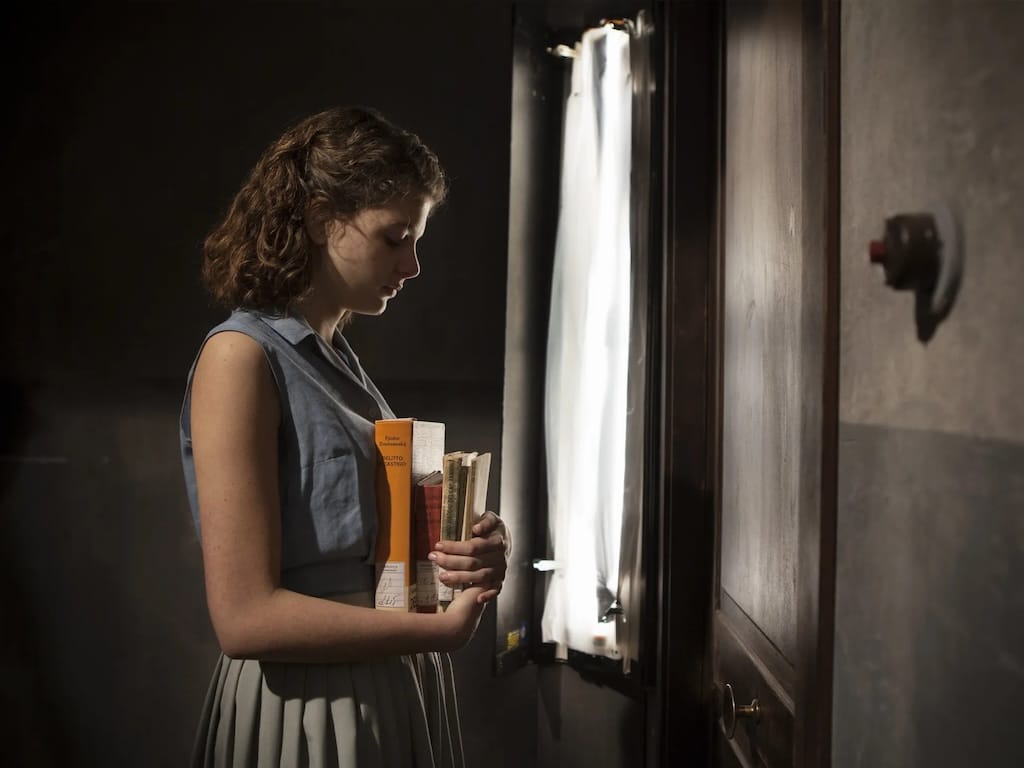
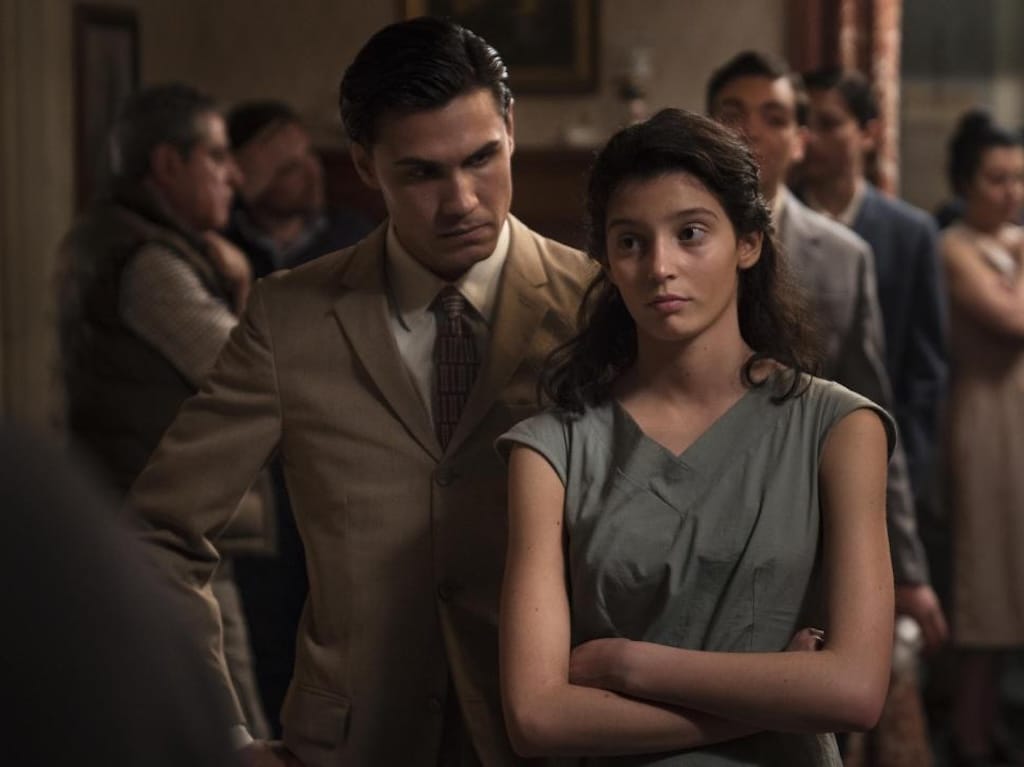
When Lenù is permitted to continue studying in middle school and Lila isn't, a rift forms between them. They're both smart, ambitious, and capable, but only one is given the opportunity to hone those gifts. Over the course of the season, Lenù excels academically while Lila's hand in marriage is auctioned off to the highest bidder. By the end of the season, Lila is married to who she believes is her best option, only to immediately learn he's irredeemable and that her life is about to get much worse.
The first season is a faithful, well-cast adaptation with direct involvement from Ferrante, who not only chose Costanzo but collaborated with him and the other writers, Francesco Piccolo and Laura Paolucci. In my attempt to pad each season's page with informative SEO copy, I must spread out the details, so check out S2 if you want to read about the production background.